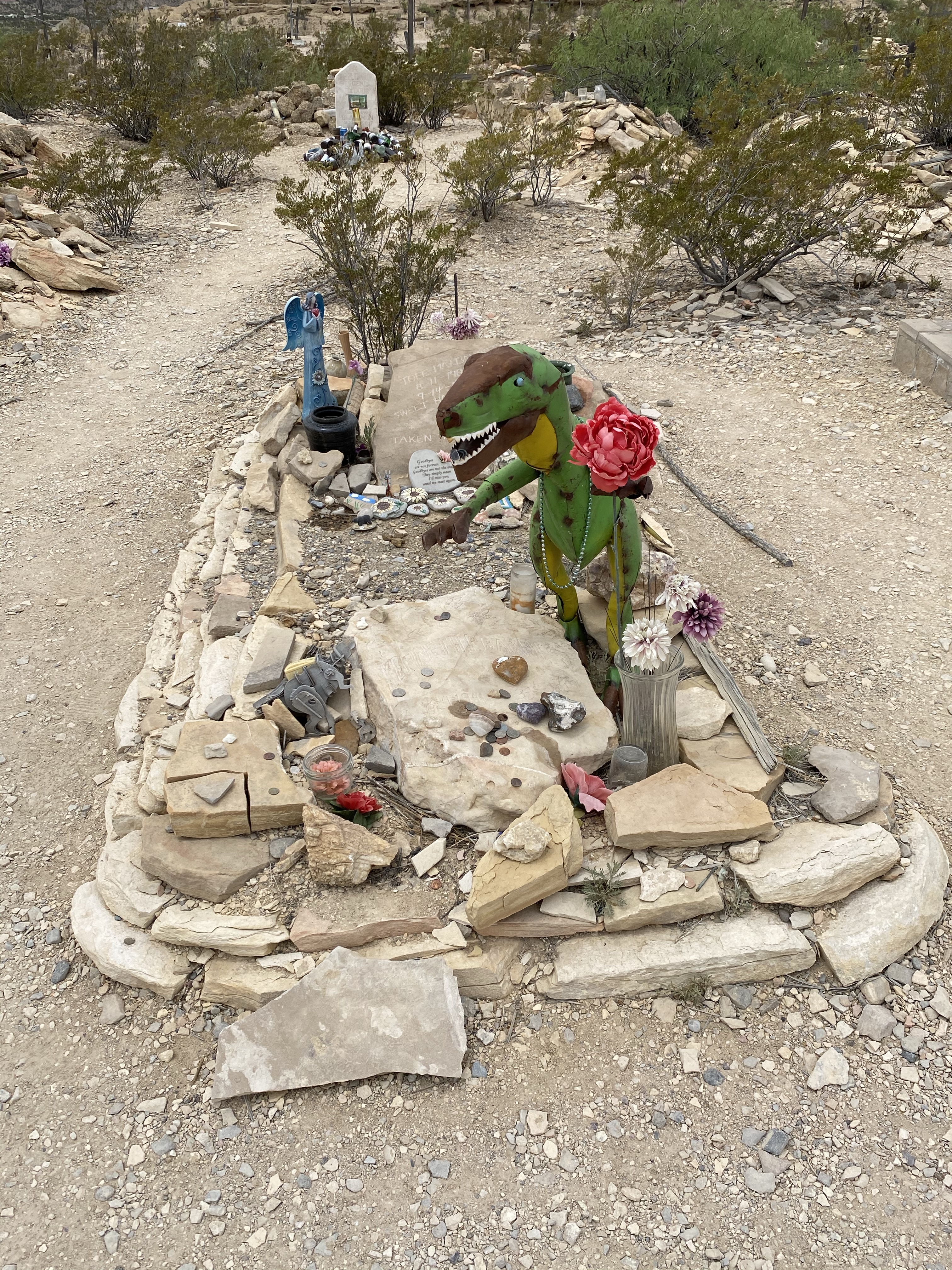
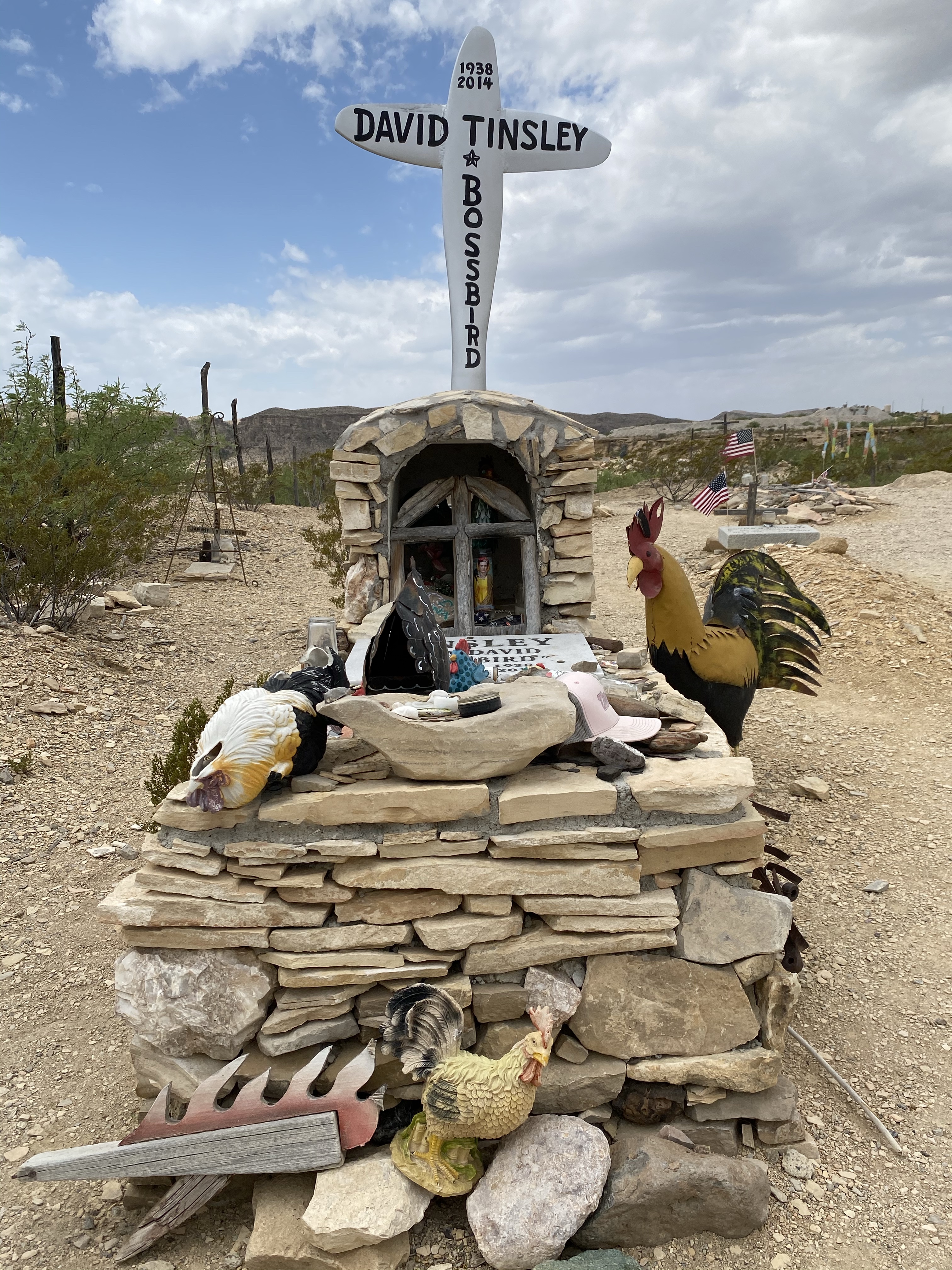
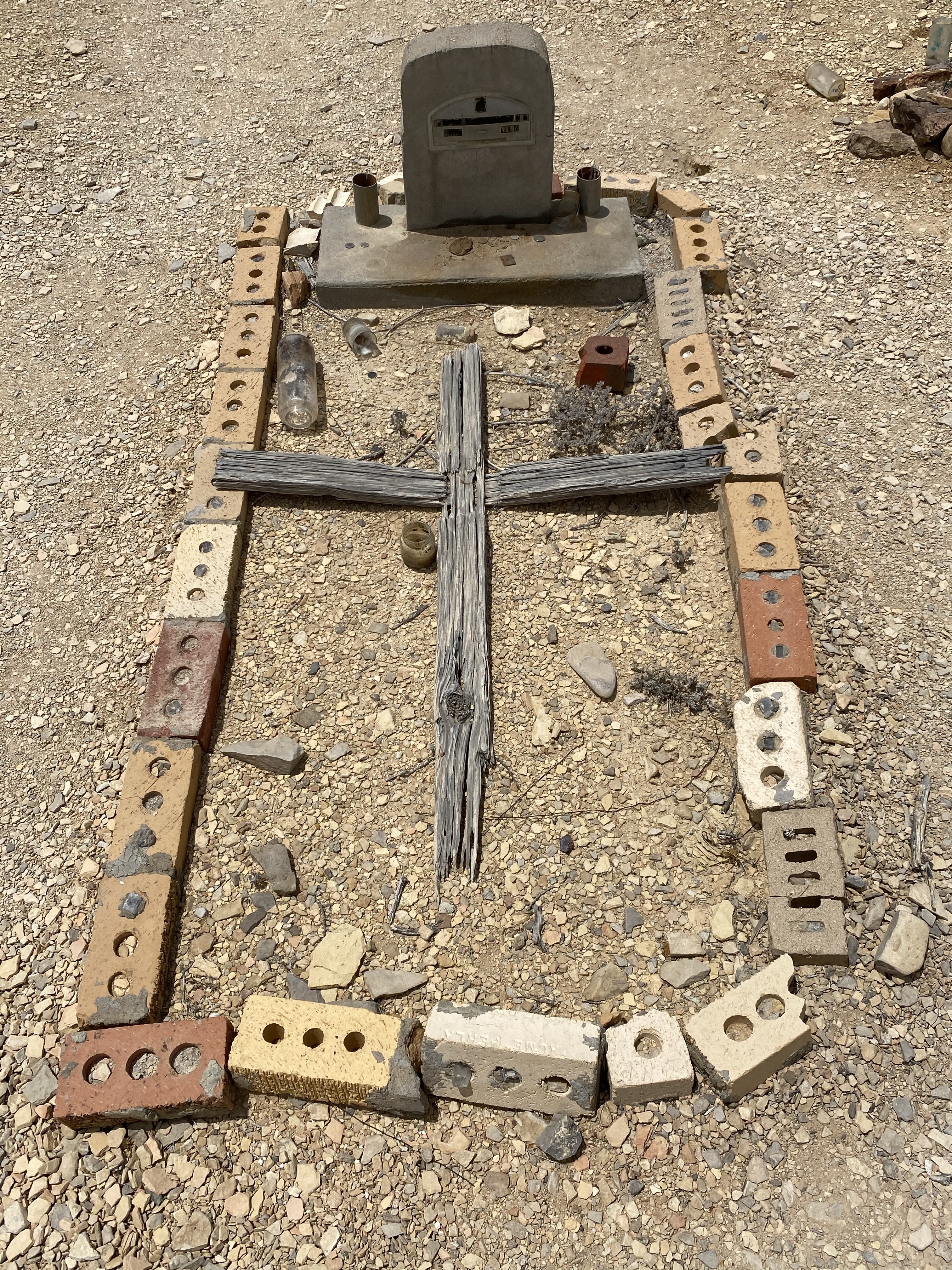
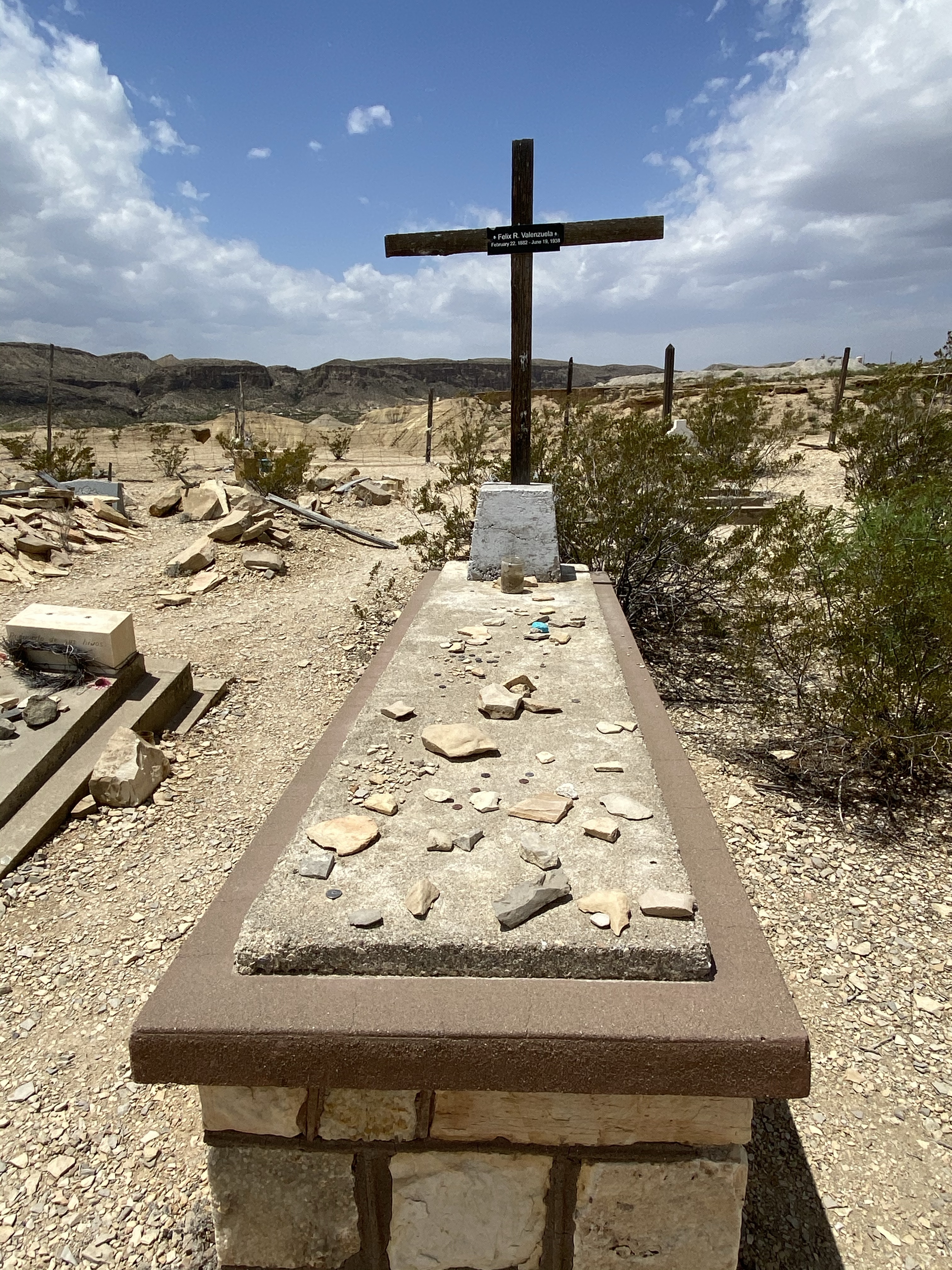
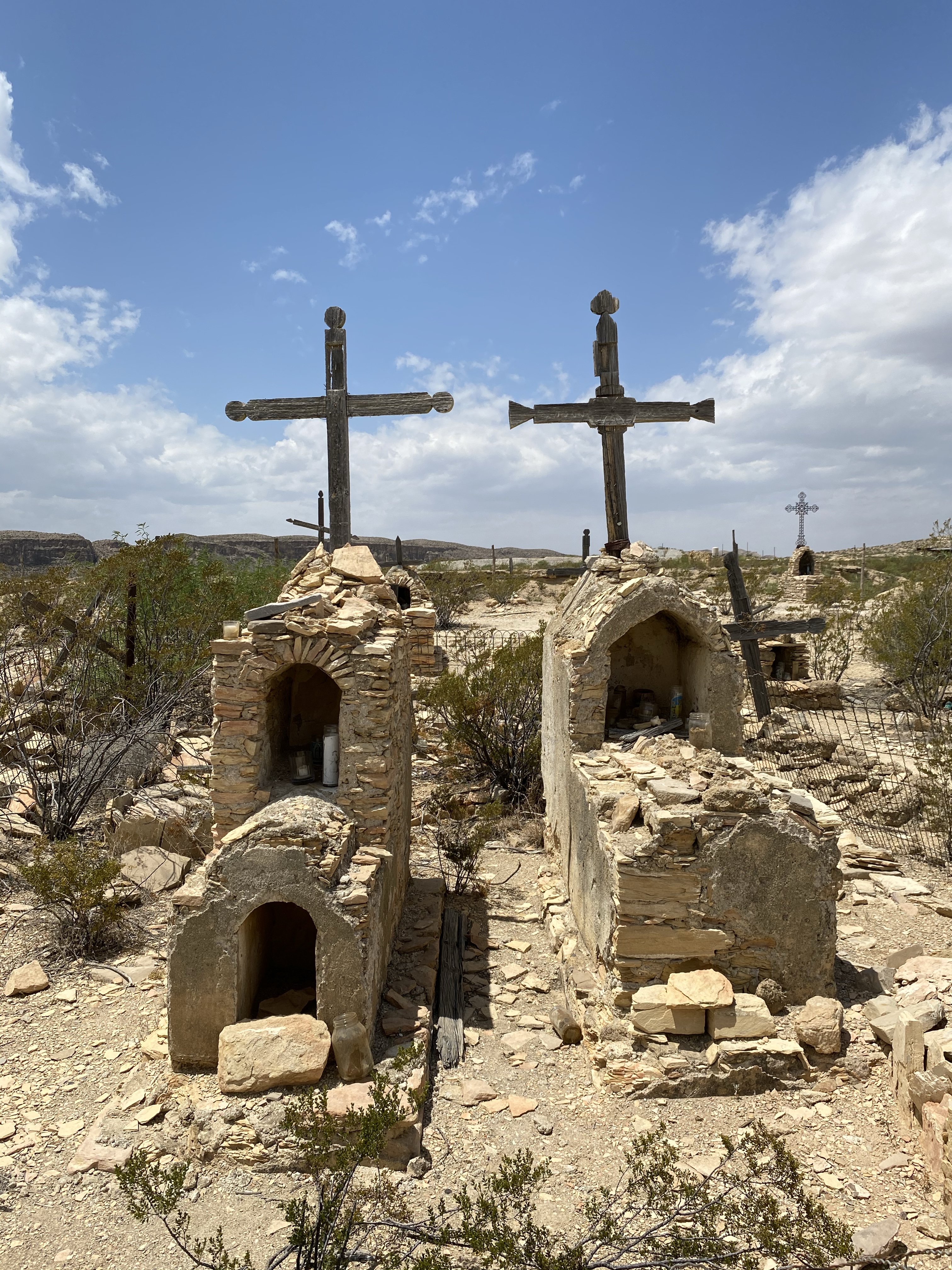
After leaving Big Bend, I headed toward Guadalupe Mountains and Carlsbad Caverns. On my way over, I stopped in Terlingua, a small ghost town outside of Big Bend. While there wasn’t much activity, there was a historic cemetery with ornate tombstones and alters. The cemetery was established when the area was booming due to mining. A Mexican-American found cinnabar, a mineral that creates mercury, here in 1902. It was in high demand during WWI. He became the first Hispanic person to make a mining claim and established a strong future for himself, his family, and the community. The cemetery continues to be the resting place of residents as they pass away. The Day of the Dead is celebrated here, when community members and relatives come to honor their ancestors. Graves exist from 1913 to 2021. I wandered around admiring the love that was displayed at each gravesite. I left a donation for the upkeep of the historic site and continued on down the road.
I made it to Guadalupe Mountains National Park in the early evening, but the last campsite had been taken by a trailer that passed me earlier on the highway. Darn! So instead, I continued down the highway towards Carlsbad, got gas which I desperately needed, and then pulled into a spot at Sunset Reef Campground. A free site recommended by my neighbors at Chisos Basin, it was a great spot – quiet, clean, and with a covered picnic table.
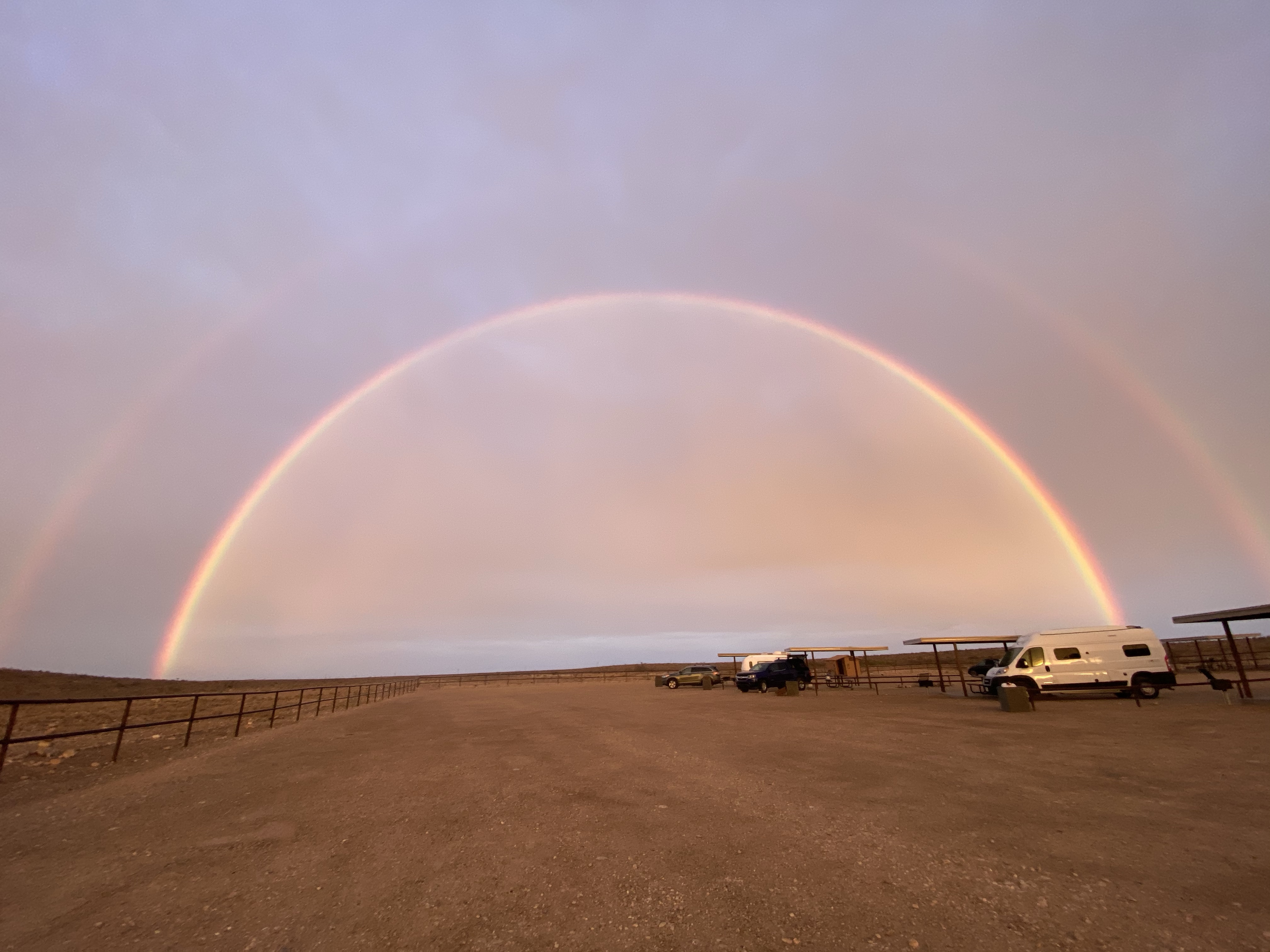
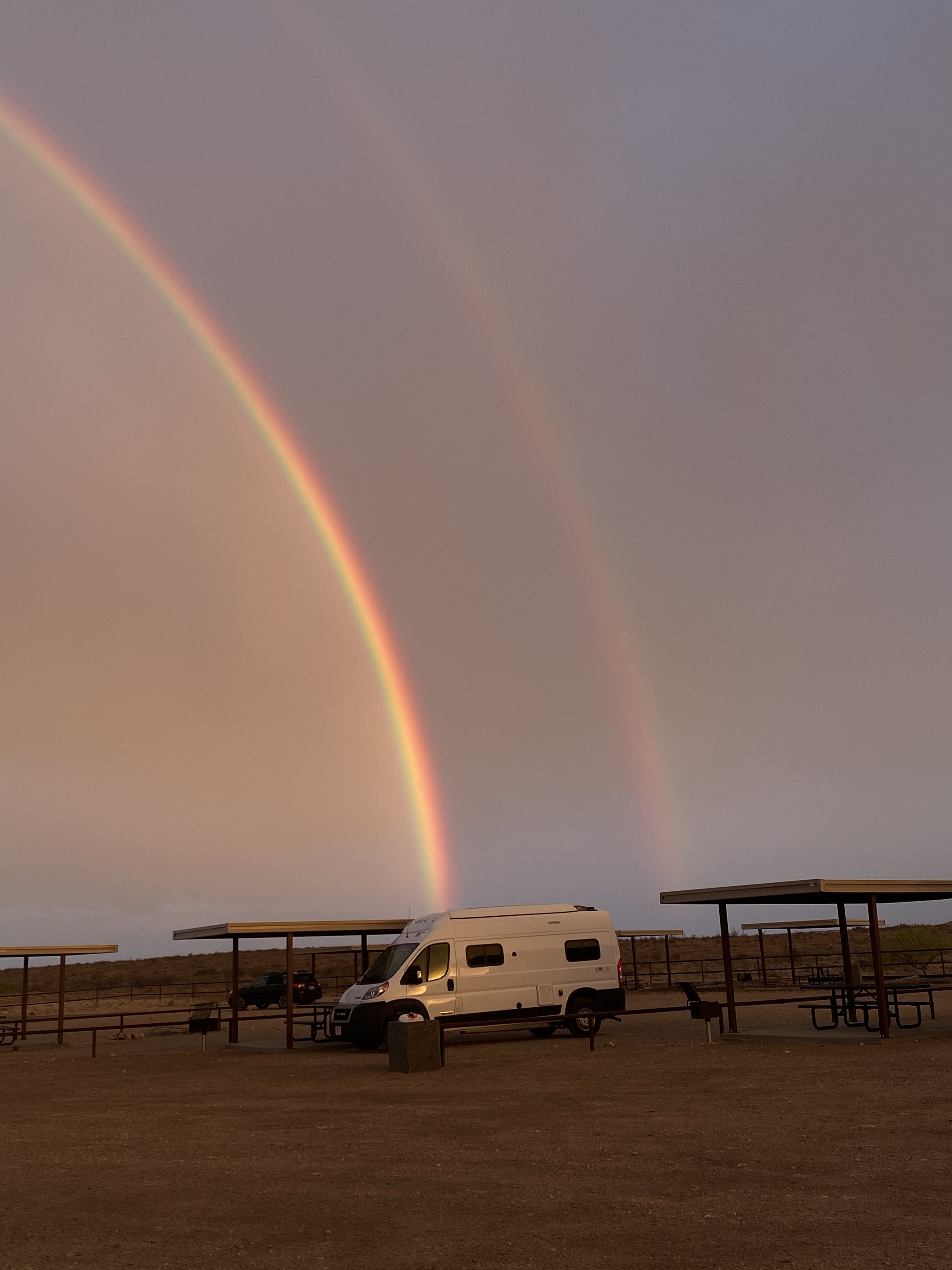
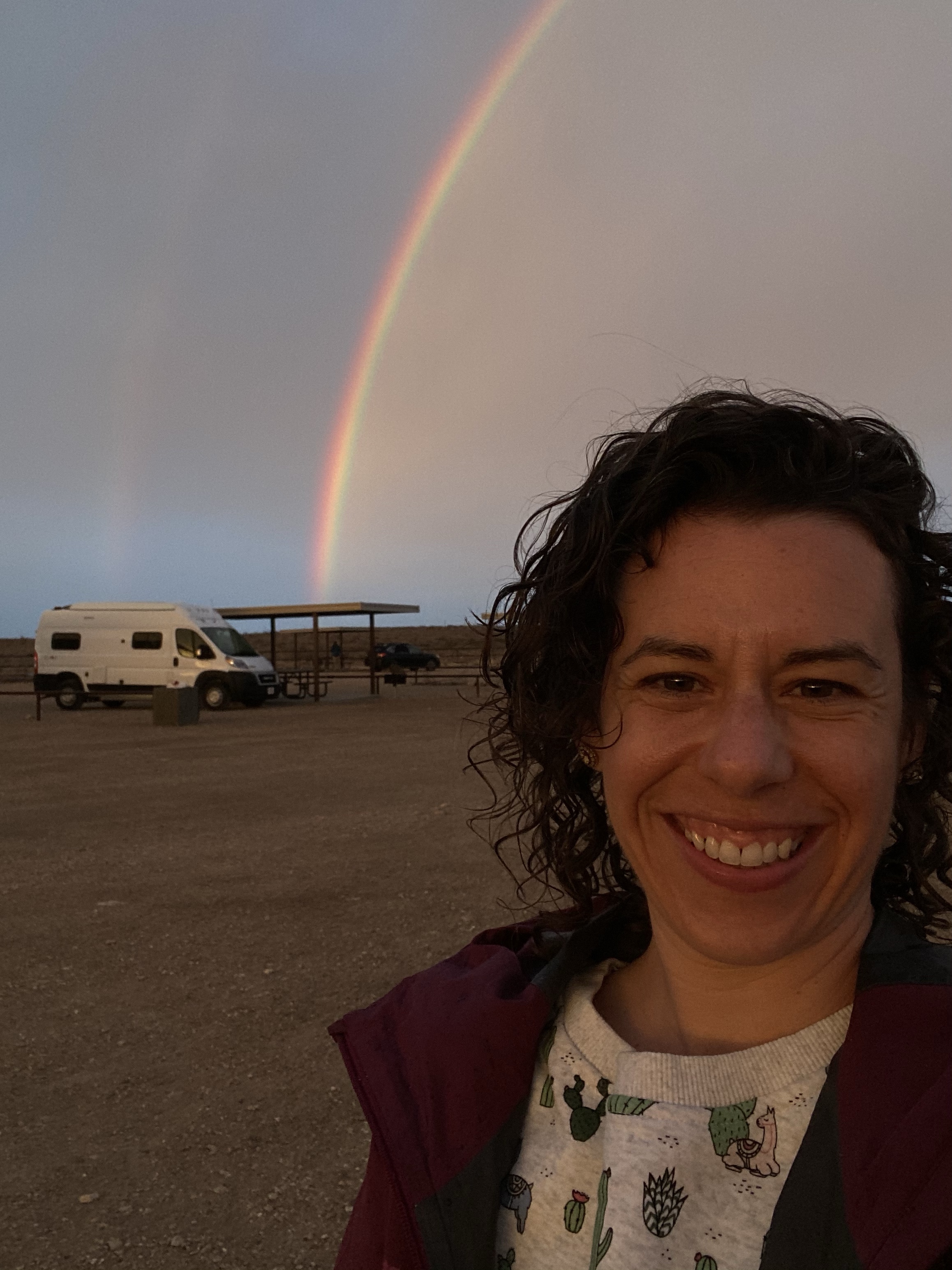
I never did use that picnic table though. It was much cooler than at Big Bend, thank goodness, and rainy. I switched into my sweatpants and sweatshirt and ate some dinner inside. I was preoccupied planning my next few days when I heard my neighbors shriek. I looked out my windshield and saw what had their attention, a full double rainbow after the rain! I grabbed my camera and ran outside before it disappeared. What a wonderful treat!
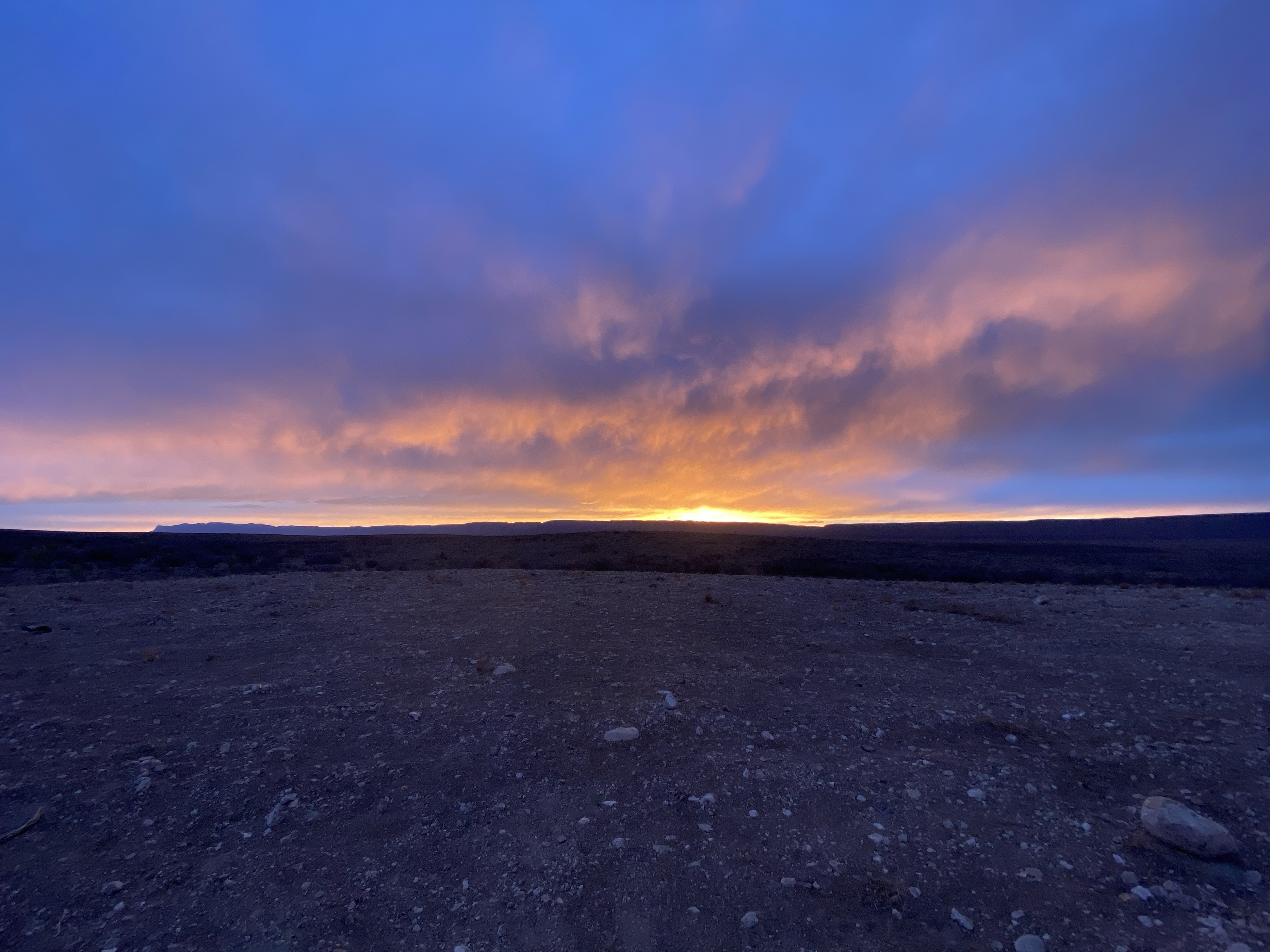
That night was calm and comfortable. I woke well rested the next day, but to steady rain. Luckily Carlsbad Caverns was right down the road and I was able to get a self-guided tour reservation. Plenty to keep me busy, and dry, for the day!
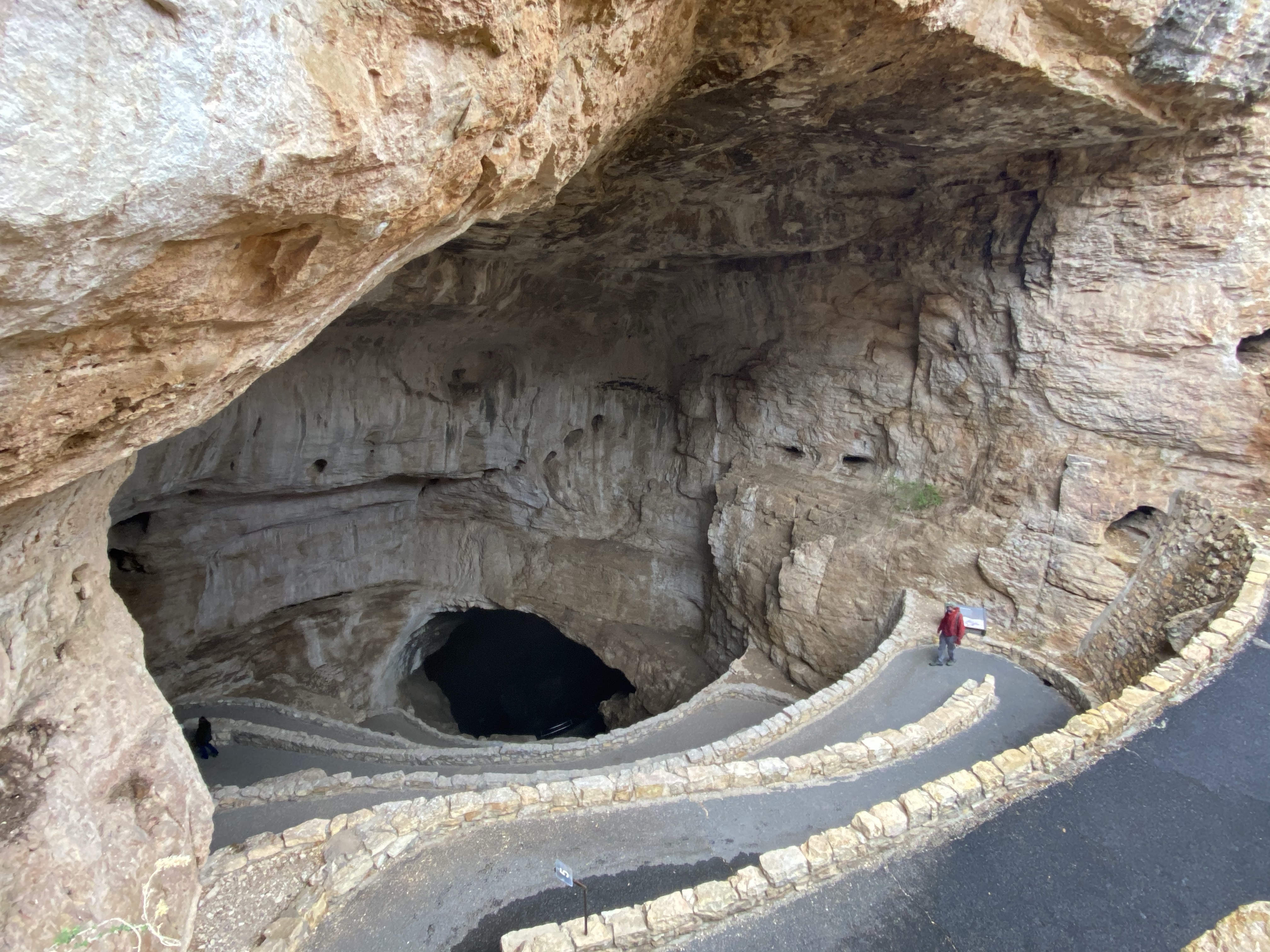
Carlsbad Caverns is a magical underground world. When you visit, take the time to enter through the Natural Entrance outside. A short path from the Visitors Center brings you to the mouth of the cave, a large hole with a winding path leading into the dark ground. During the day you can find Cave swallows humming about the entrance, gathering on the ceiling far above. If you are lucky enough to be here at night in the summer, you’ll be treated to Brazilian free-tailed bats taking their place as they fly from the depths of the caves to find their dinner outside.
The switchbacks lead you down, down, down into the darkness where the magic awaits. With each step you descend farther from the surface until you are 750 feet below ground. While no natural light shines down here, carefully placed lamps light the sloping and damp floor. No light doesn’t mean no life though. Besides bats and swallows, ringtail cats, moths, and millipedes take shelter down here. And cave crickets, spiders, and beetles reside here permanently. Even cooler, scientists are discovering nano organisms that live in the deepest darkest parts of the cave that might help us understand life on other plants and be cures for cancer. Mother Nature is amazing!

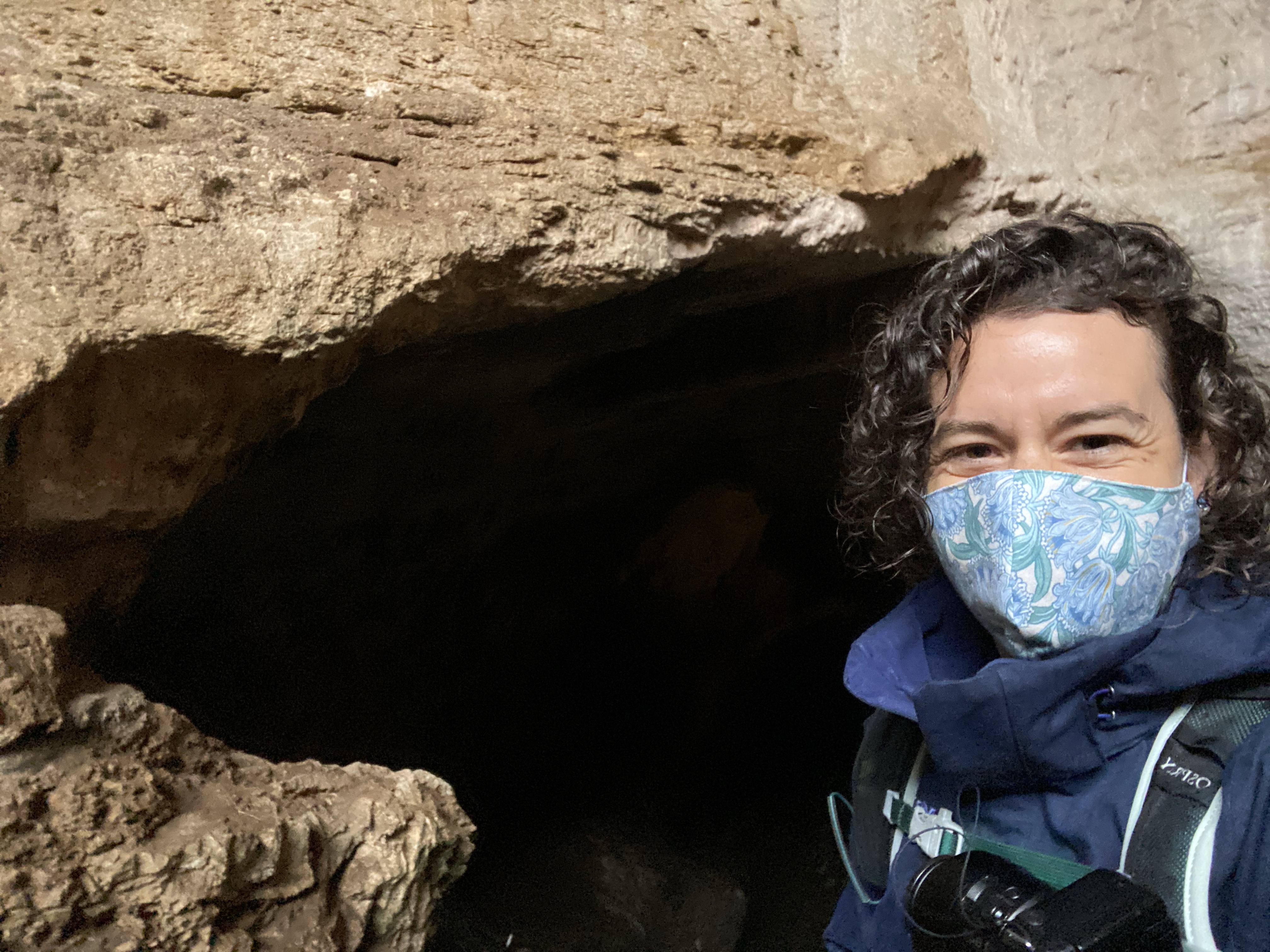
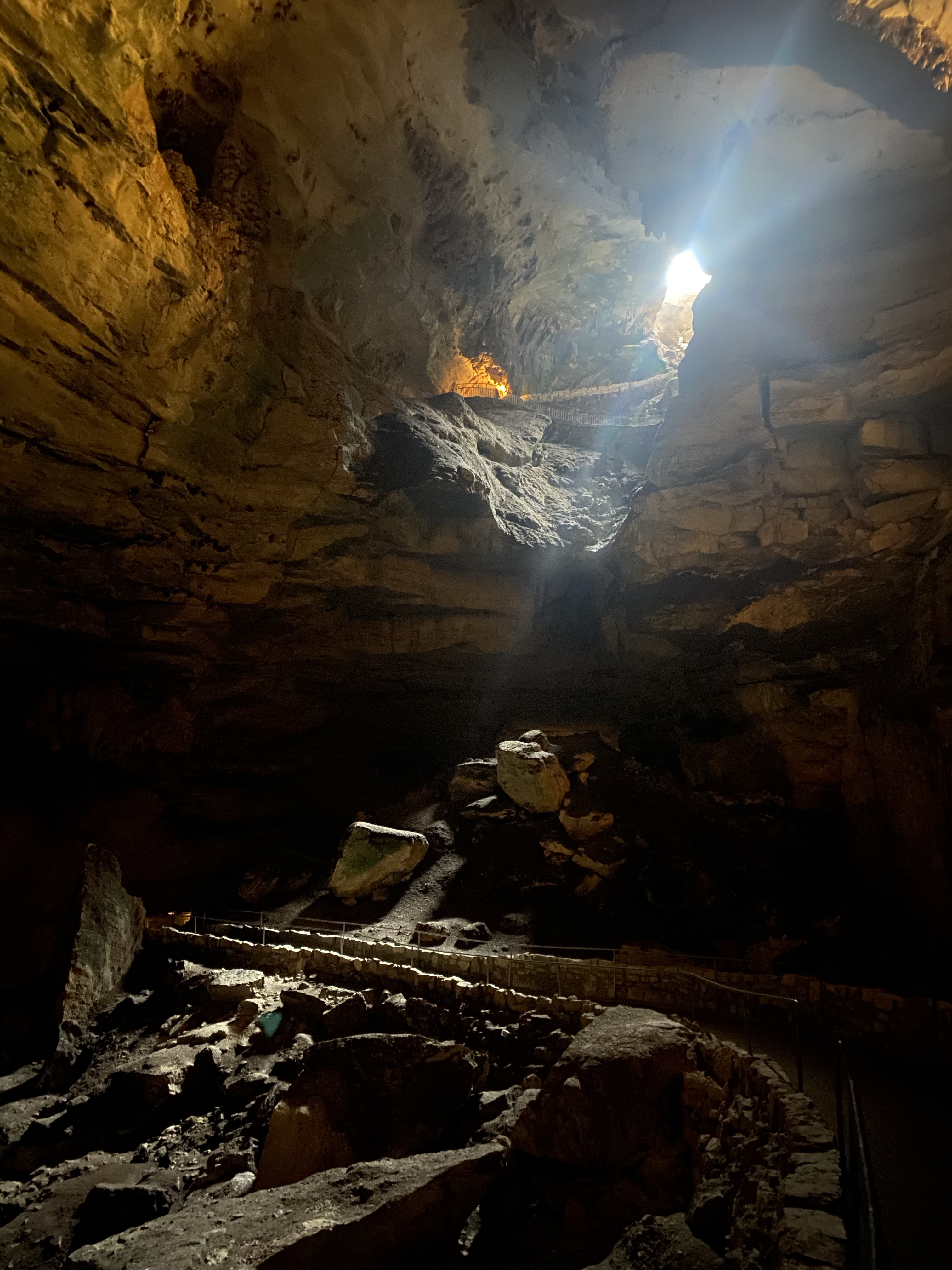
It’s chilly down in the cave, steady around 58 degrees. A welcome break from the scorching heat of the last few days.
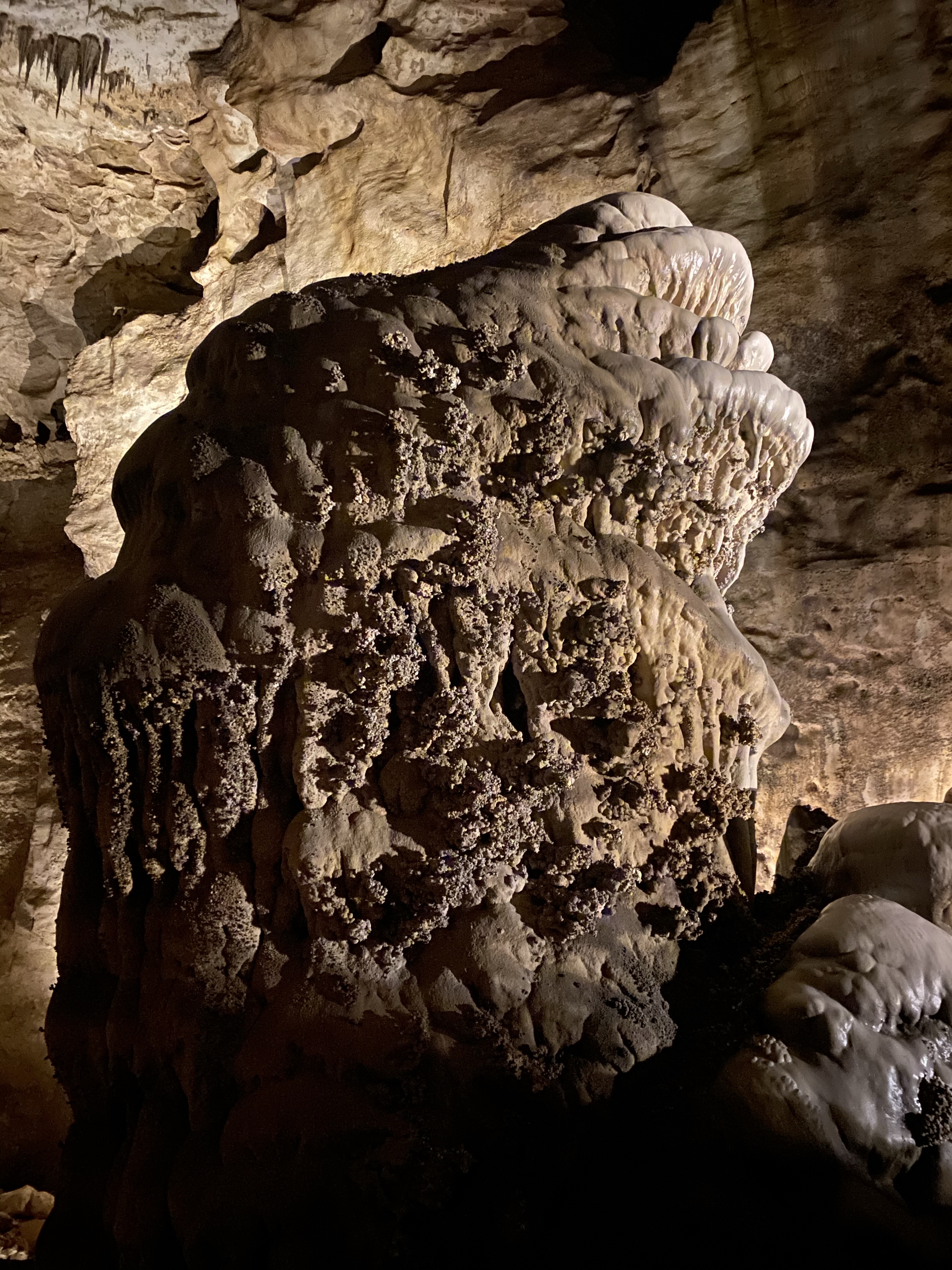
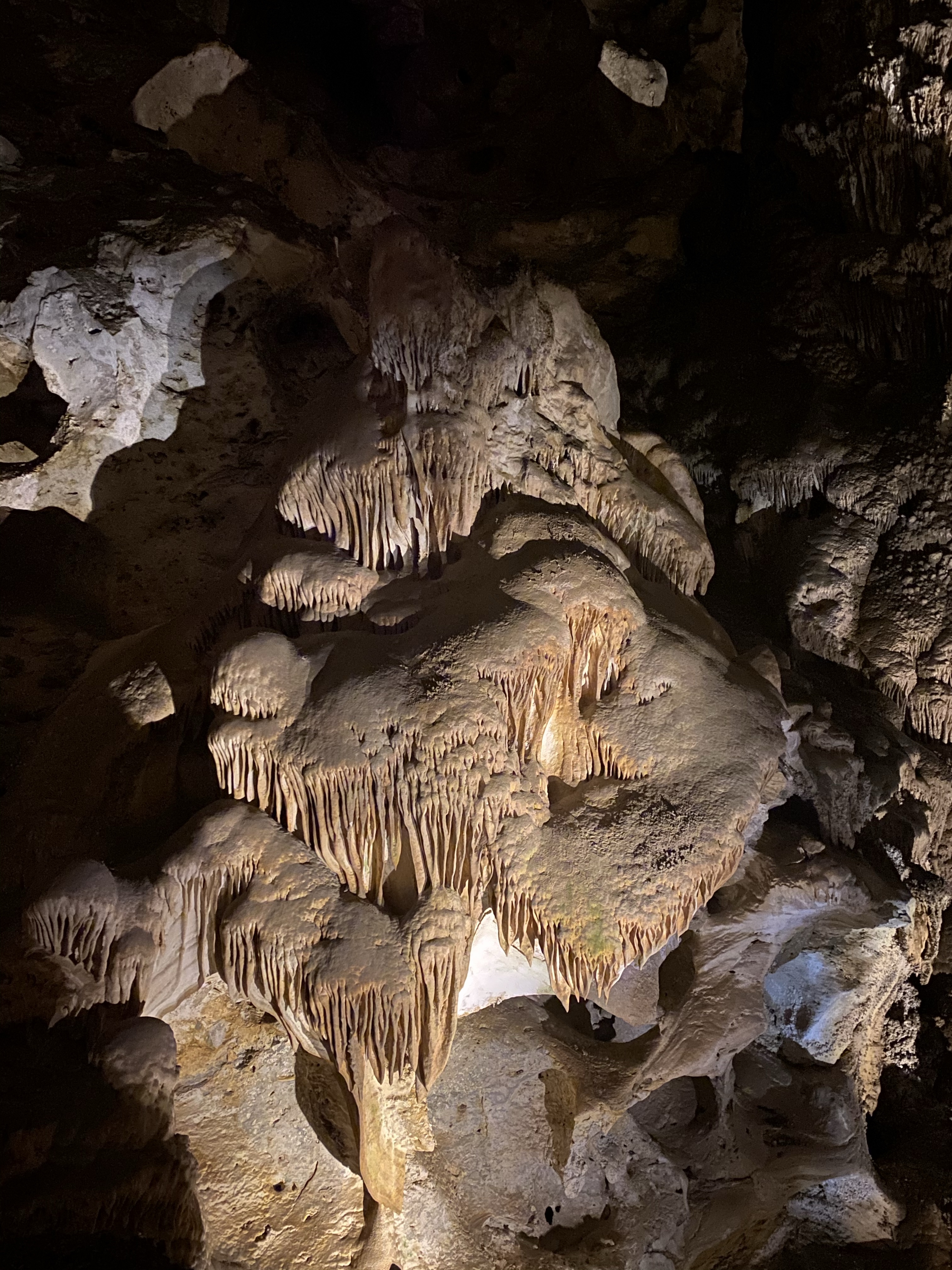
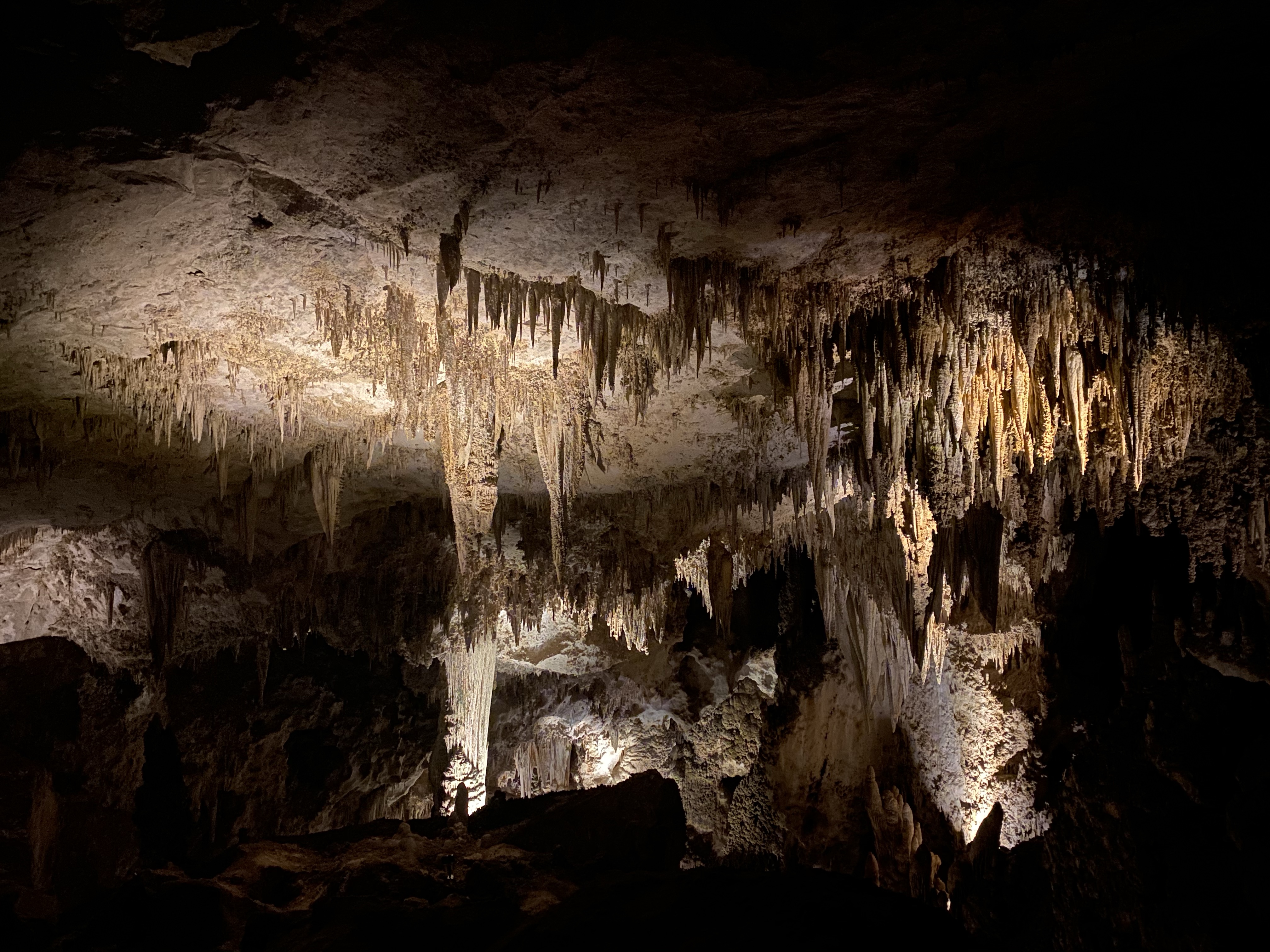
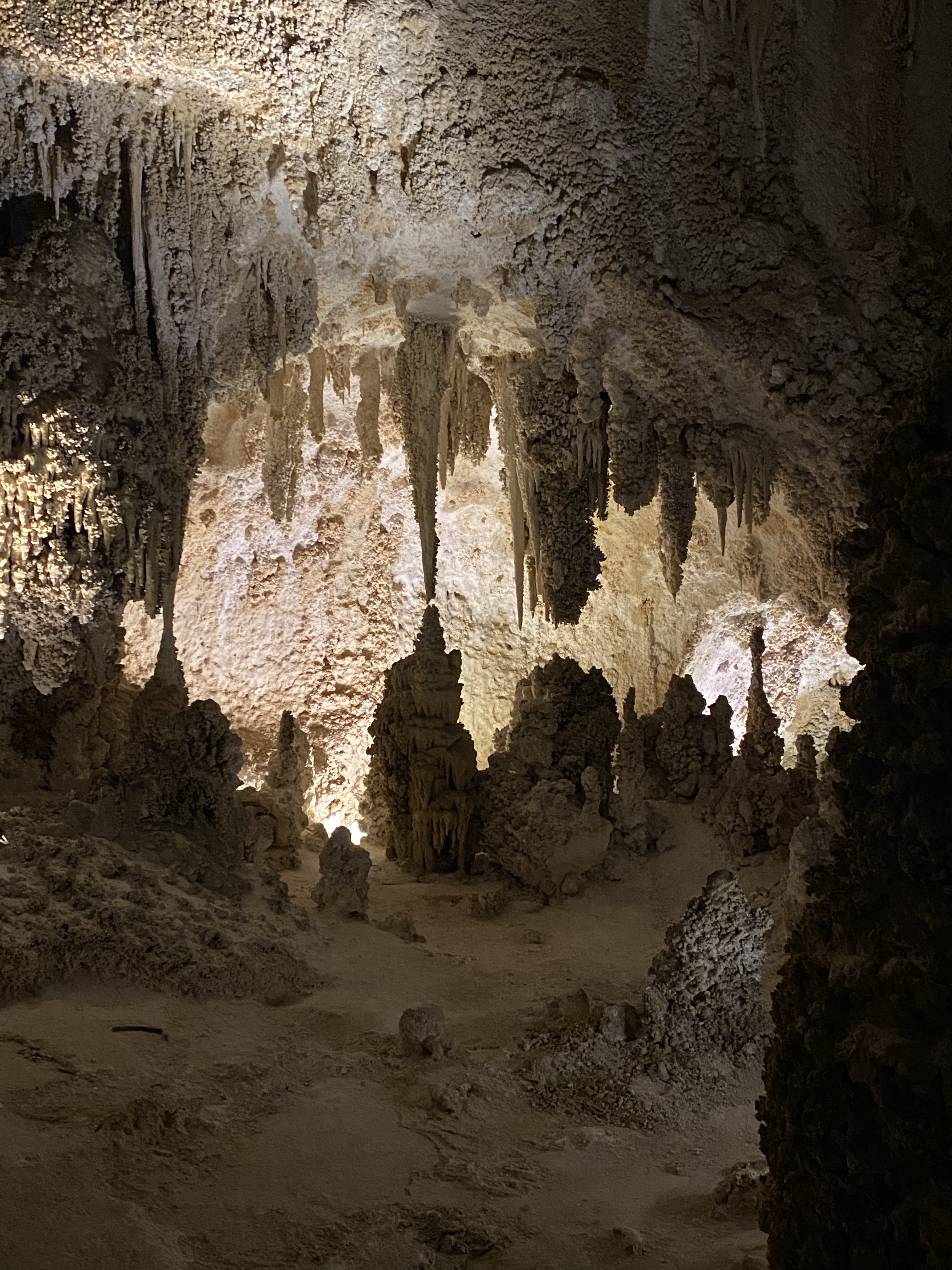
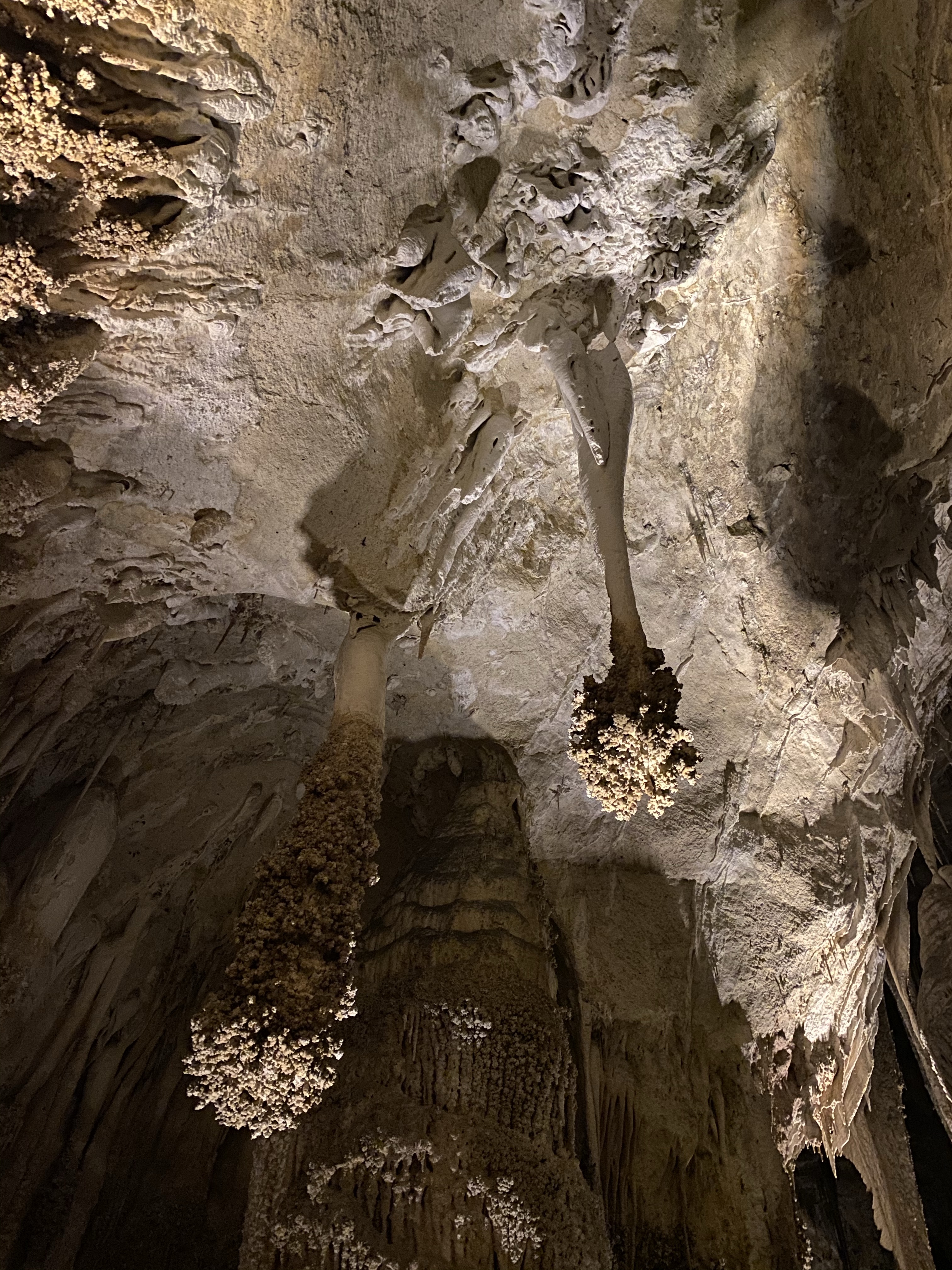
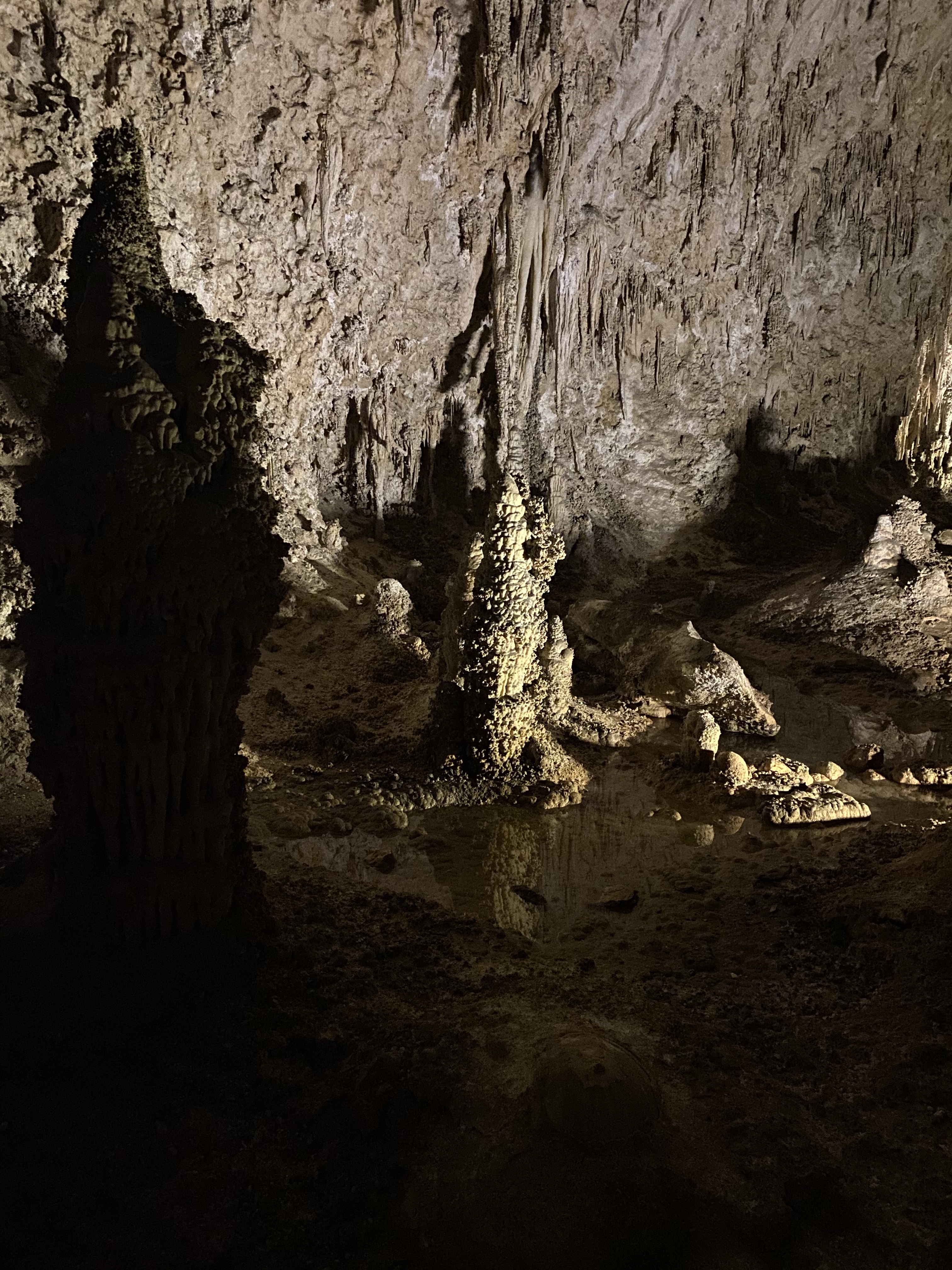
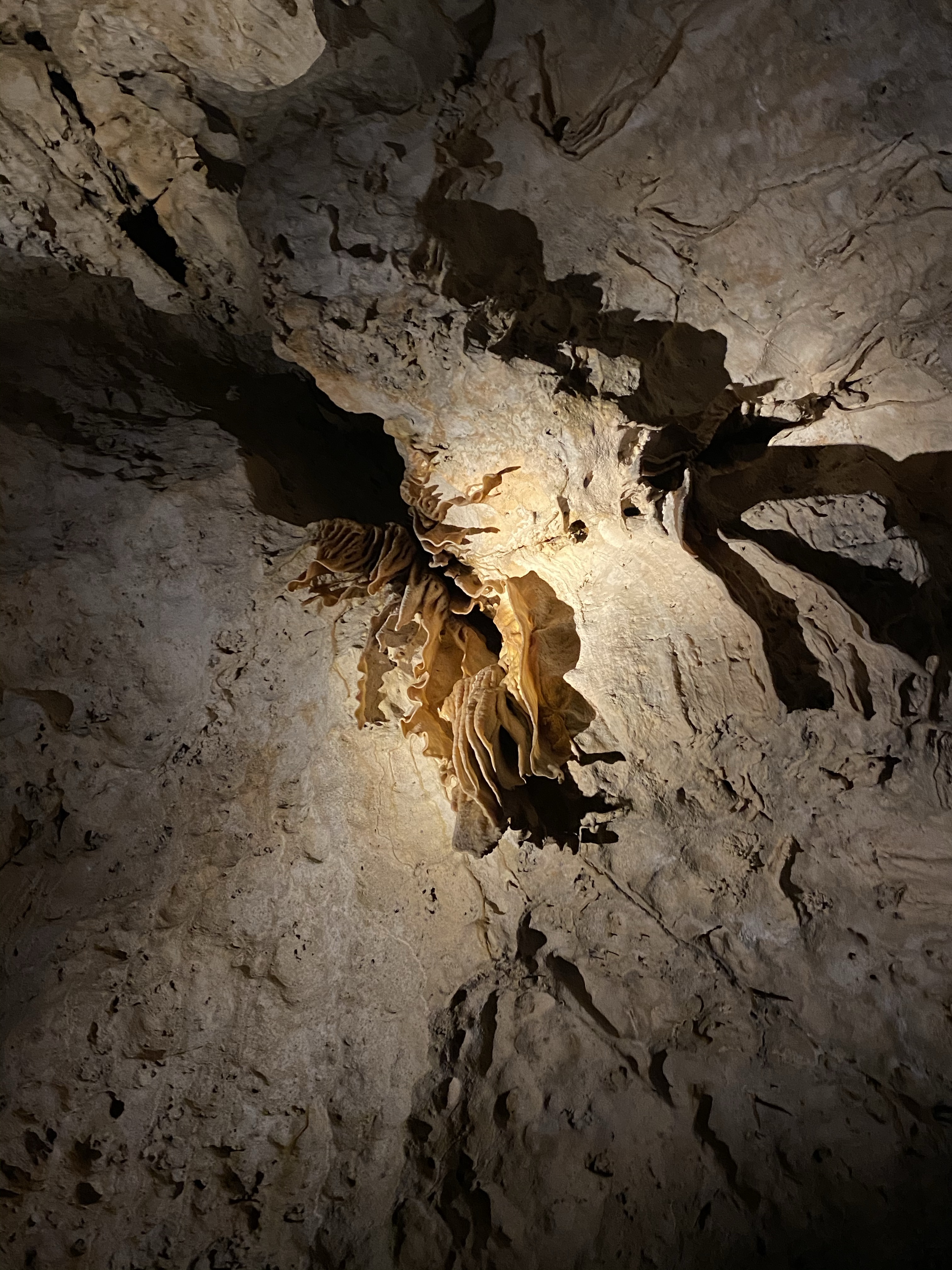
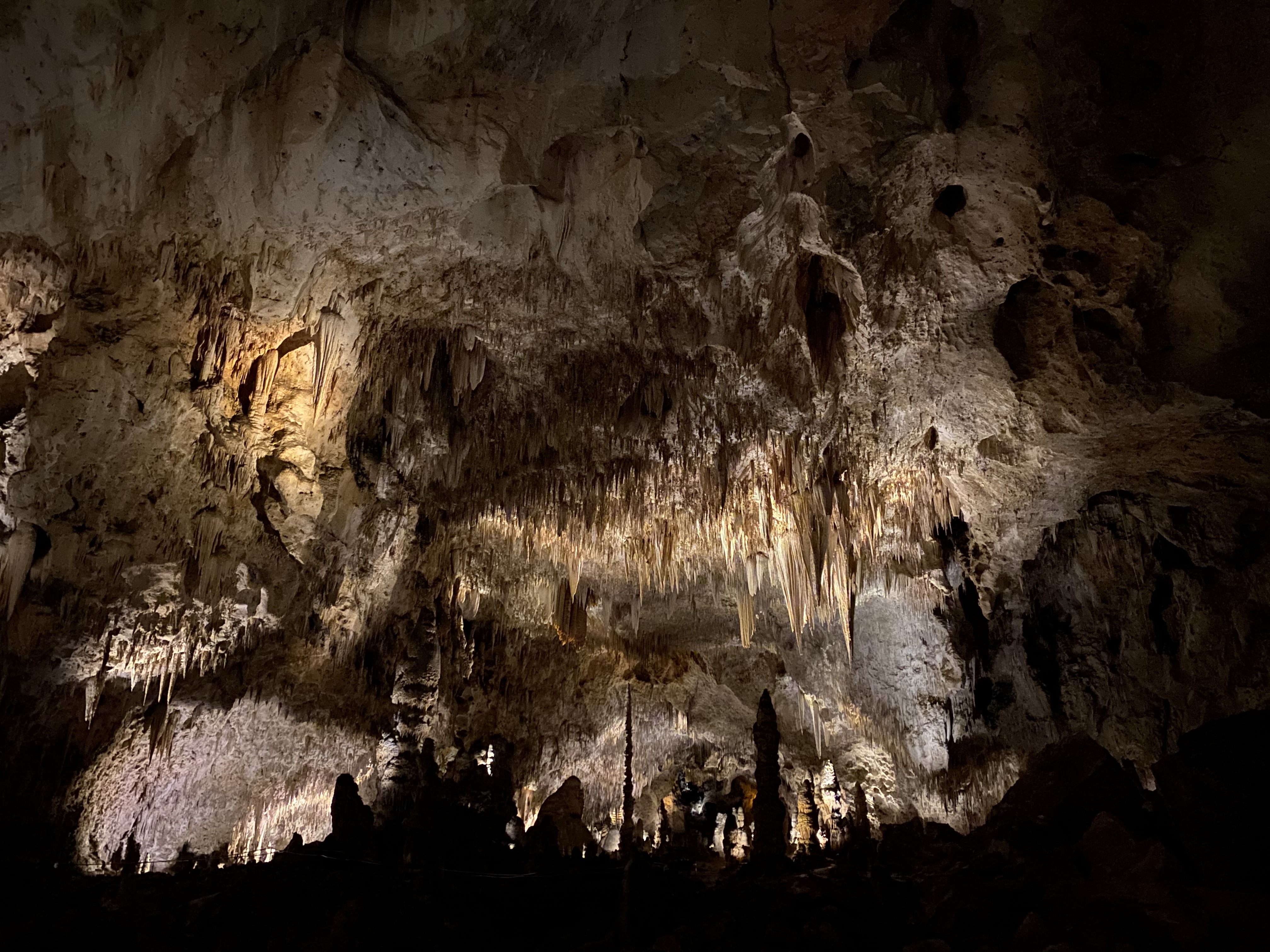
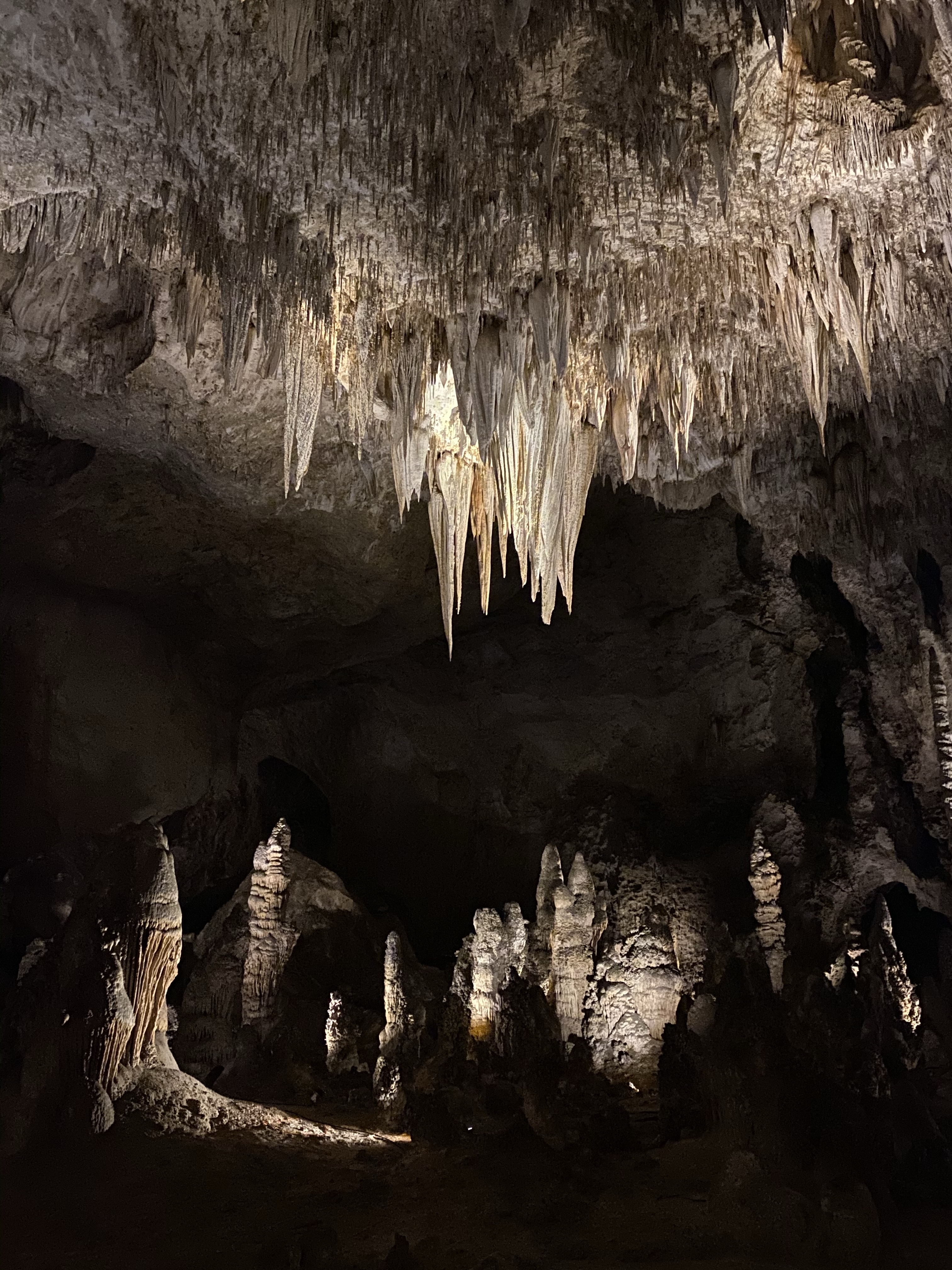
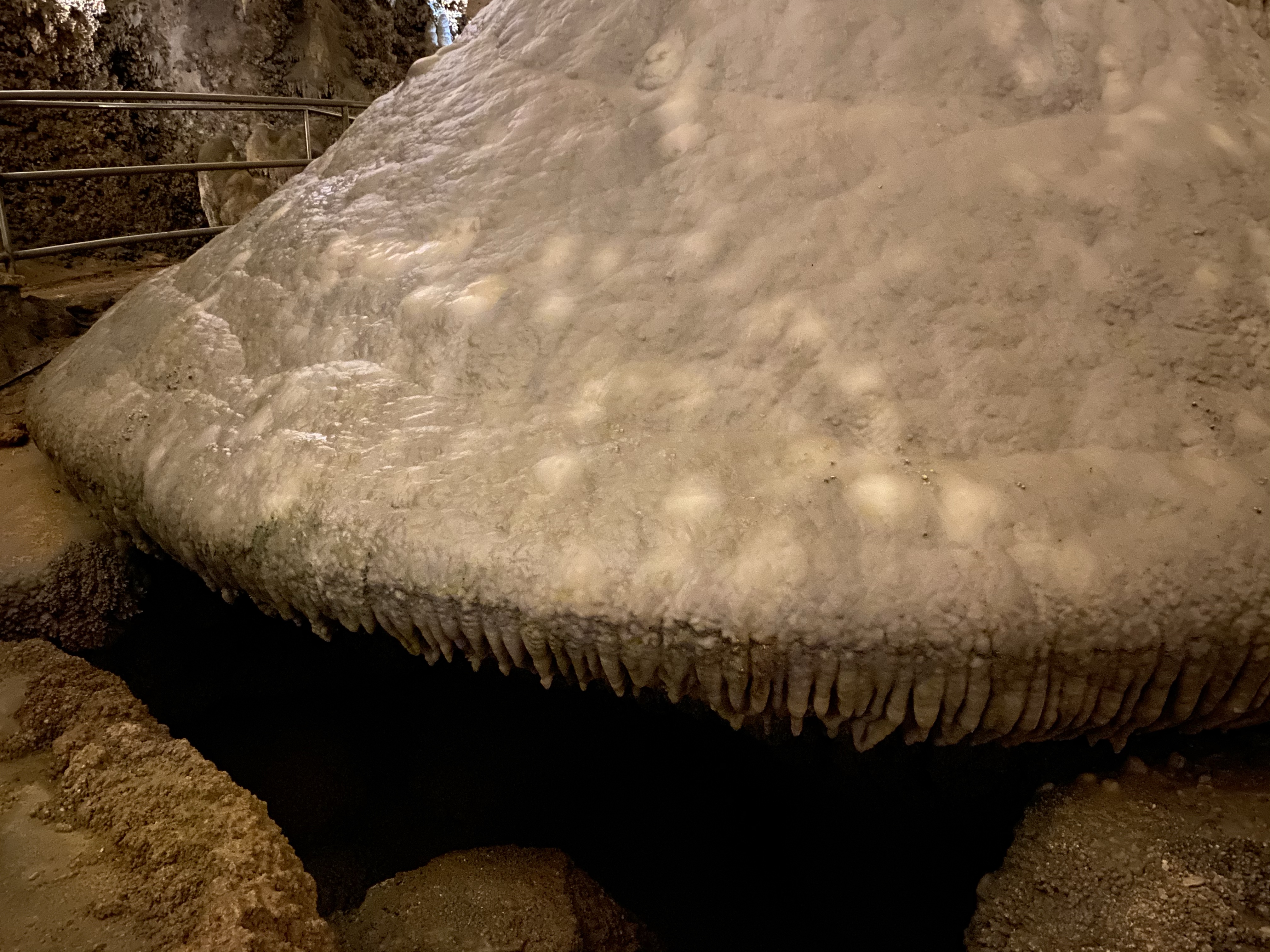
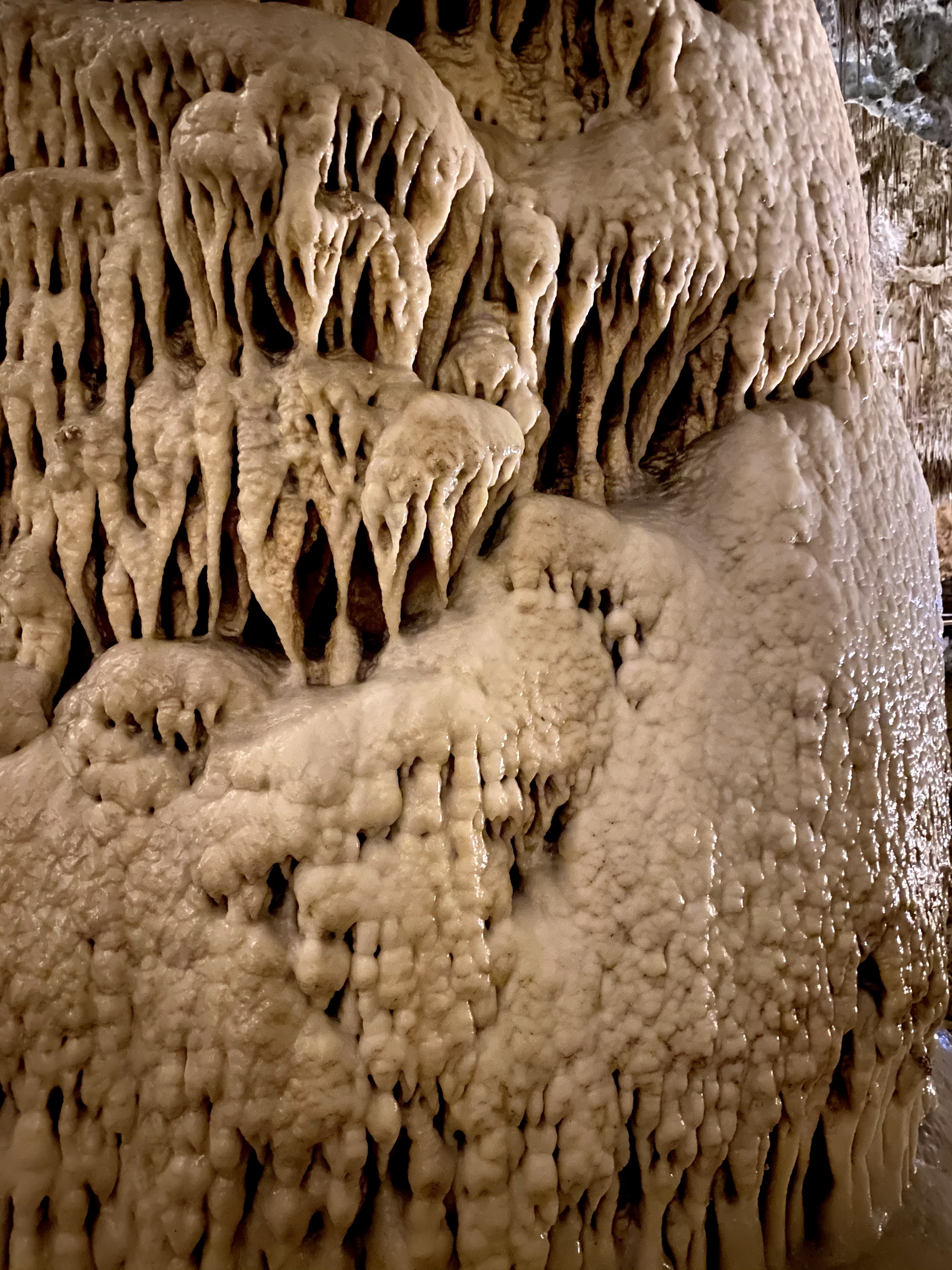
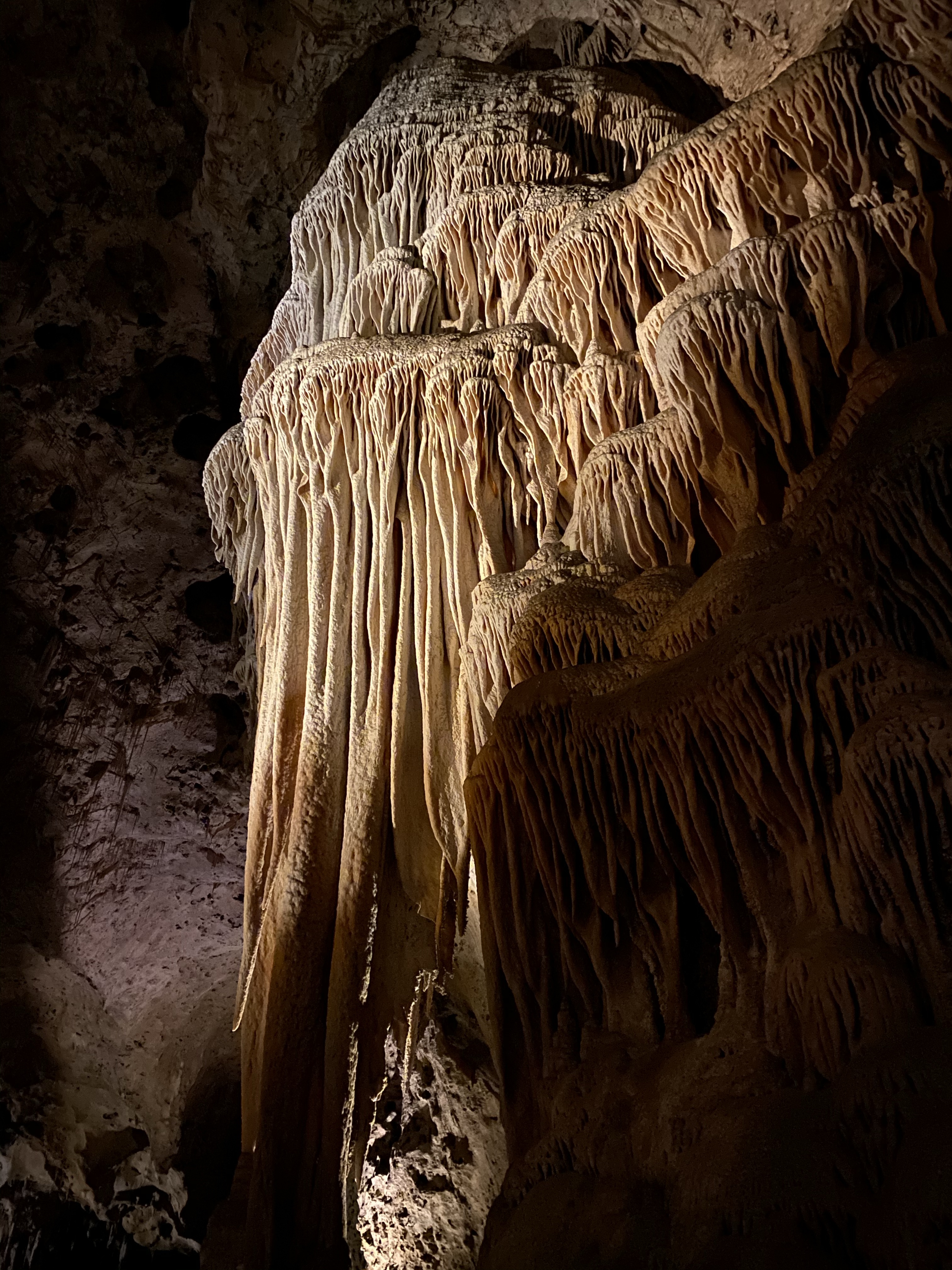
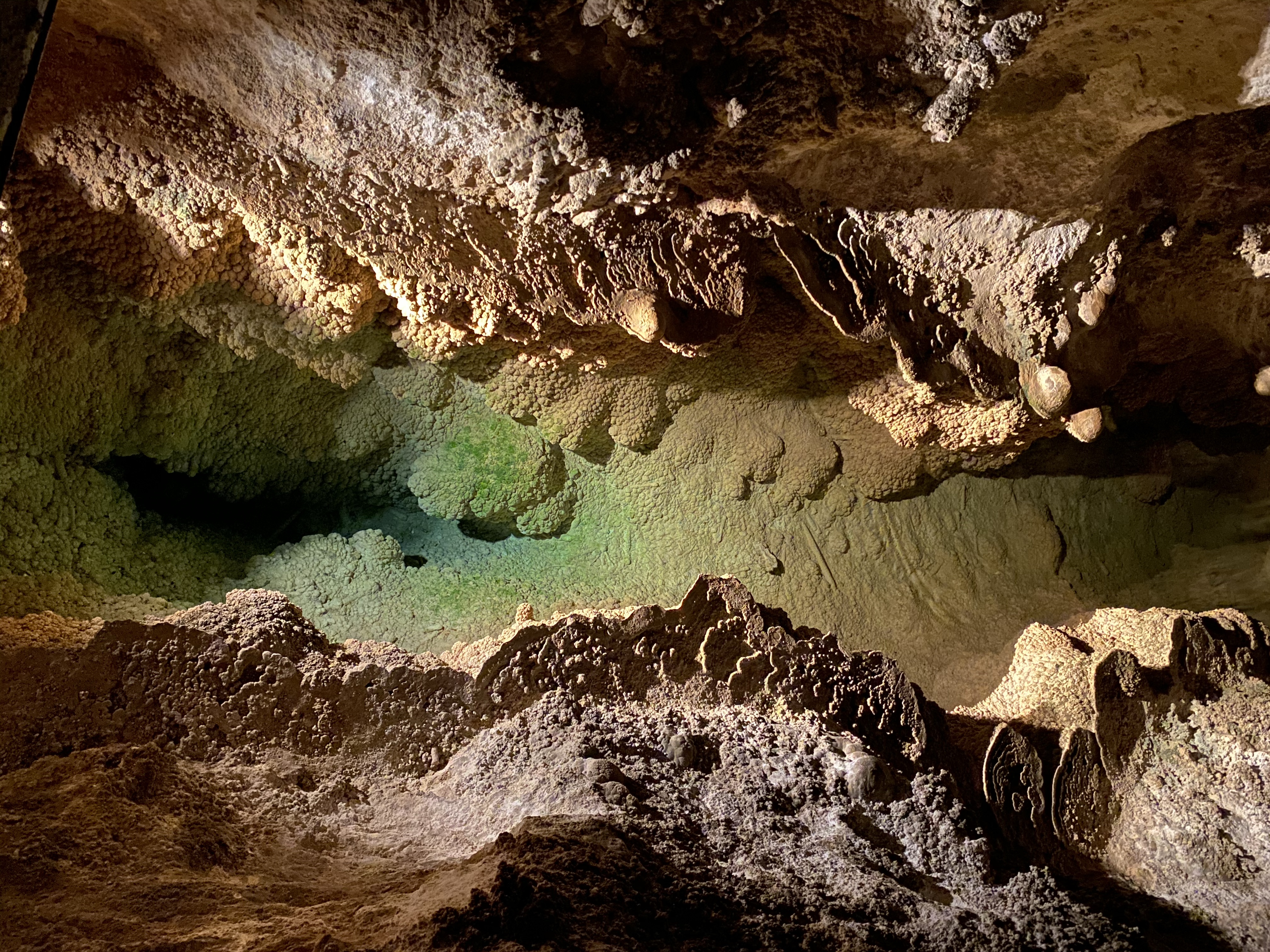
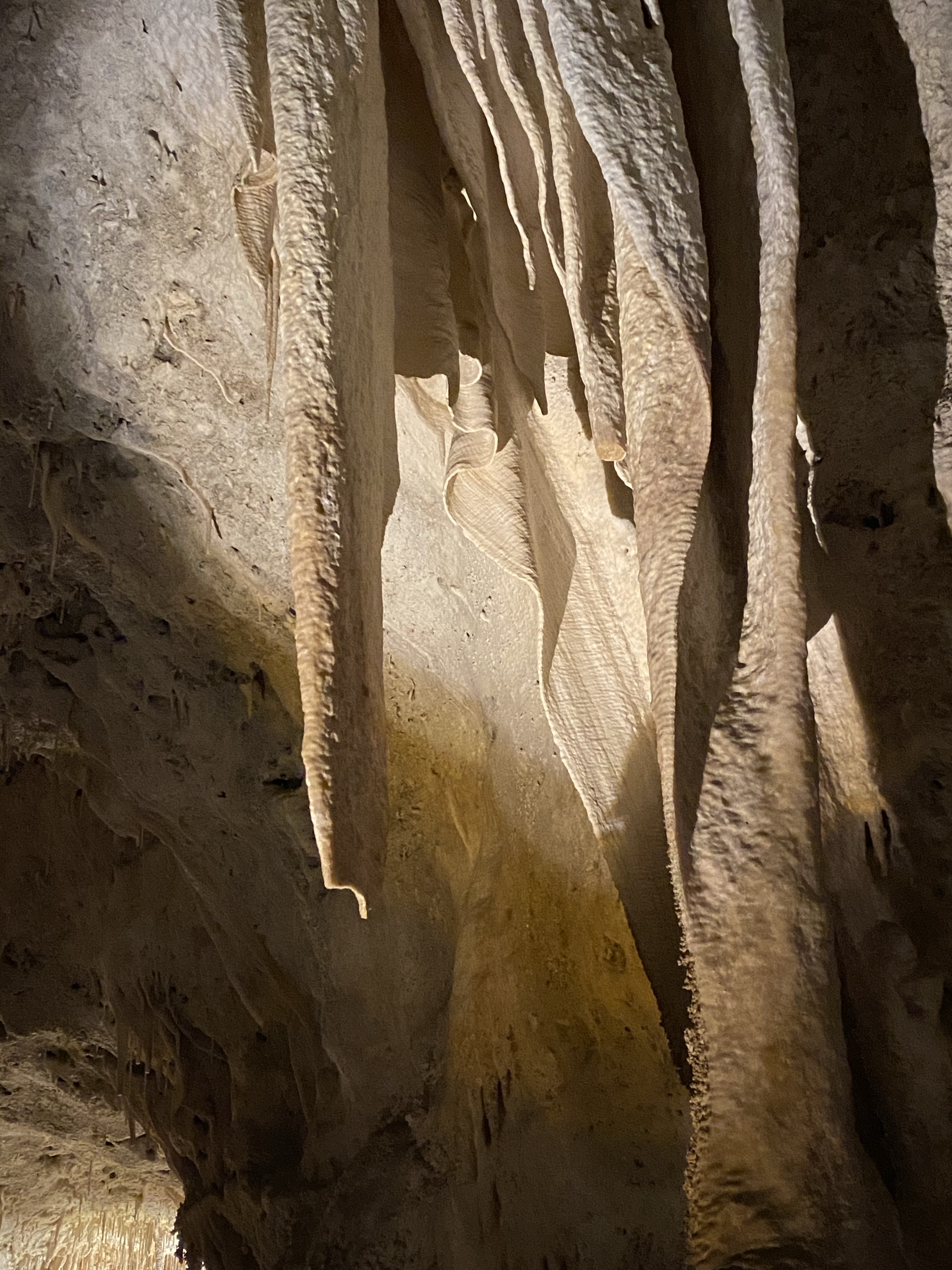
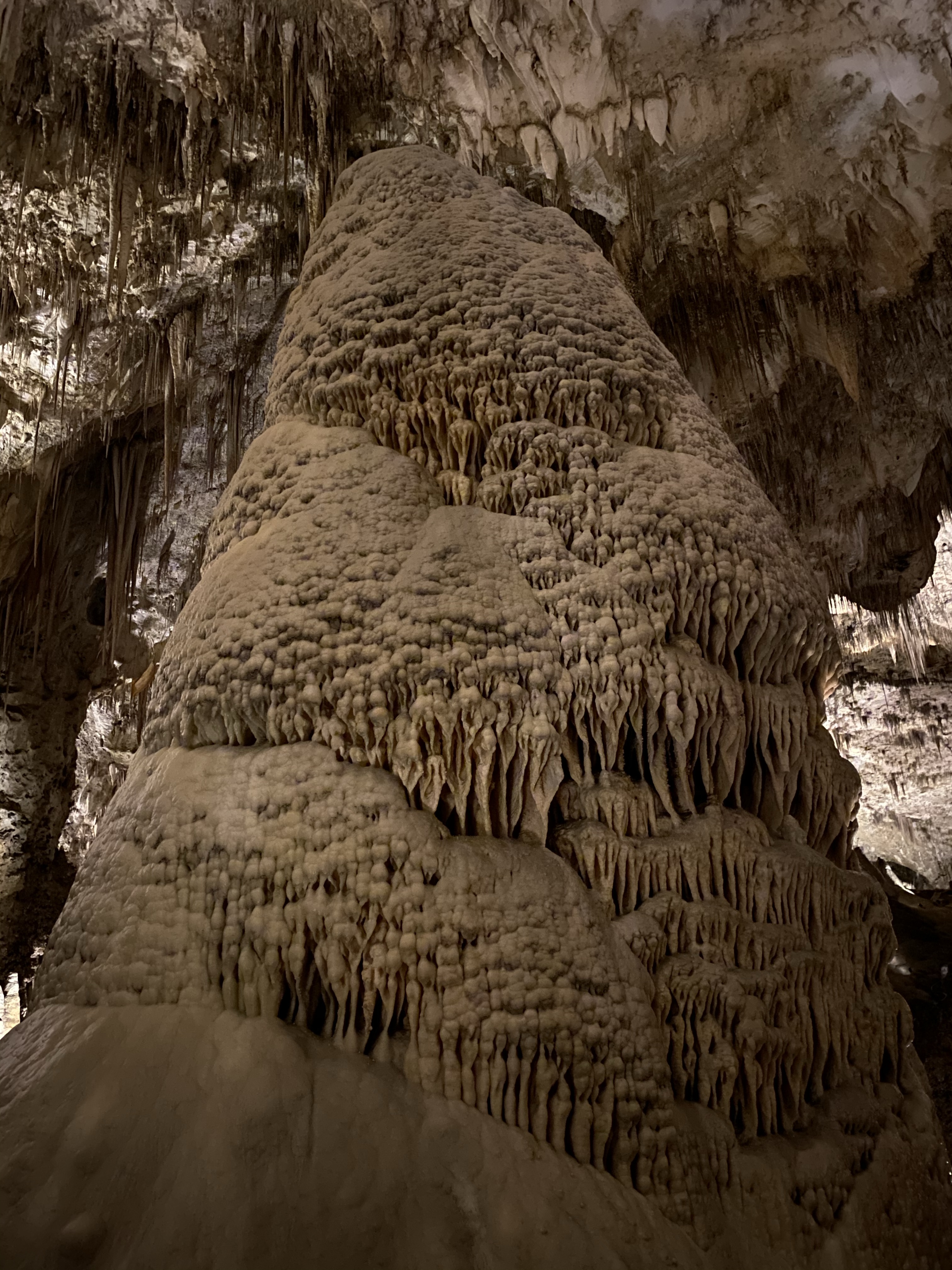
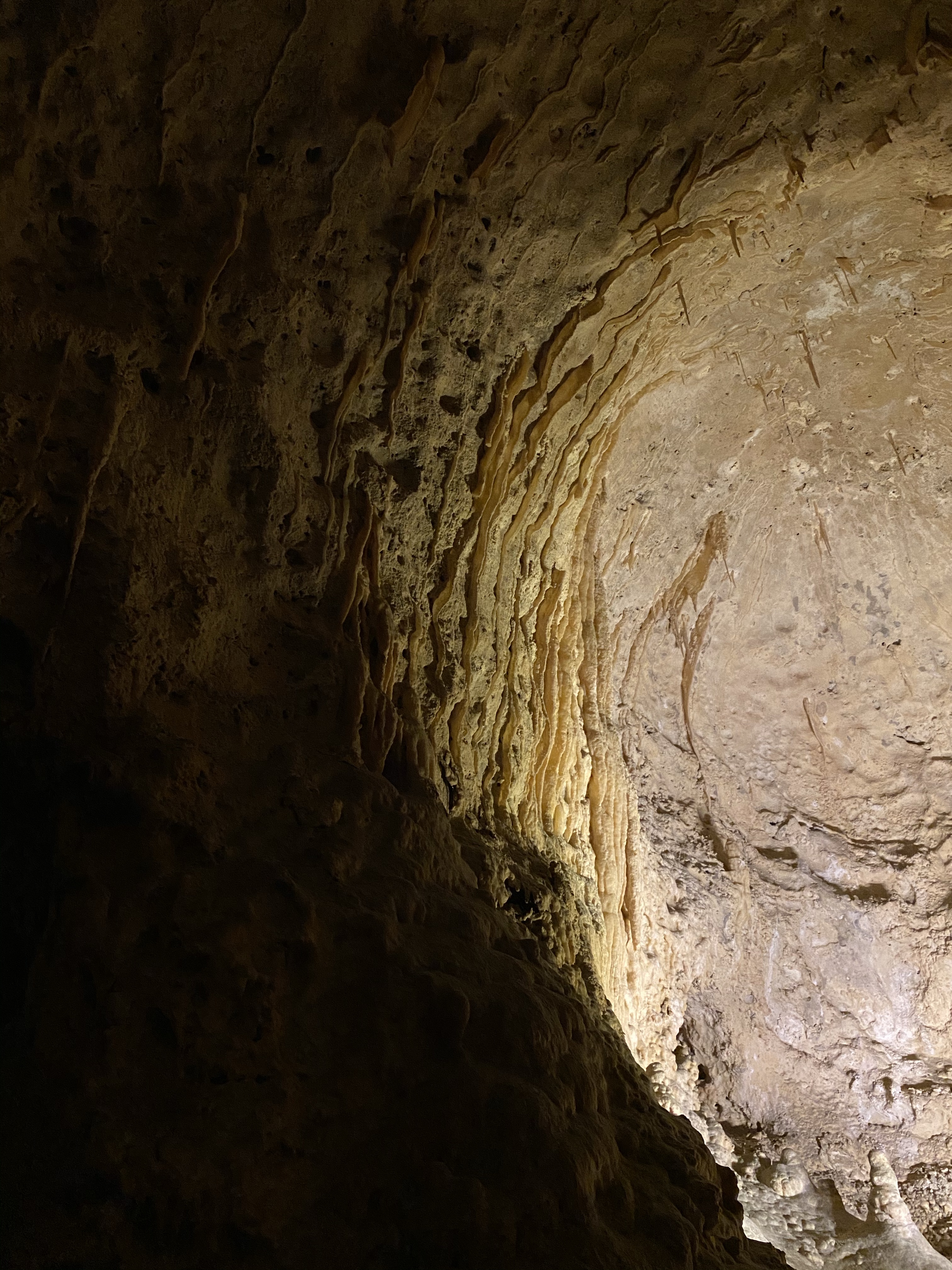
I spent hours wandering around the paths, from room to room, staring up, down and all around. All around strange masterpieces hung from the ceiling, crept along the walls, and sprouted from the floors. Skinny straws, thick columns, flowing ribbons, bumpy popcorn nodules. The cave formed millions of years ago but continues to grow each day, slowly morphing drop by drop as water trickles down from above.
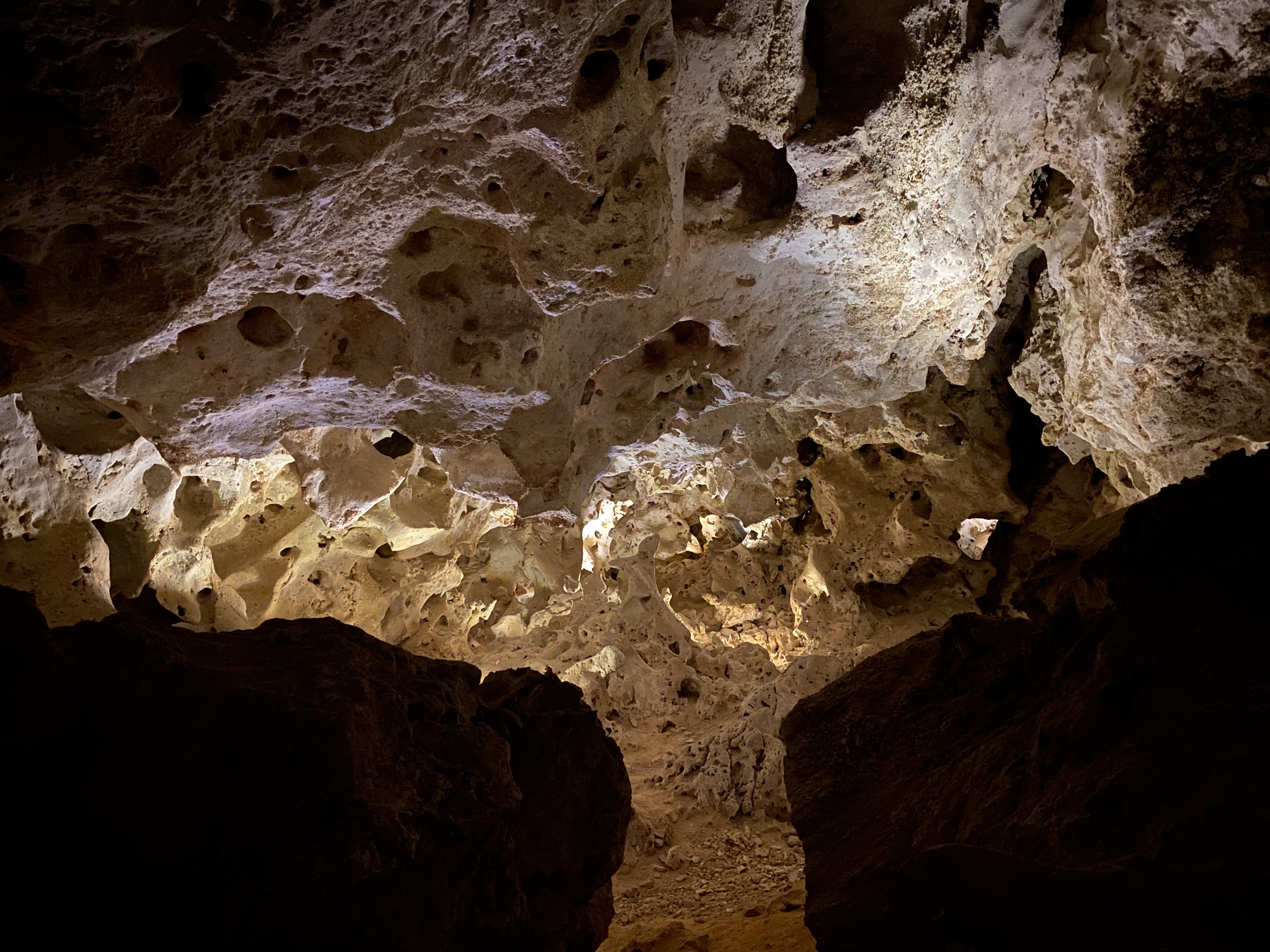
These caves of the Guadalupe Mountains were formed quite mysteriously. Most caverns are formed when limestone is dissolved by carbonic acid. And parts of these caves may have been created that way too. However, here there are huge gypsum deposits, large rooms without rocks scattered, and no streams. Scientists are still learning how these particular parts of the cave formed and believe it could have to do with sulfuric acid, making this place even more magical.
This park is connected to the ancestral heritage of 14 different tribes, including the Mescalero, Lipan Apache, and Chiricahua. Each group has a special tie to the earth in which they honor what brings them life. The indigenous people were removed from their homelands in the recent past and prohibited from visiting until very recently. They are only now beginning to reconnect with the magic of the caverns and land that brings them food, water, and other resources.
As I slowly meandered through the rooms, each formation was more stunning than the next. When thinking of the brave explorers who first stepped into this unknown world, my heart pounds. In 1989, Jim White stumbled upon a hole on his ranch and threw down a lighted branch to see how deep it went. He came back with a ladder fashioned from fence and sticks and headed down! No fear. Later explorers did the same with delicate ladders and no safety gear to explore deeper and deeper. Elizabeth Willis, daughter of an early investigator, was the first female guide leading visitors through in the 1920s. Inspiring.

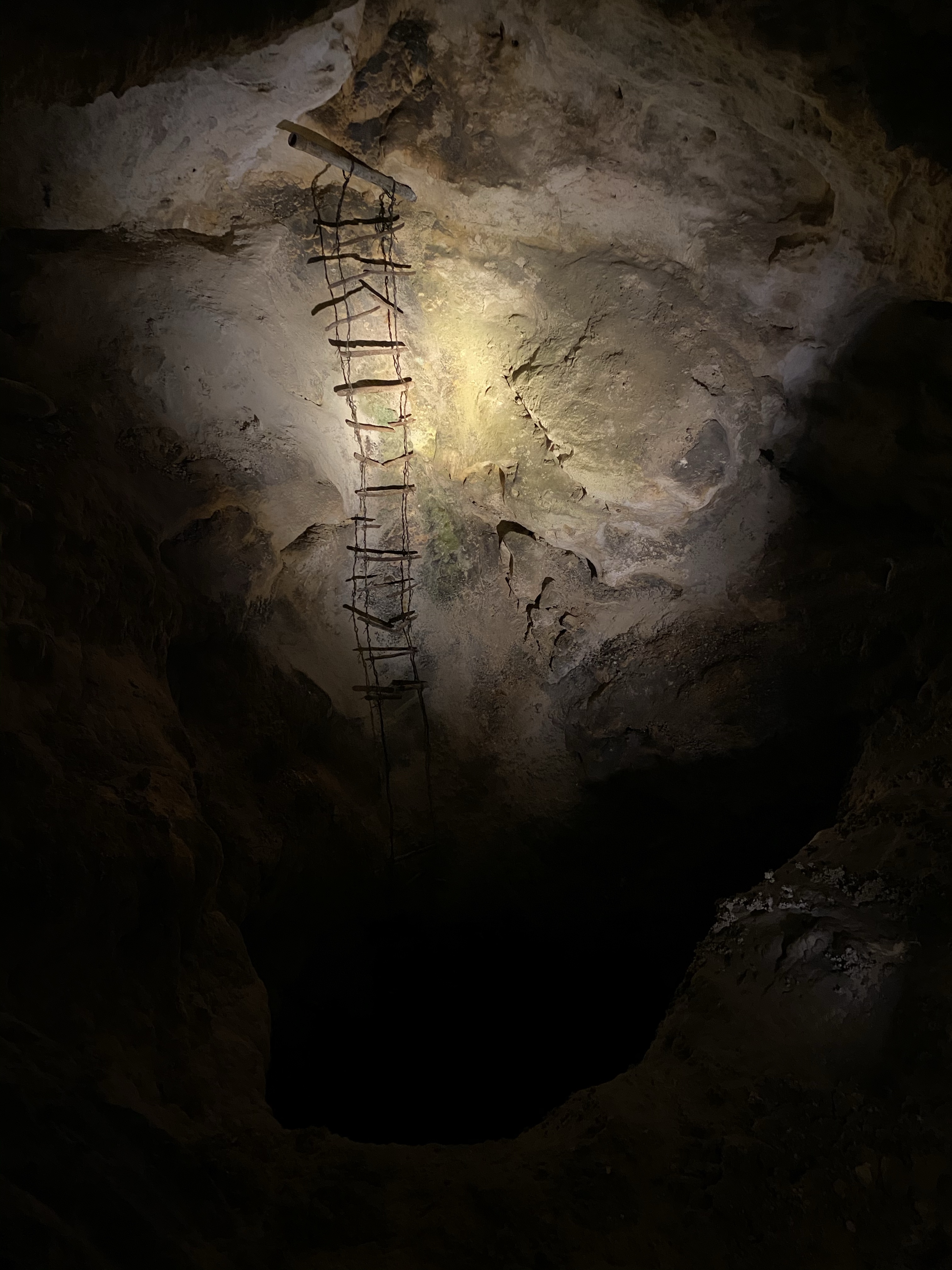
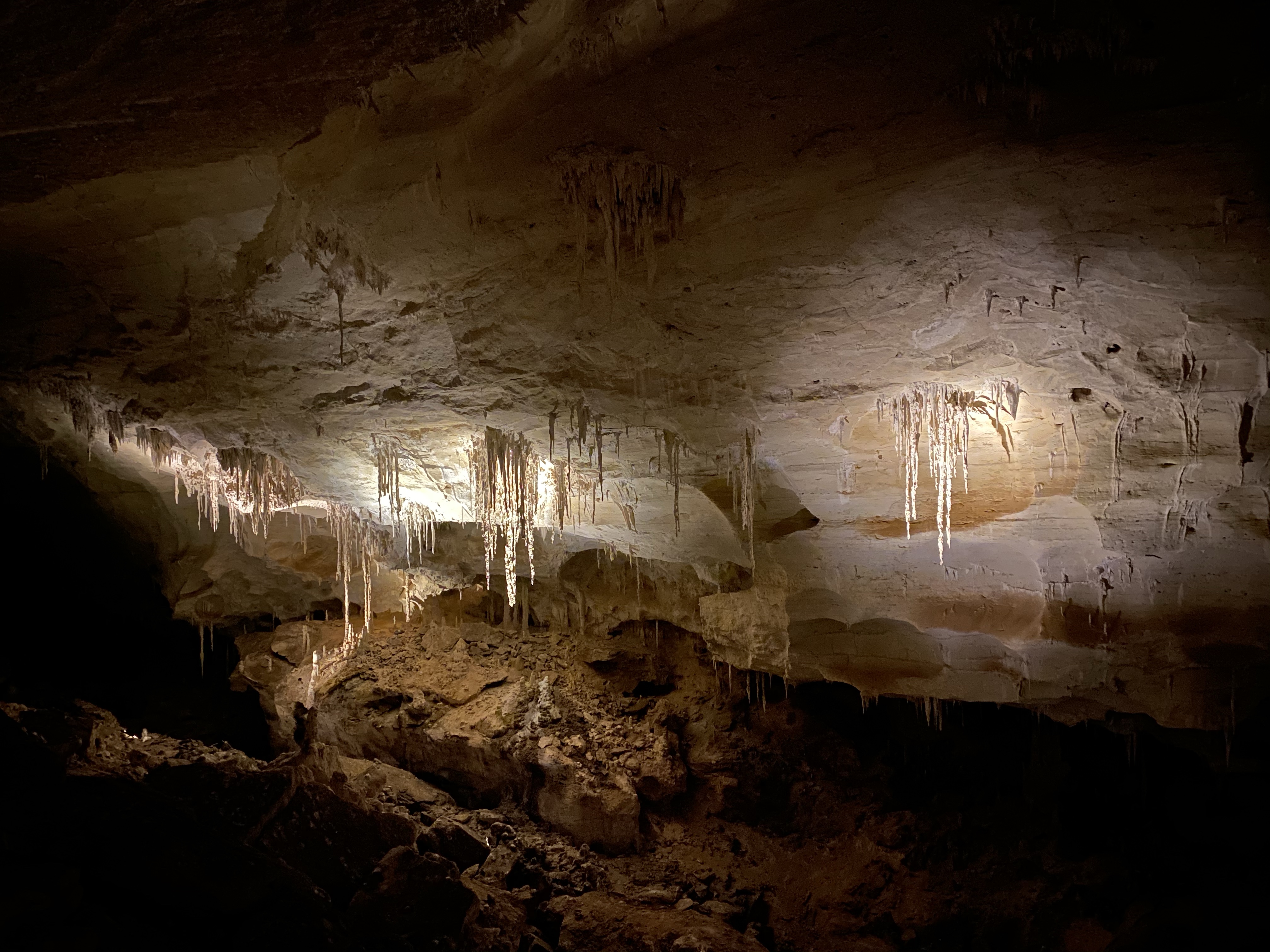
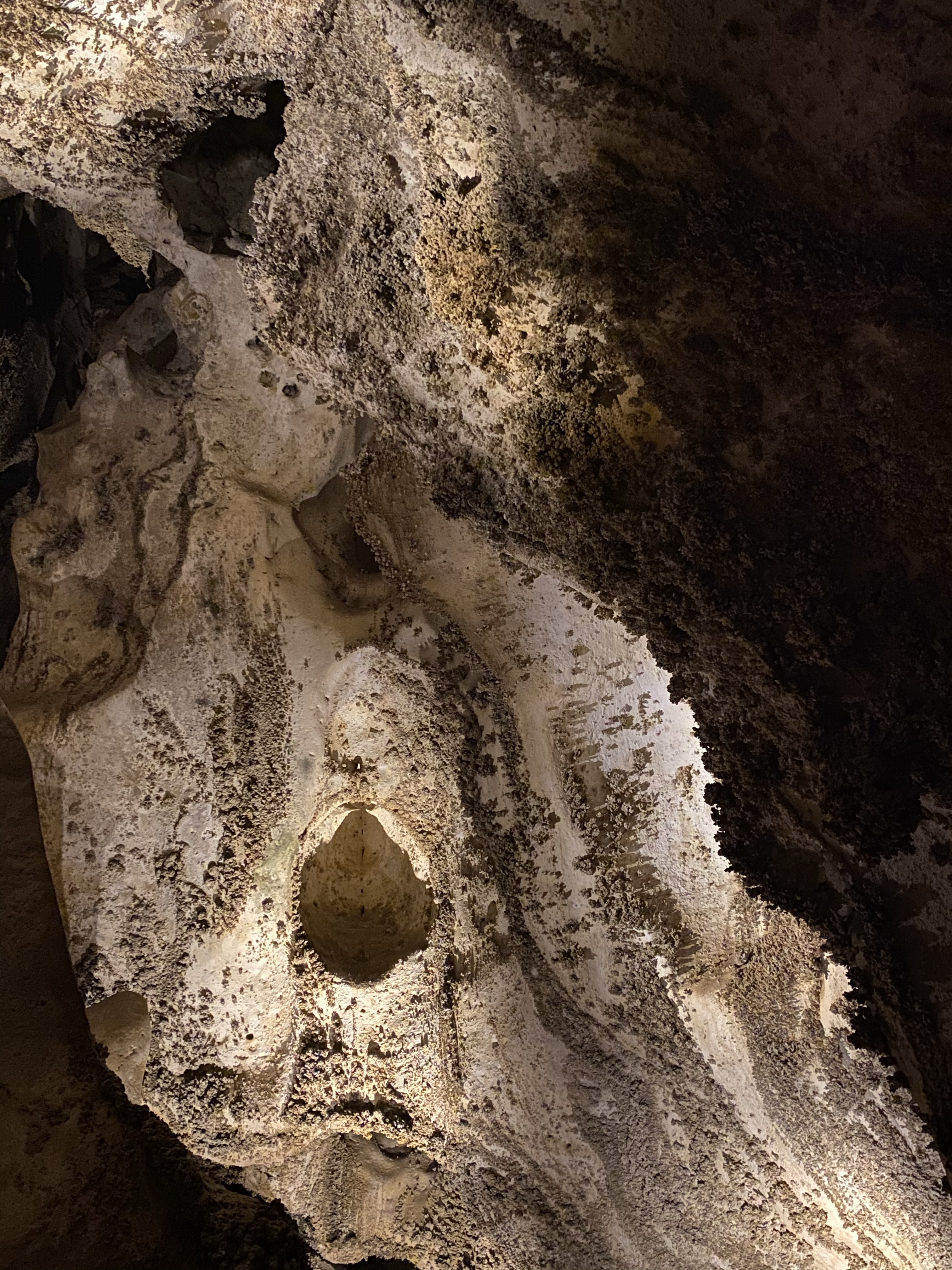
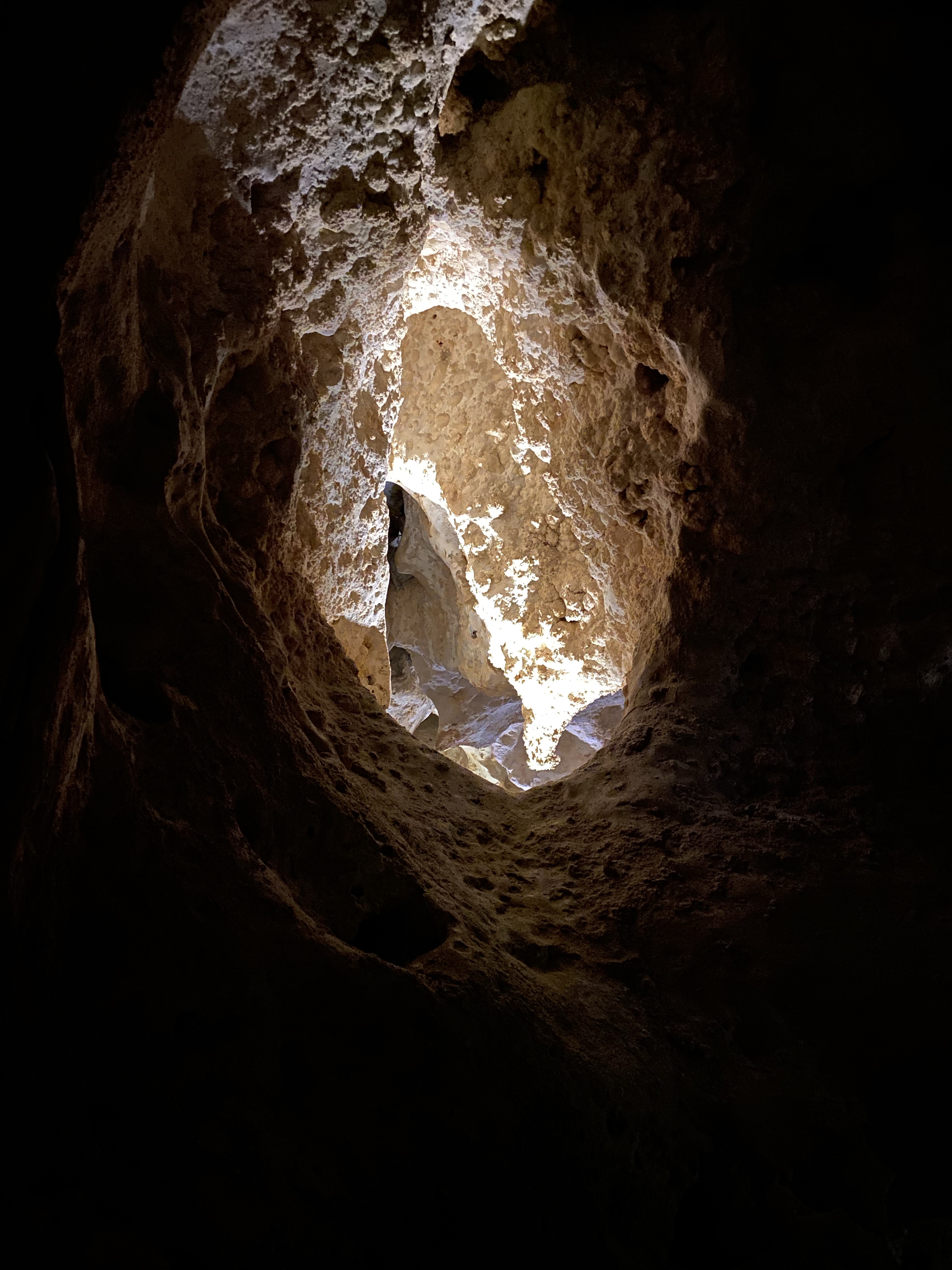
It is difficult to describe what I saw and do it justice, so I will let the pictures speak for themselves. What I saw was only a fraction of the caves, new parts of constantly discovered. Perhaps one of you will be a future cave explorer!

 Tonelli's Travels