My new friend Crystal was on a route that was about to intersect with my travels again, so we made plans to caravan for a while. I should have know we’d be great, long term friends (and really, I did), when I agreed to watch her dog Max after knowing her for five seconds. Life brings people together when they need each other. Crystal and I were excited to reconnect after nearly a month apart. I can’t believe it’s been that long!
So as I left Great Basin, I headed southeast towards Cedar Breaks National Monument, entering another new state for this trip, Utah! While I didn’t have far to go, there was much to do. First the typical chores – gas, dump and fill tanks, groceries. Then, a few fun stops that I stumbled upon while investigating my road atlas. Yay for maps!
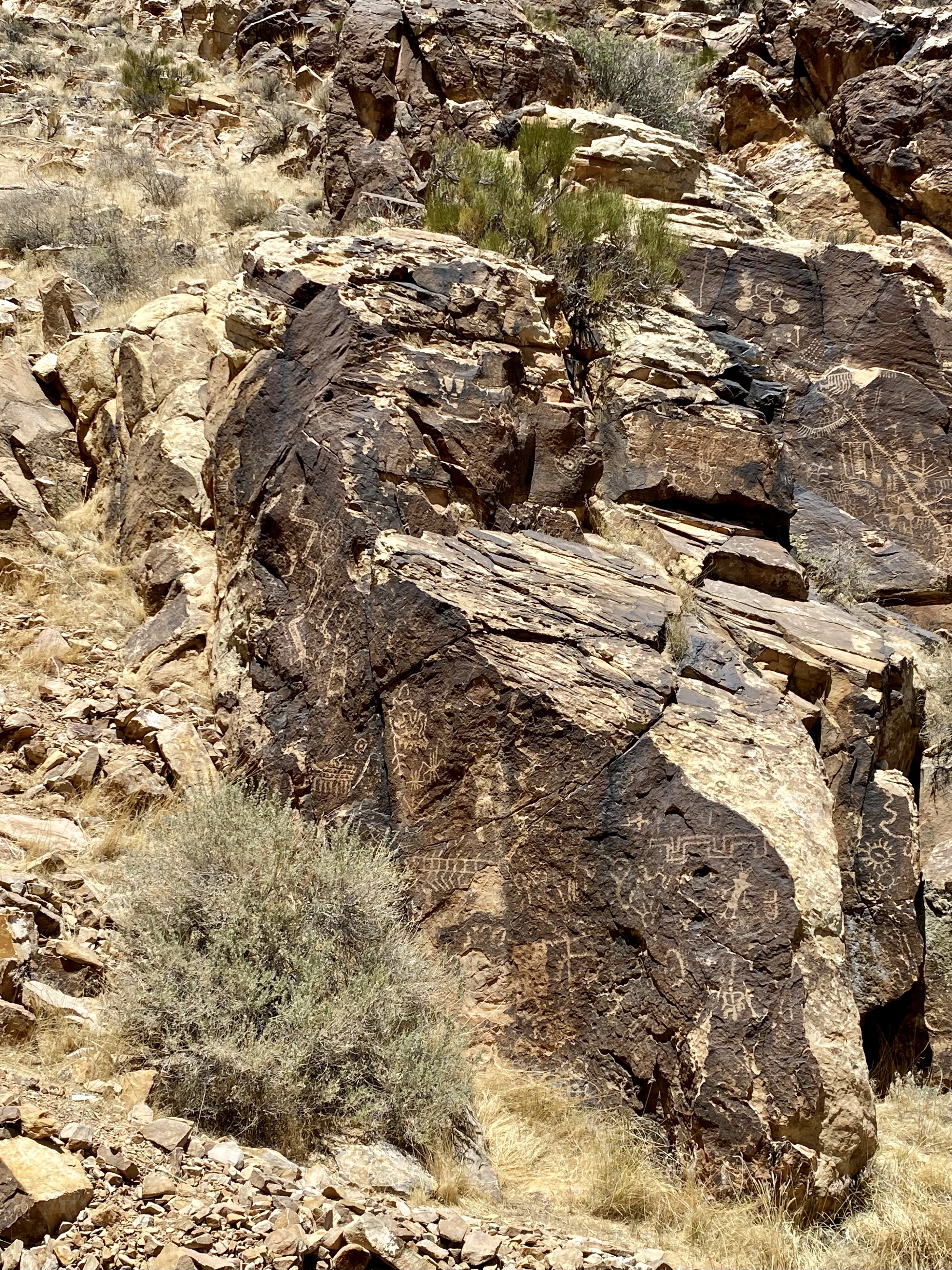
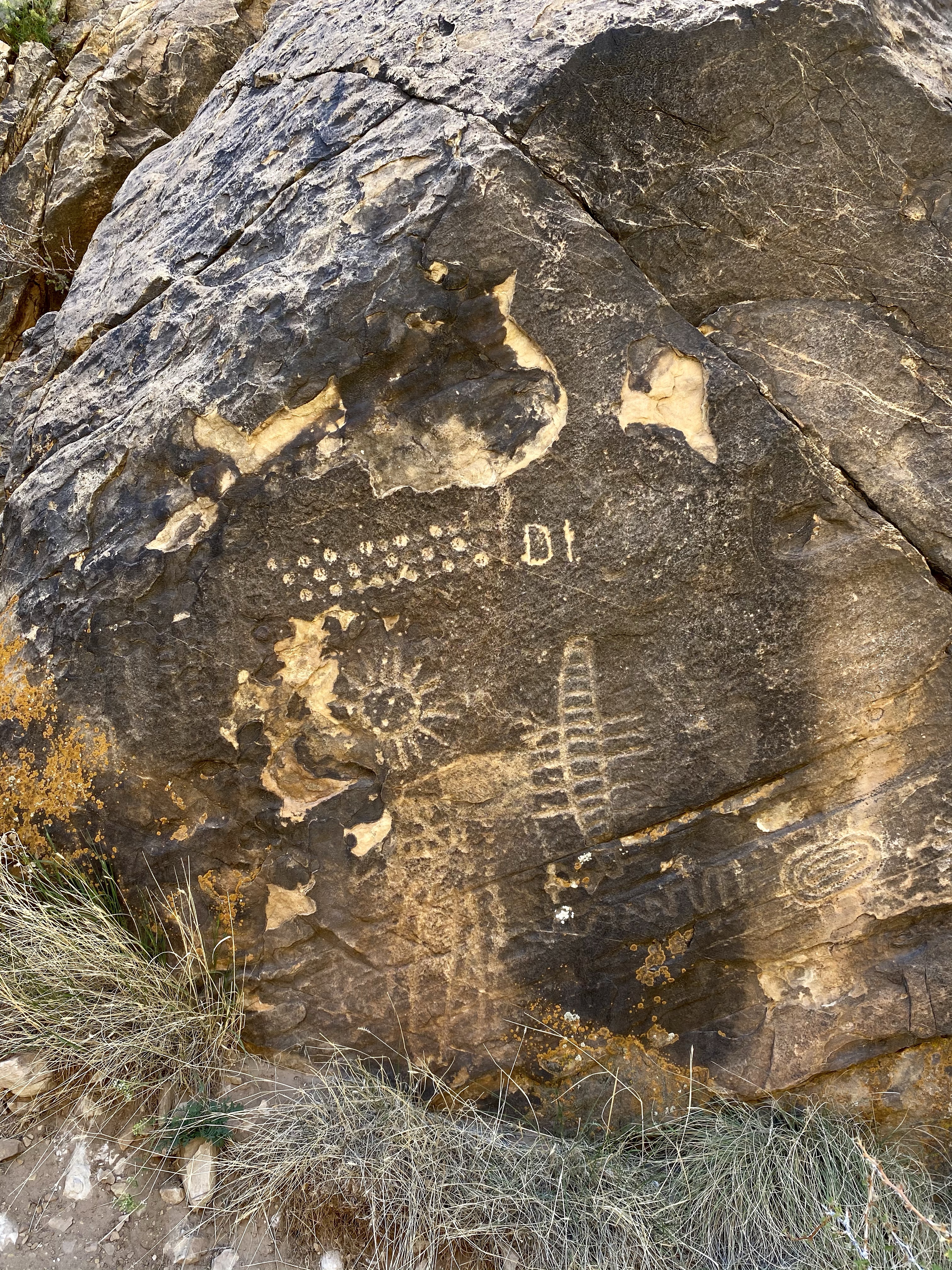
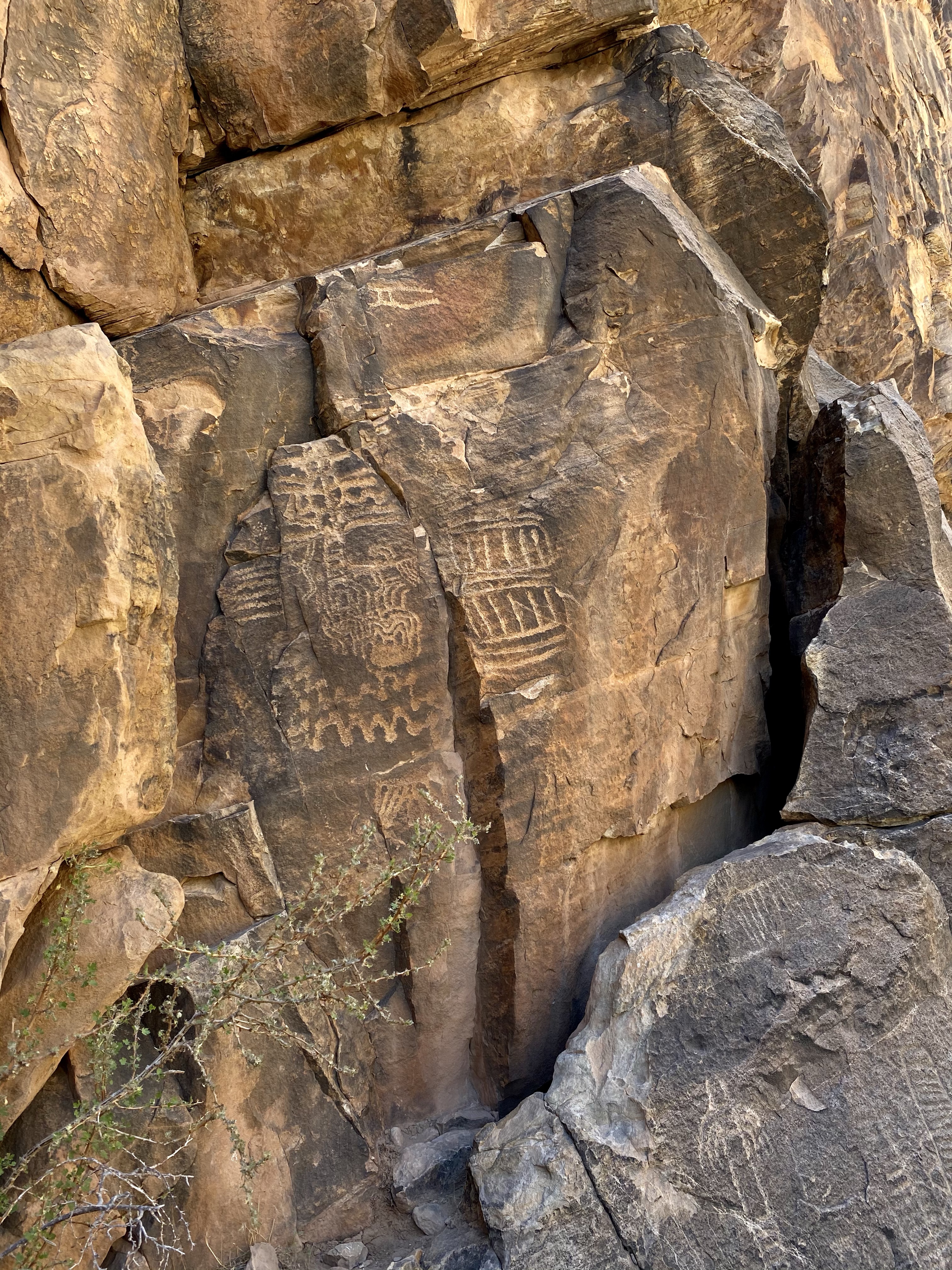
Parowan Gap Petroglyphs was my first pit stop. While only place on the national register of historic places in 1969, this sacred site has existed for thousands of years. The stories depicted on the rock are the histories of the prehistoric Fremont and Southern Paiute tribes, and with possible additional contribution from other indigenous cultures. Collaboration with the current local tribes has helped reveal possible interpretations of the petroglyphs, but their true meaning may never be known. Religion, hunting and gathering, family history, farming, and travel are among the believed story themes.
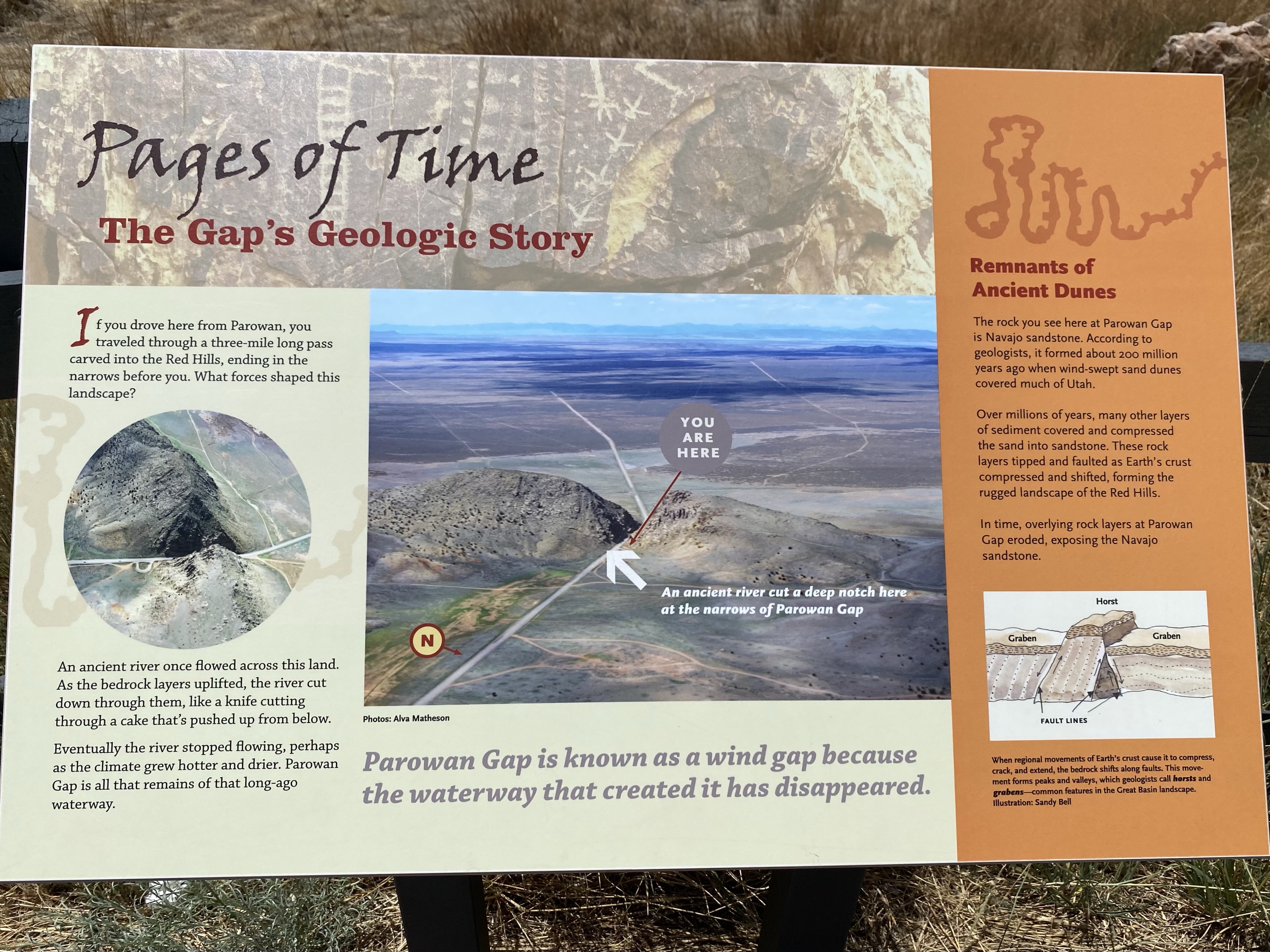
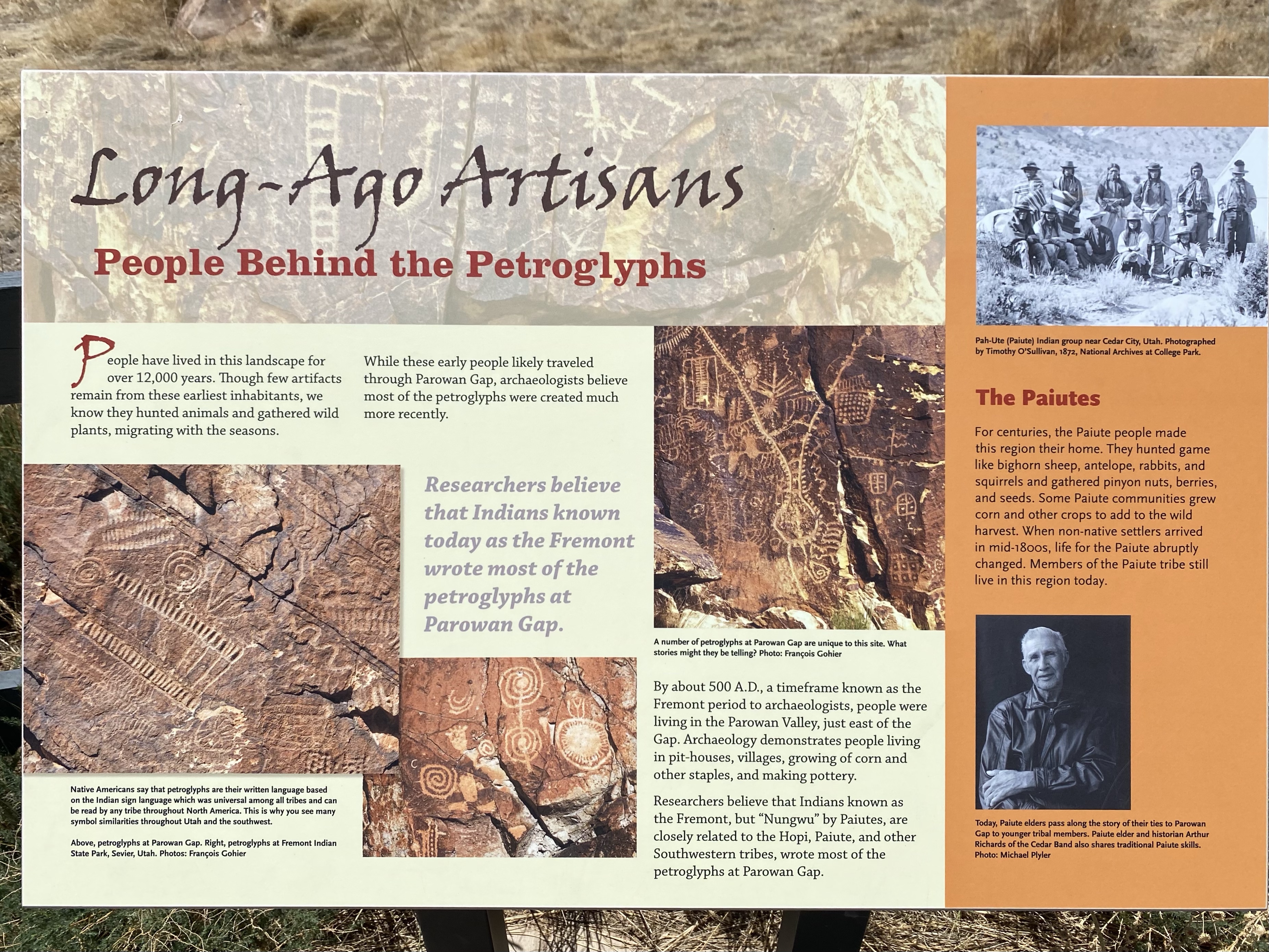

There is historic evidence that people have lived in this area for more than 12,000 years. The Fremont people were likely the first to live here, arriving around 500 A.D. Later the Paiute, Hopi, and other Southwestern tribes used this land. Many of them are probably descendants of the early Fremont tribe. Each group used this land to hunt bighorn sheep, antelope, rabbits and squirrels and grow crops like corn. They also foraged from the local landscape, using pinyon nuts, berries, and seeds for a variety of purposes. The Paiute people lived peacefully here until Mormon settlers arrived in the 1800s and invaded their land.
Current Paiute elders keep the history of their people alive, sharing how this area was once lush and green, providing fertile soil. The tribes traveled through the gap in various seasons and make home here when appropriate. Parowan Gap is a sacred site to the Paiute, and also to the Hopi. Each set of petroglyphs tells a different chapter in the past of these people. Specifically for the Hopi people, this site is also where they entered a sacred agreement with Maasaw, the Earth Guardian, and promised to care for and respect the land.
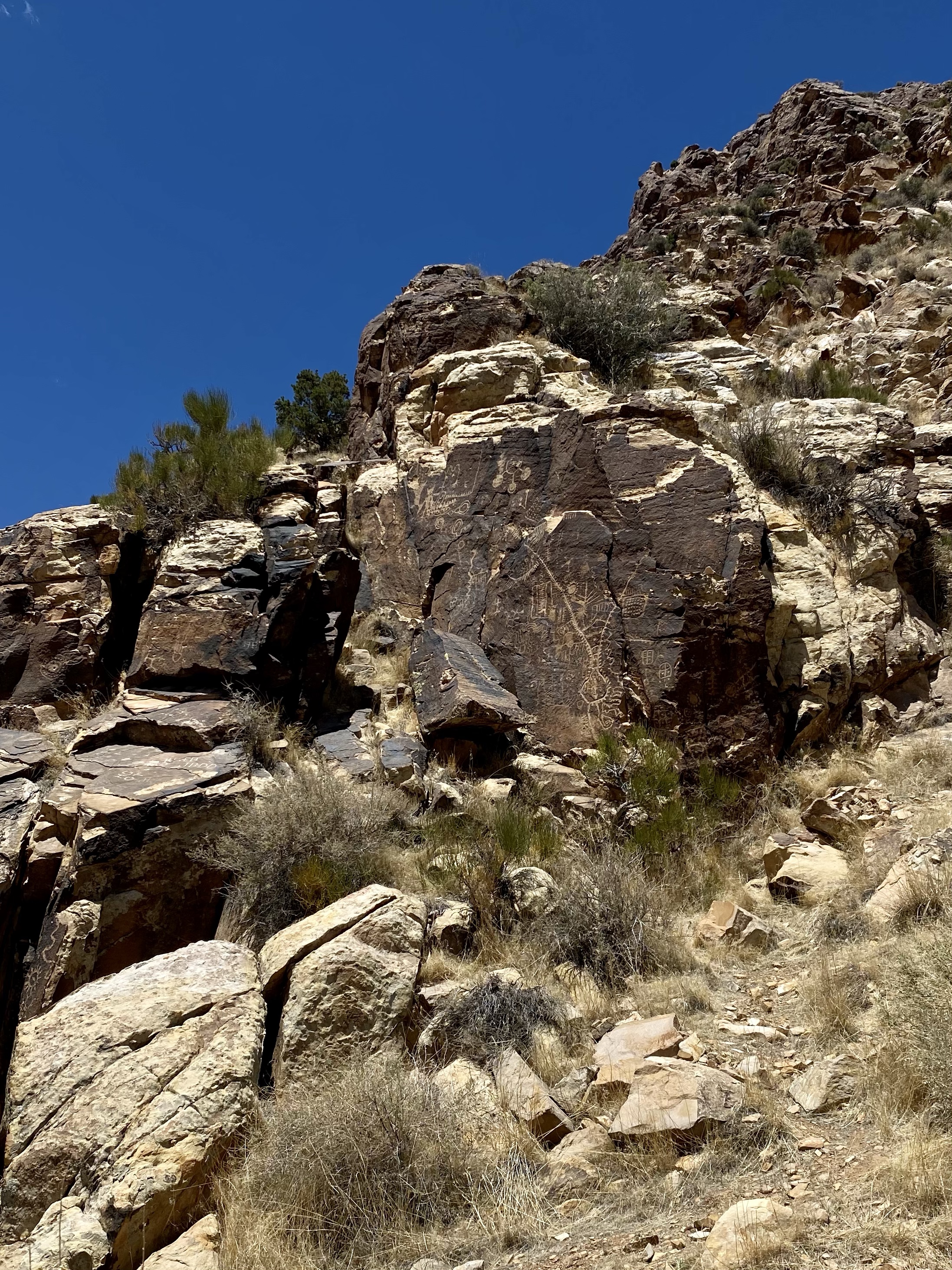
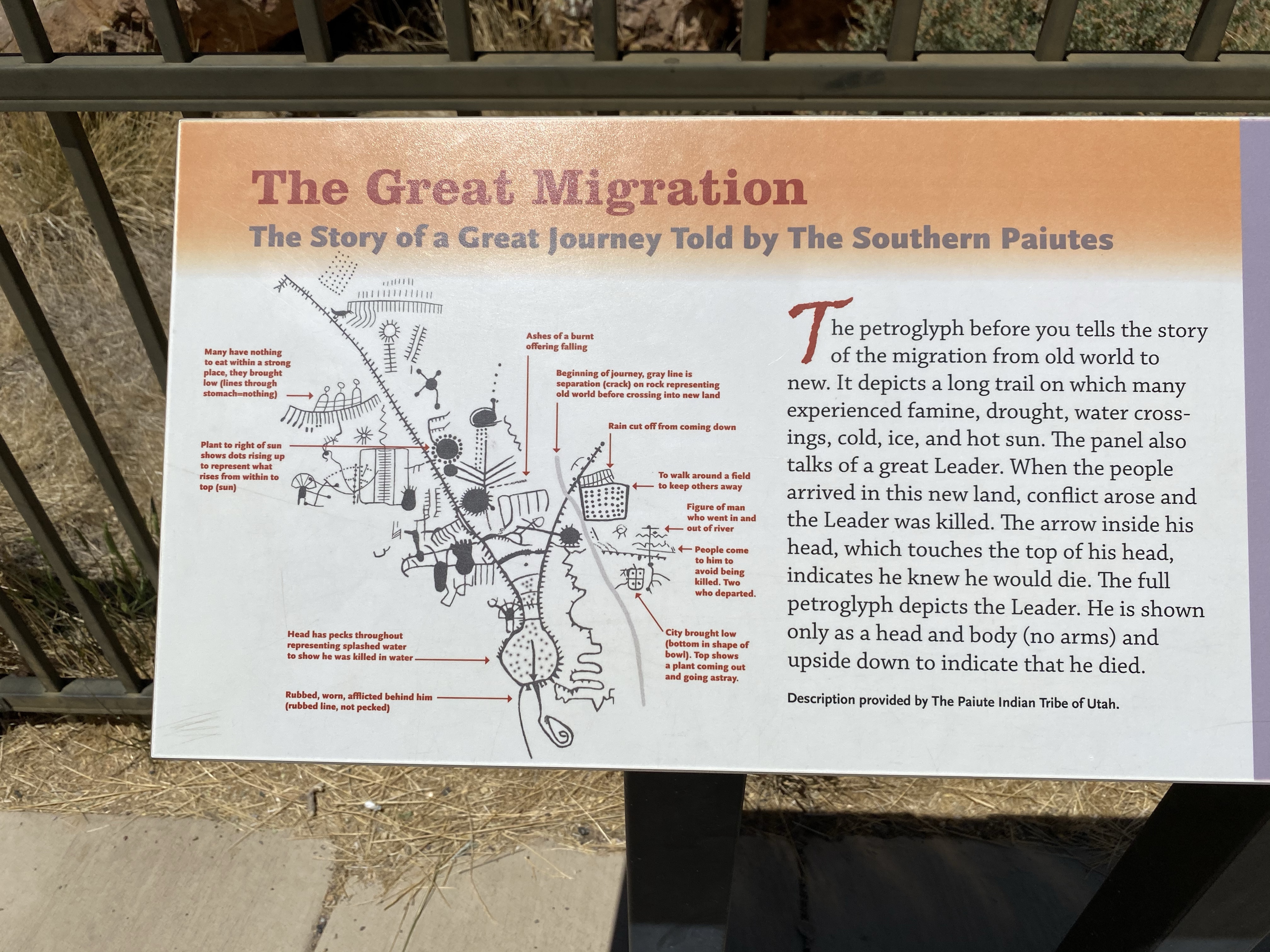
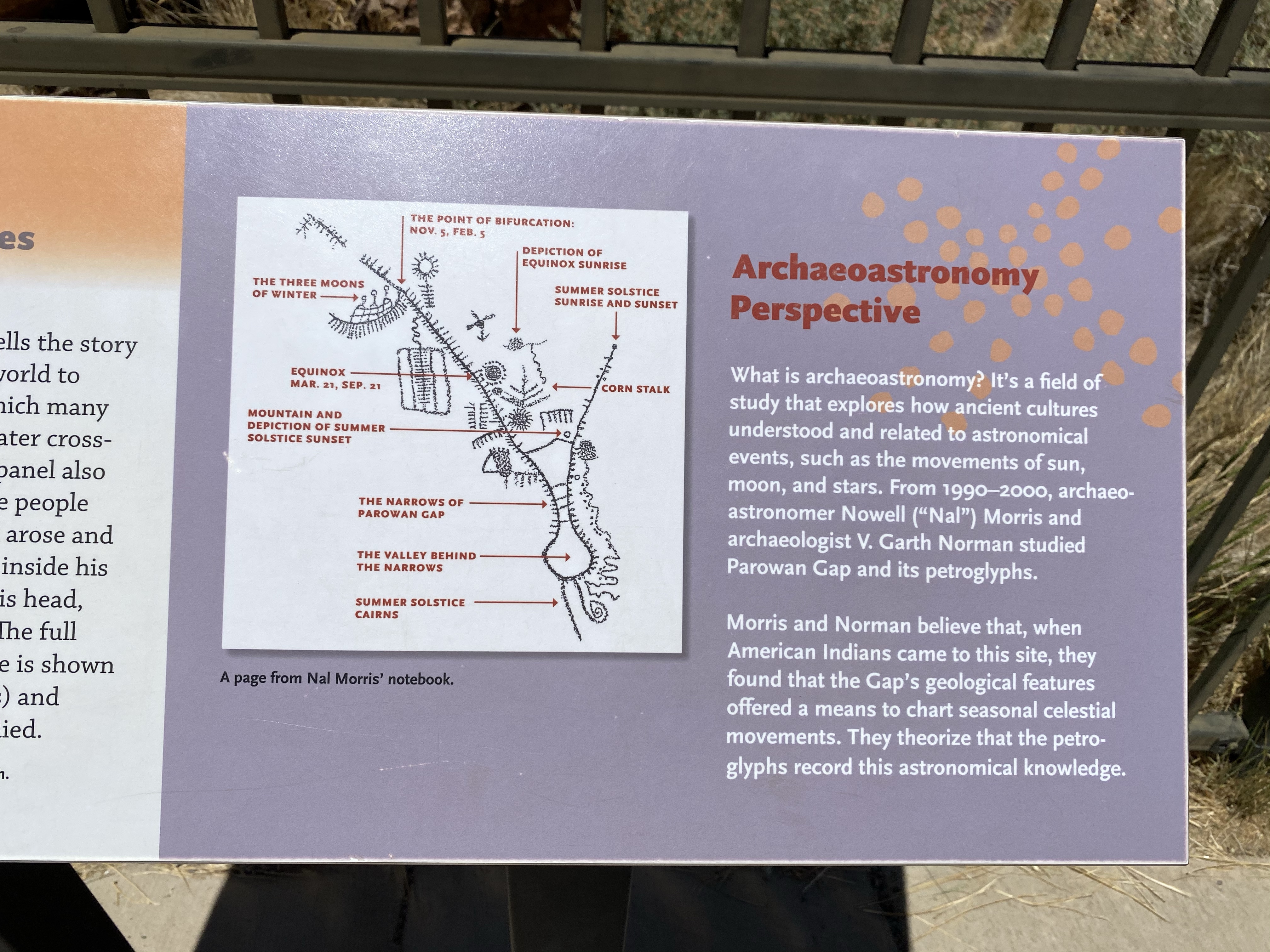
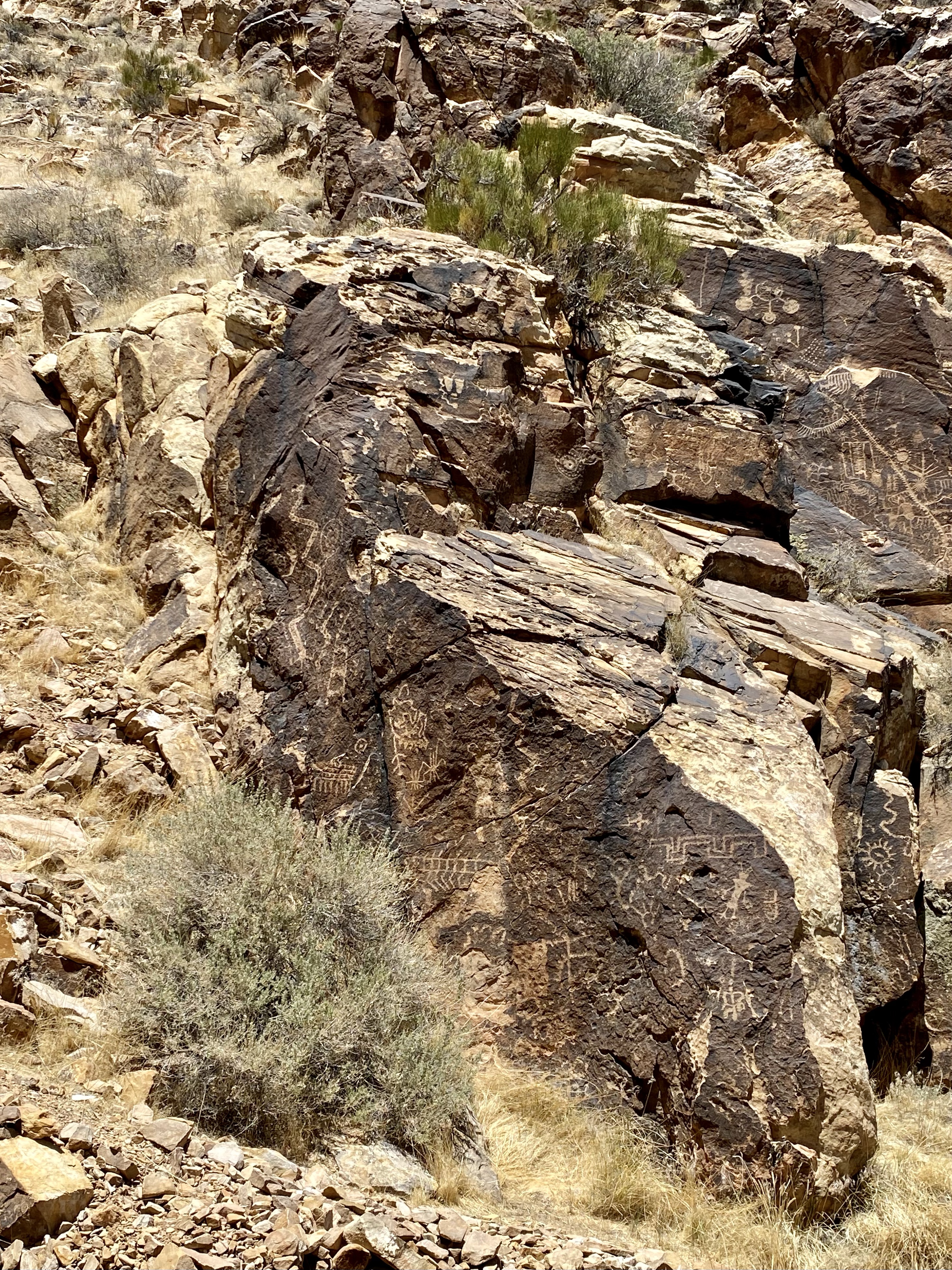
As you walk along, the delicate symbols are etched into the stone. Some are at eye level, other high up the rocky mound. Some you can get close to, but you must be careful not to touch. They are fragile and should be respected. There is some evidence of graffiti, other visitors thinking it fun to leave their mark. Or old, but still newer, initials from the white people who took over the valley. Fortunately, before too much damage was done, many recognized the importance and sacredness of this place and sought to protect it. Hopefully there will be protectors so we can all continue to benefit and learn from these cultural artifacts. Walking among history was very powerful and humbling.

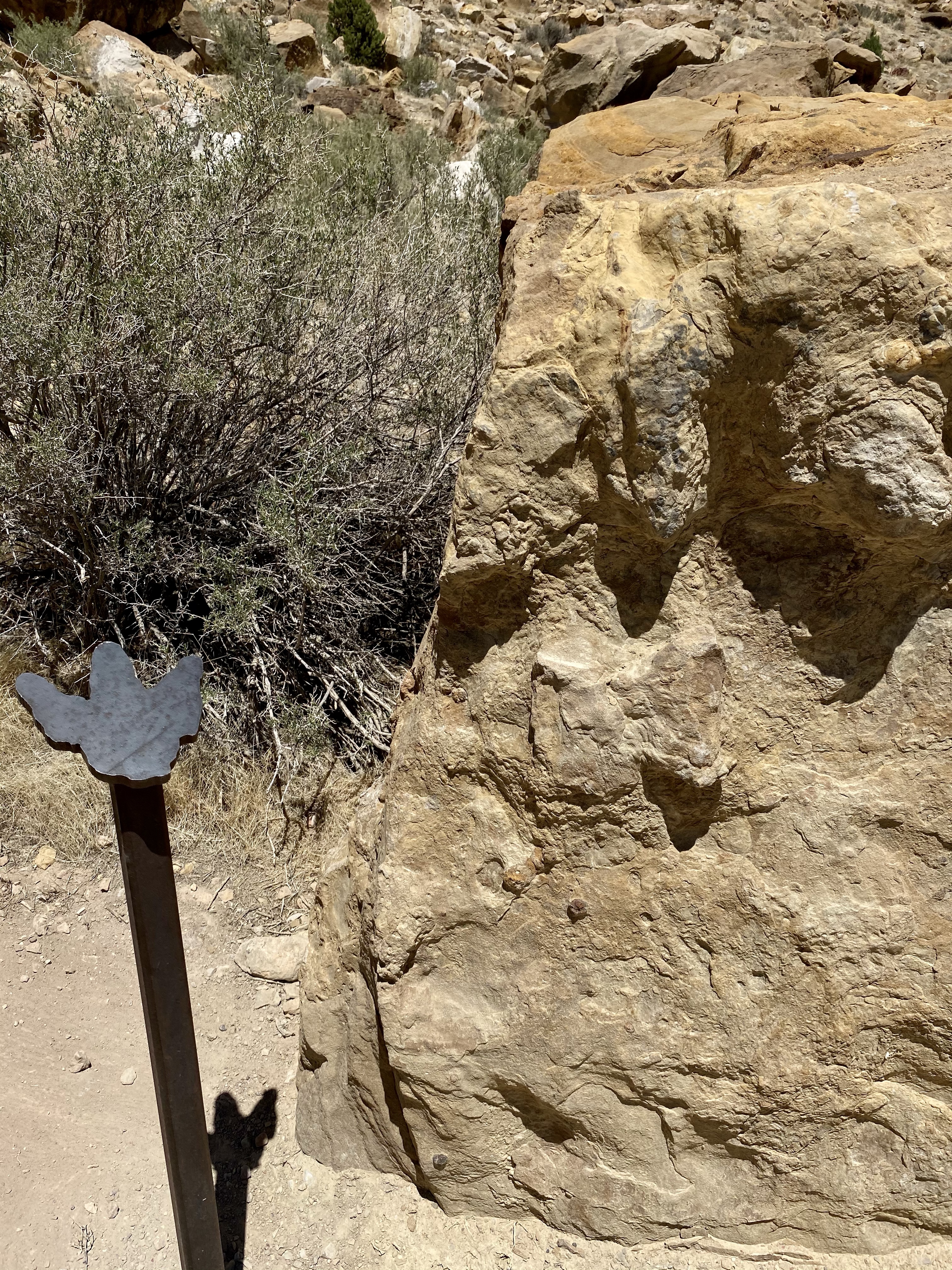
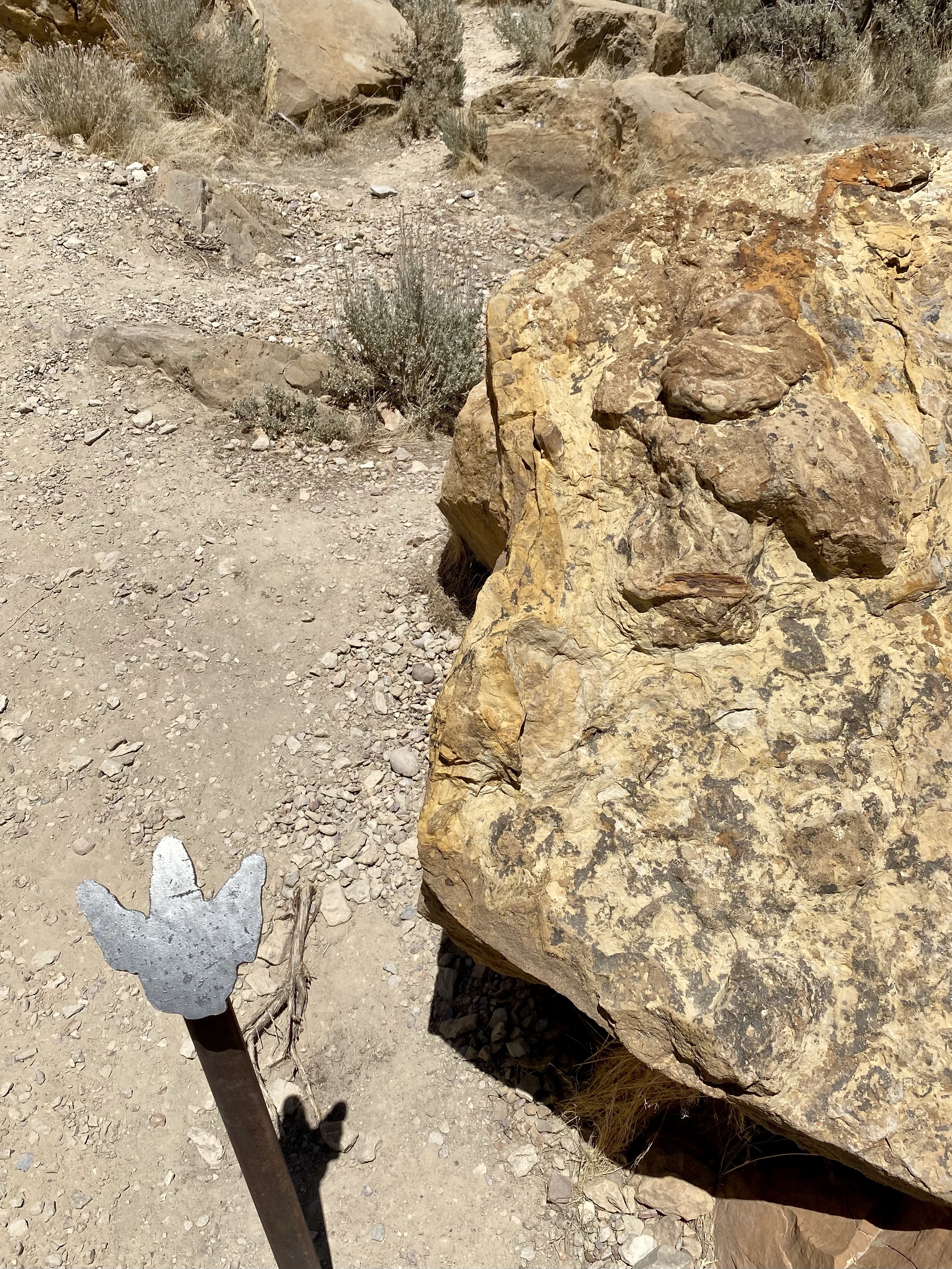
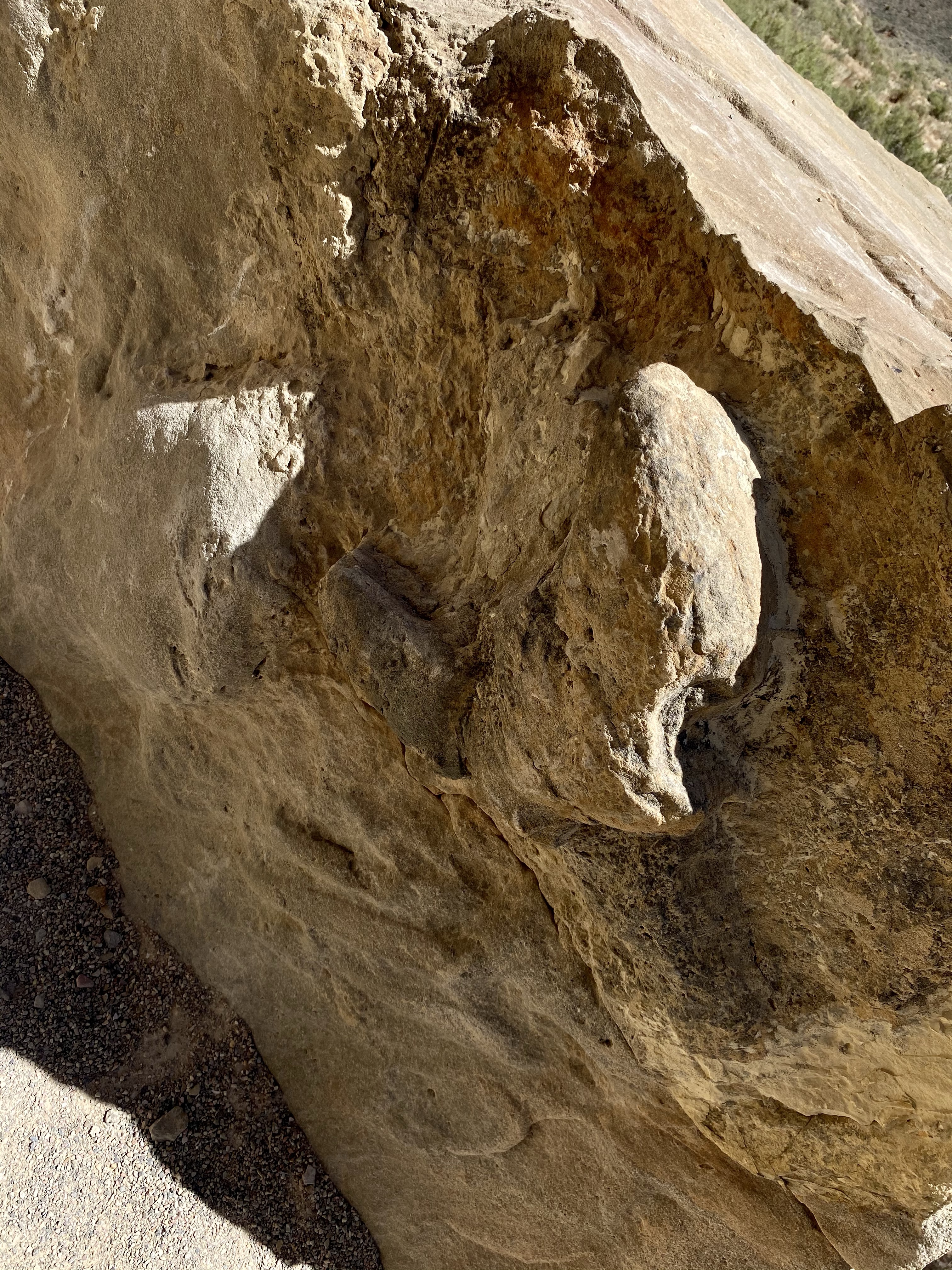
After I learned from the native heritage, I headed down the road to the preserved dinosaur footprints. A short path allowed me to walk where the extinct creatures once stood. I hunted for their fossilized steps, some difficult to identify because weathering and erosion has taken its toll. Every now and then though I spotted the raised impression, on the side of a rock or a hole in the ground. To know I was stepping where dinosaurs once stepped was very cool.

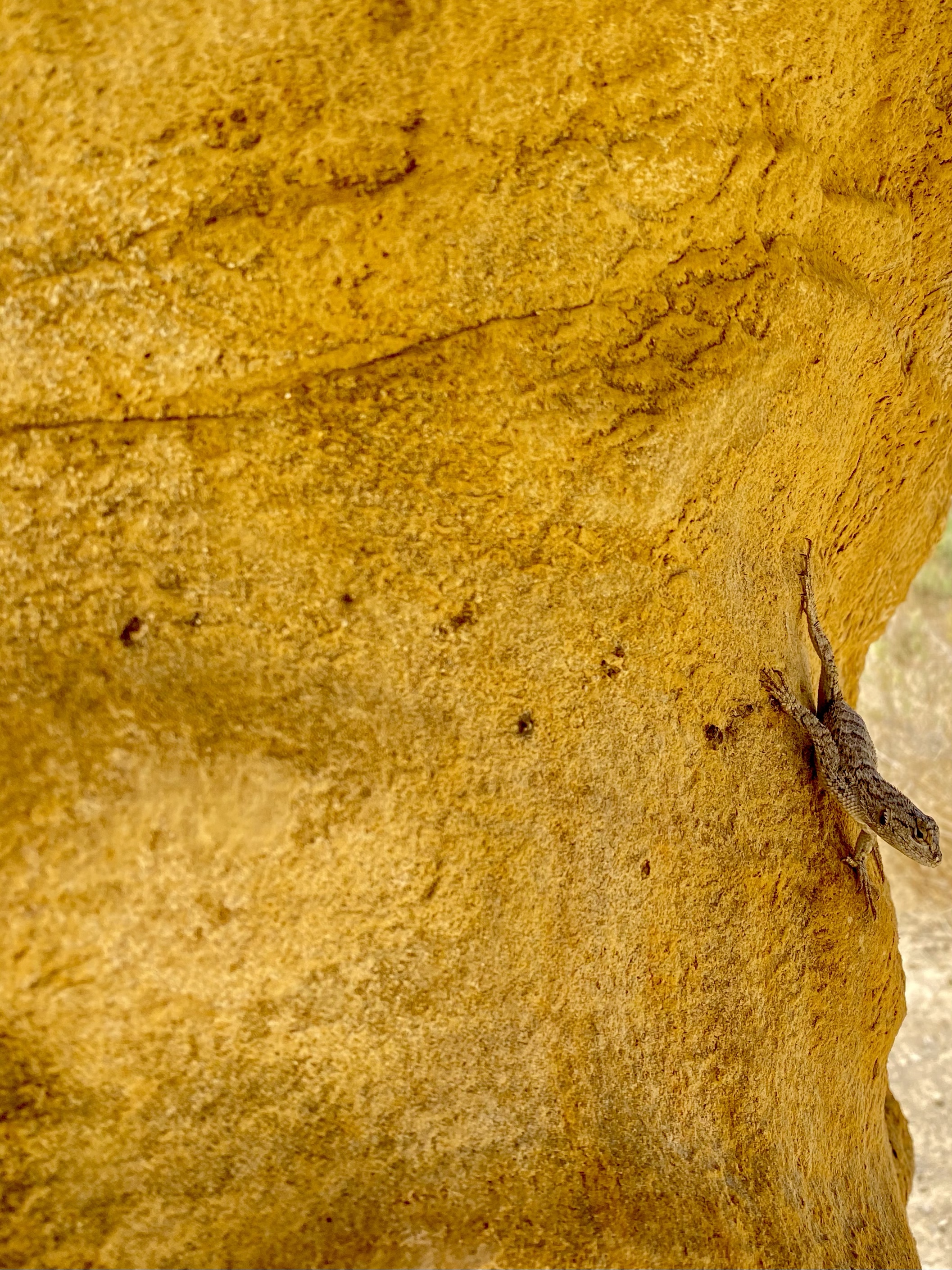
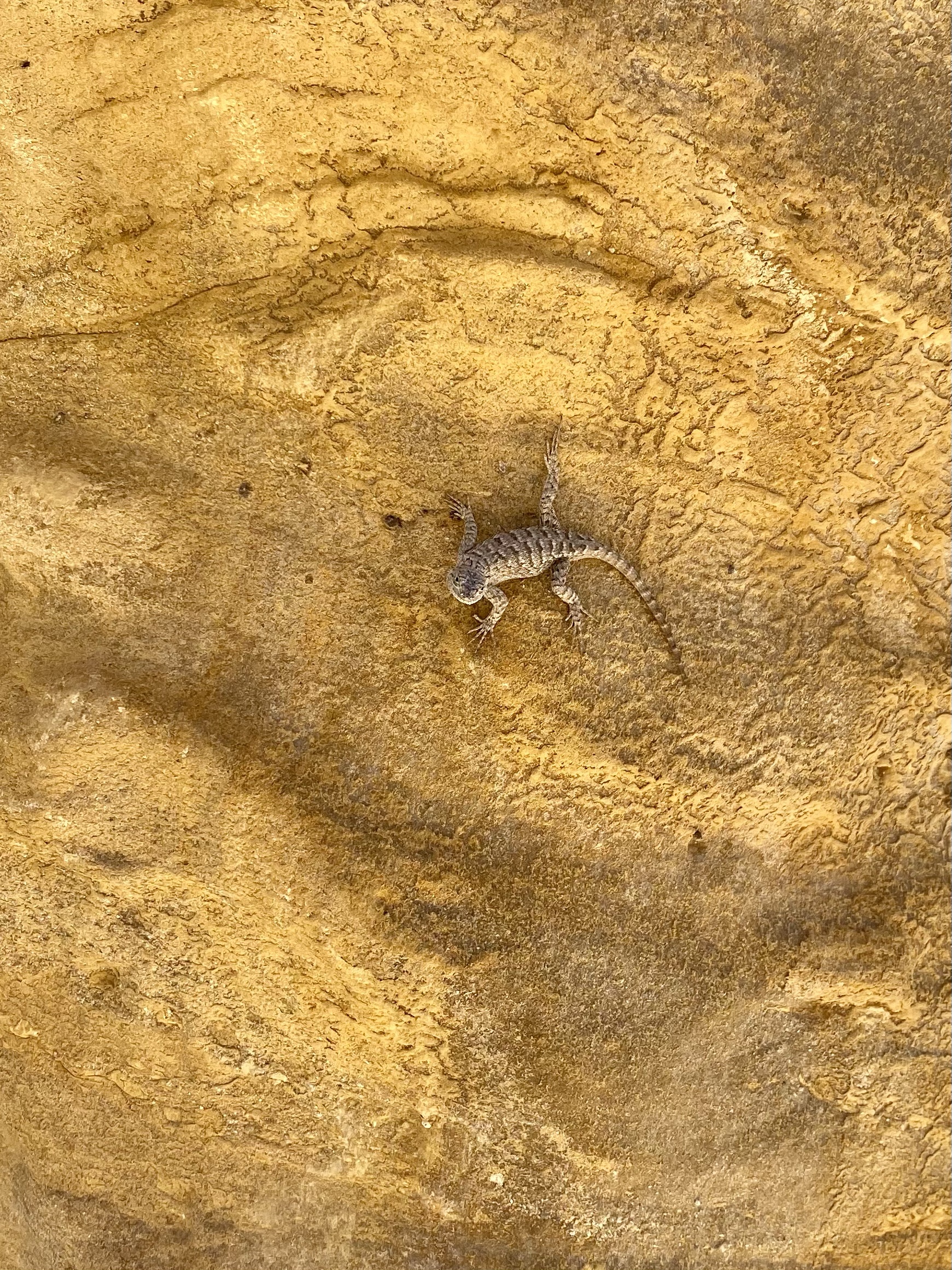
A lizard captured my attention as I walked. Then a skinny snake startled me as it climbed a bush and slithered through. A few cacti stood still for a photo. Then I was off again, ready to meet Crystal at Cedar Breaks!


 Tonelli's Travels