Next step on my journey home was Mesa Verde, a National Park and a World Heritage Site. Created in 1906, the site aims to preserve the archeological heritage of the Ancestral Pueblo (previously referred to as Anasazi) people through the safeguarding of the dwellings on the mesa top and on the sides of the cliffs. This place is home to 4,500 archeological sites!
The Ancestral Pueblo people were inventive and resilient. On top of the mesas they farmed and hunted. Below the mesa tops, over time, the built communities in the alcoves of the cliffs. They used hand-and-toe hold trails, little more than indents in the cliff faces, to enter and exit their homes. When they inhabited the land, the soil was fertile and water was plentiful. They used sticks to dig dams and holding areas for reservoirs of snow and rain. They adapted to their environment to survive. For nearly 700 years, from AD 550 to the late 1200s they flourished here.
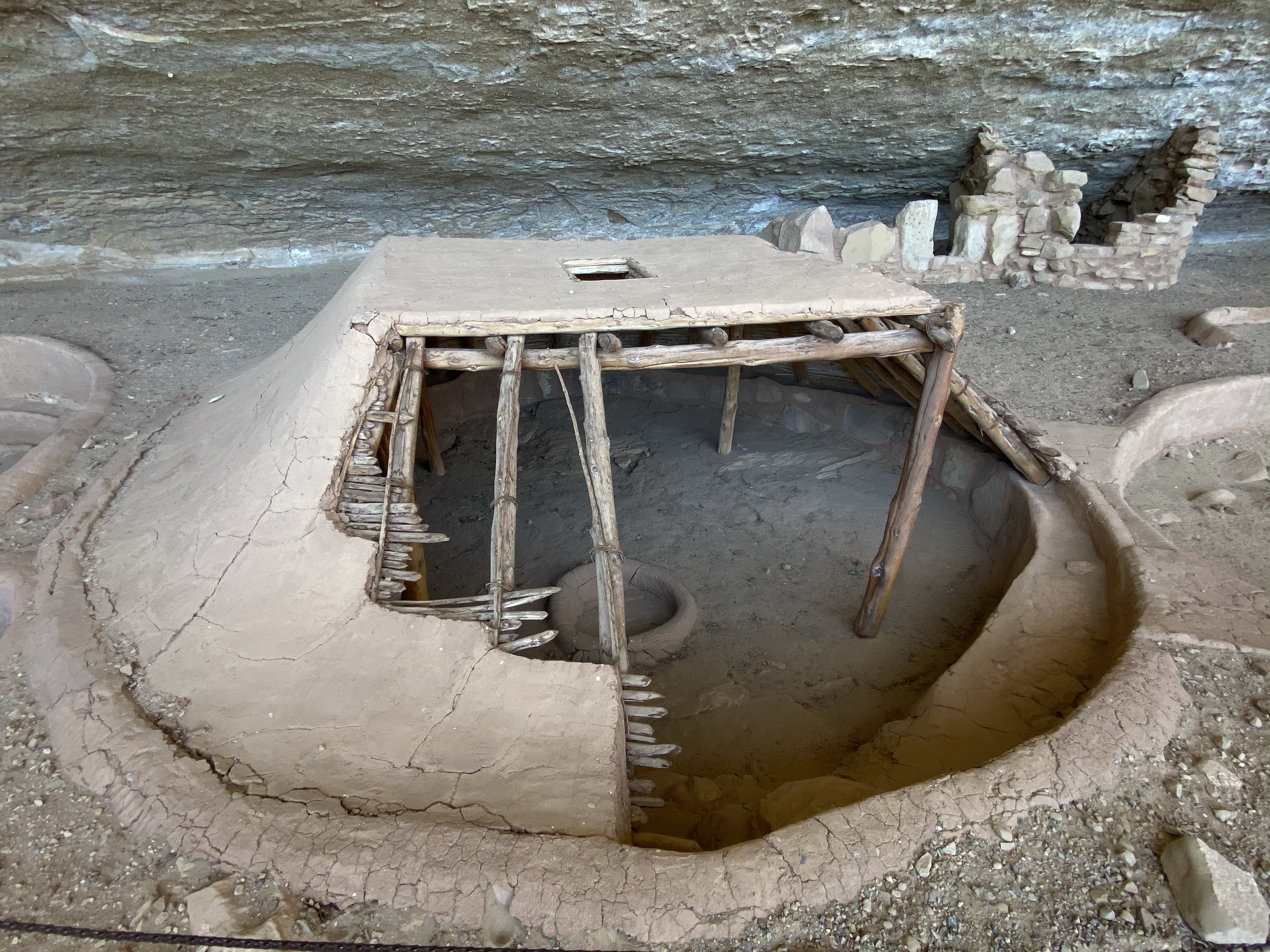
These skillful people first built their communities on the mesa tops and later below the cliffs in alcoves. The first Ancestral Pueblo people to occupy this land were expert basket makers and lived in pit houses. Pit houses were dug into the ground and had wooden roofs. By 750 AD, homes were built together in clusters, each one touching the next, in long curving rows with walls of mud and stick. Their skills developed over the decades to include stone masonry and larger villages.
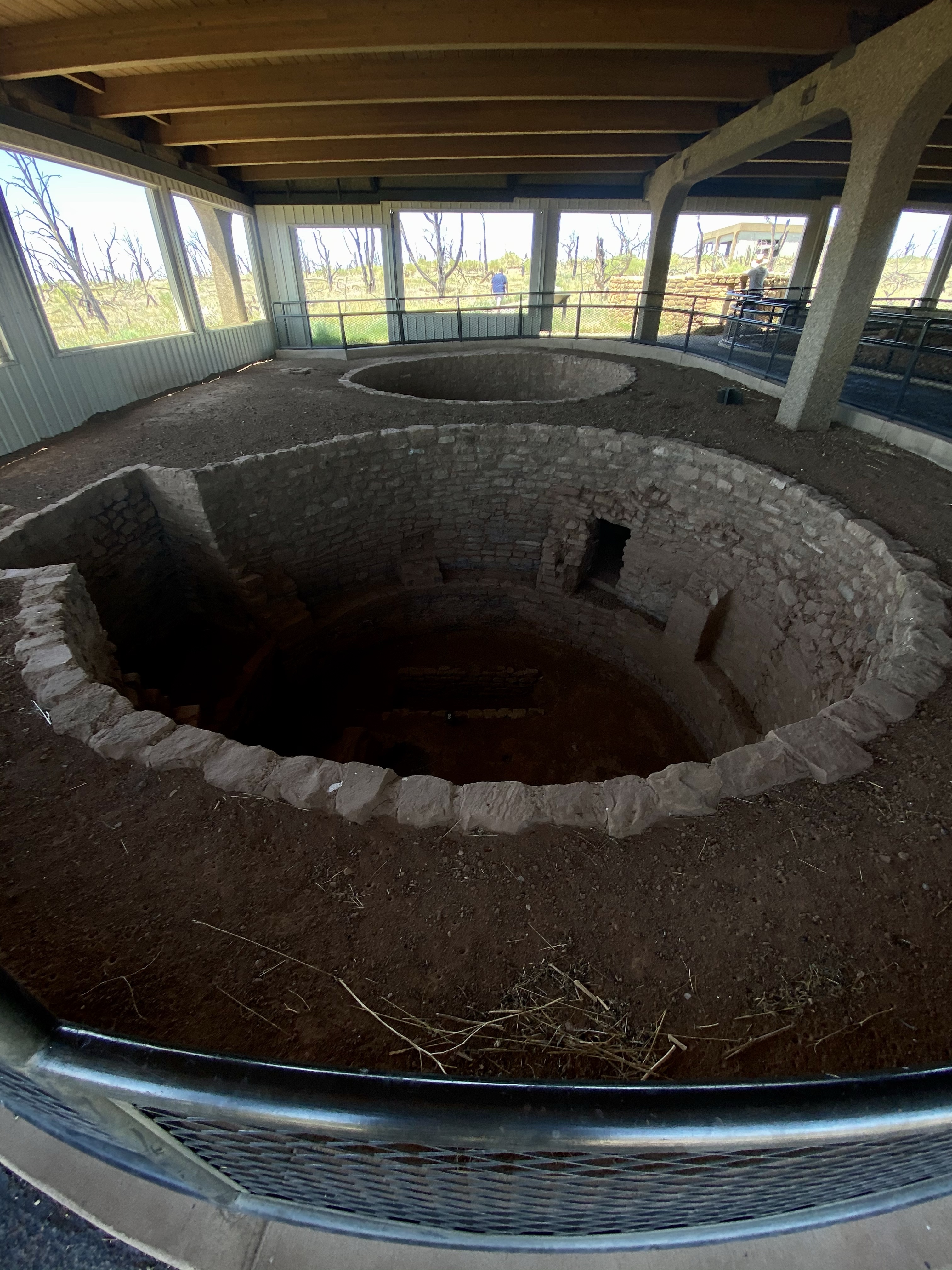
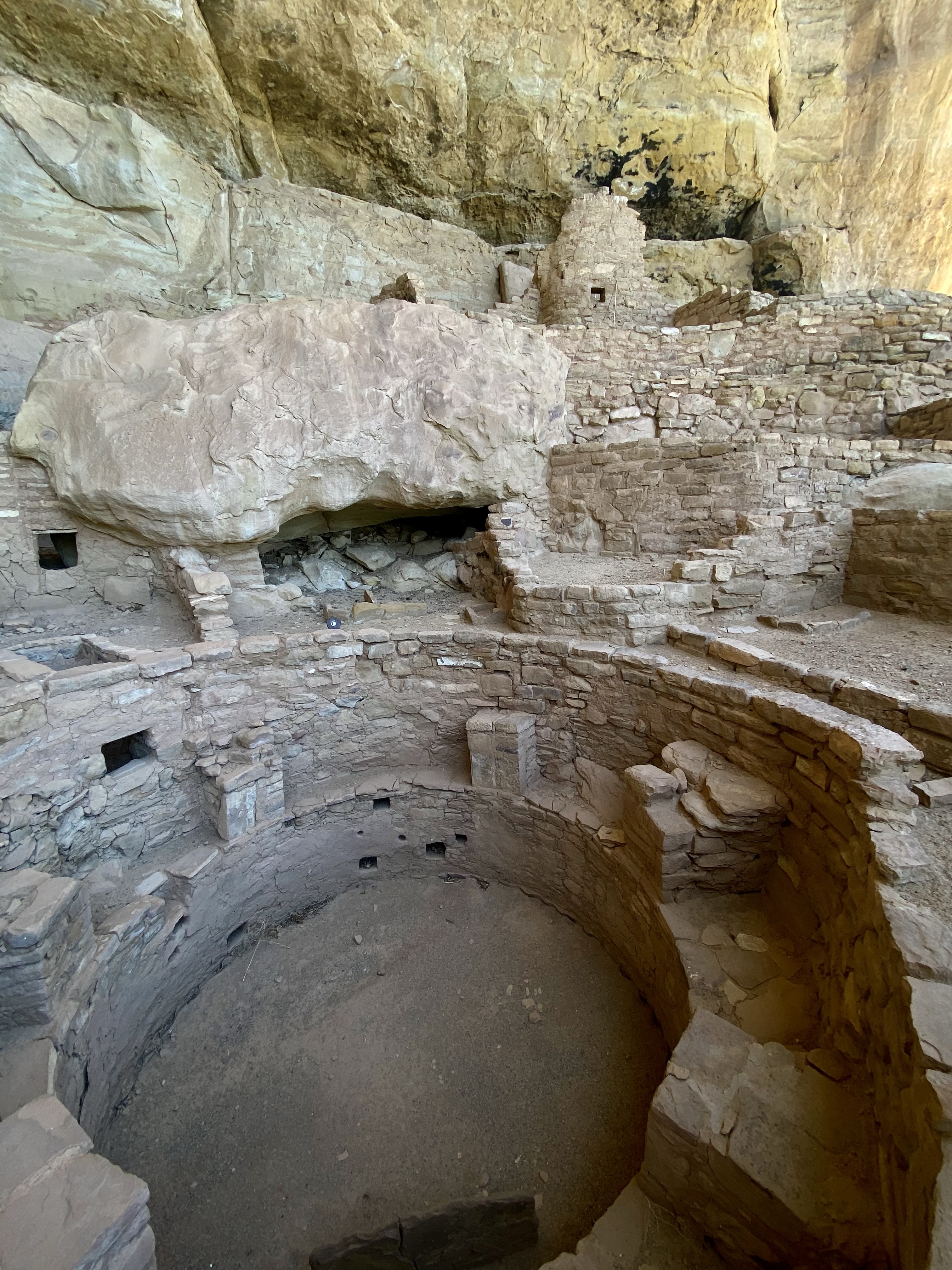
Kivas were eventually created, a word from the Hopi language which refers to round chambers. These spaces in the villages on mesa tops are found in every community and hold multiple purposes, including social religious, and storage. A ladder was used to climb down into the space. Kivas are still important spaces in current Pueblo communities and ceremonies.
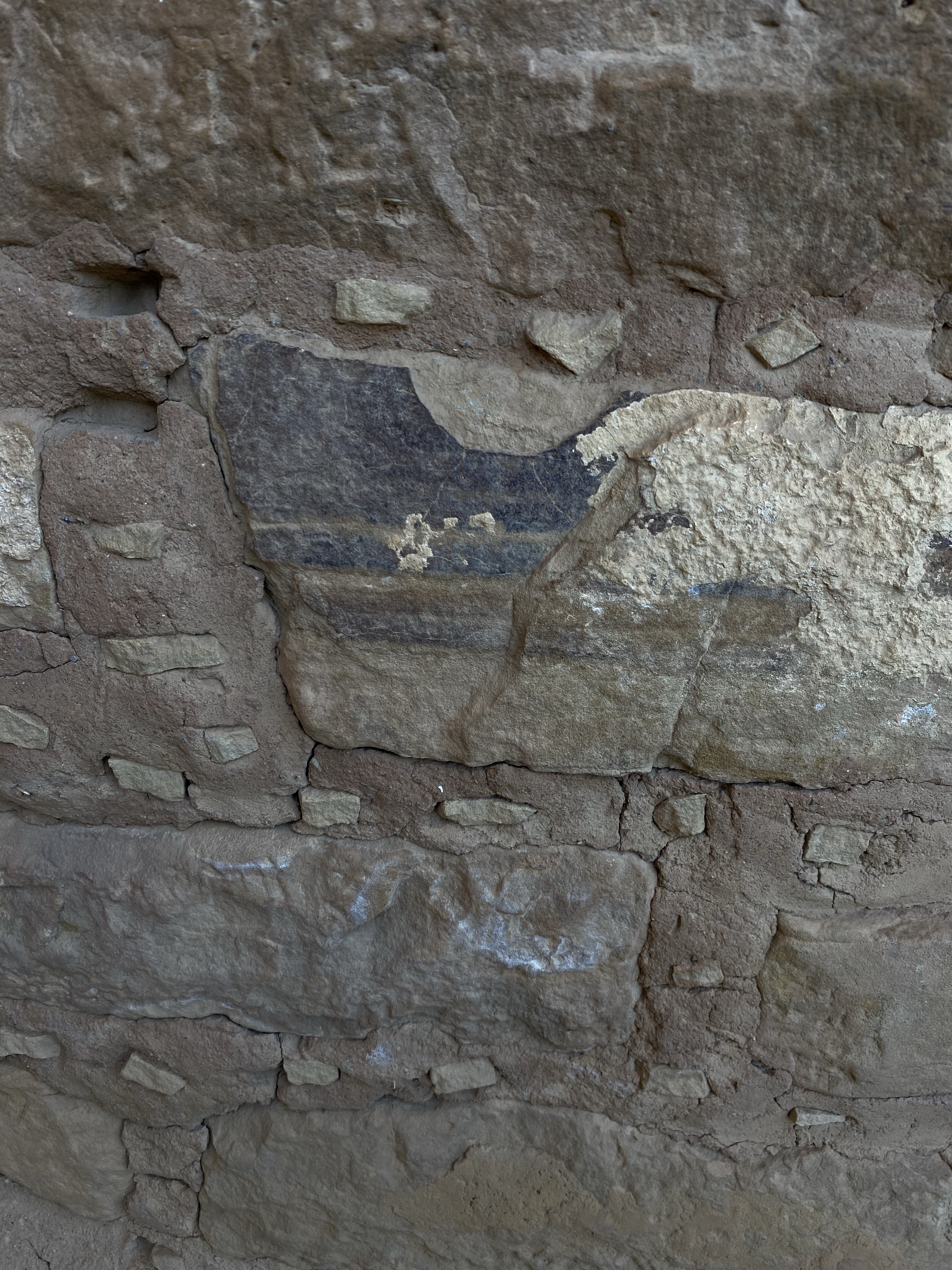
In the late 1190s, many of the Ancestral Pueblo people begun building cliff dwellings. For cliff dwellings, they cut sandstone into bricks and stuck them together with mortar made of mud and water. Experienced builders they made rooms big enough for a few people and created space for storing crops. An open courtyard in the front was a community space where fires where built for cooking in the summer and warmth in the bitter cold winter.
These cliff dwellings were deserted after only 100 years. One theory is that severe drought plagued the area and forced the inhabitants to relocate. Another idea is that the land was over used. The Ancestral Pueblo people had thrived and their population grew rapidly, so perhaps the land was depleted of nutrient and animals. Or maybe there was social or political conflict. And new theories are still being tested.
When they left, they migrated with others to New Mexico and Arizona. Today, many tribes trace their heritage back to the Ancestral Puebloans, including the Hopi of Northern Arizona and the people of Zuni, Laguna, Acoma, and the pueblos of the Rio Grande.
I would have thoroughly enjoyed a tour of these marvelous cliff dwellings, but I was unaware that I needed to book tours in advance. So, alas, I had to enjoy them from afar. I’ll be back though!
My first day in the park I drove out to Wetherill Mesa on the far western side of the park. It is a long a snaking road through the park, traversing over several mesa tops, down into the valleys, and up again. Sunny and I are now very experienced with long windy roads. When we arrived the lot was busy, but not over crowded. I stopped quickly at the information kiosk and headed out on the paved Long House Loop.
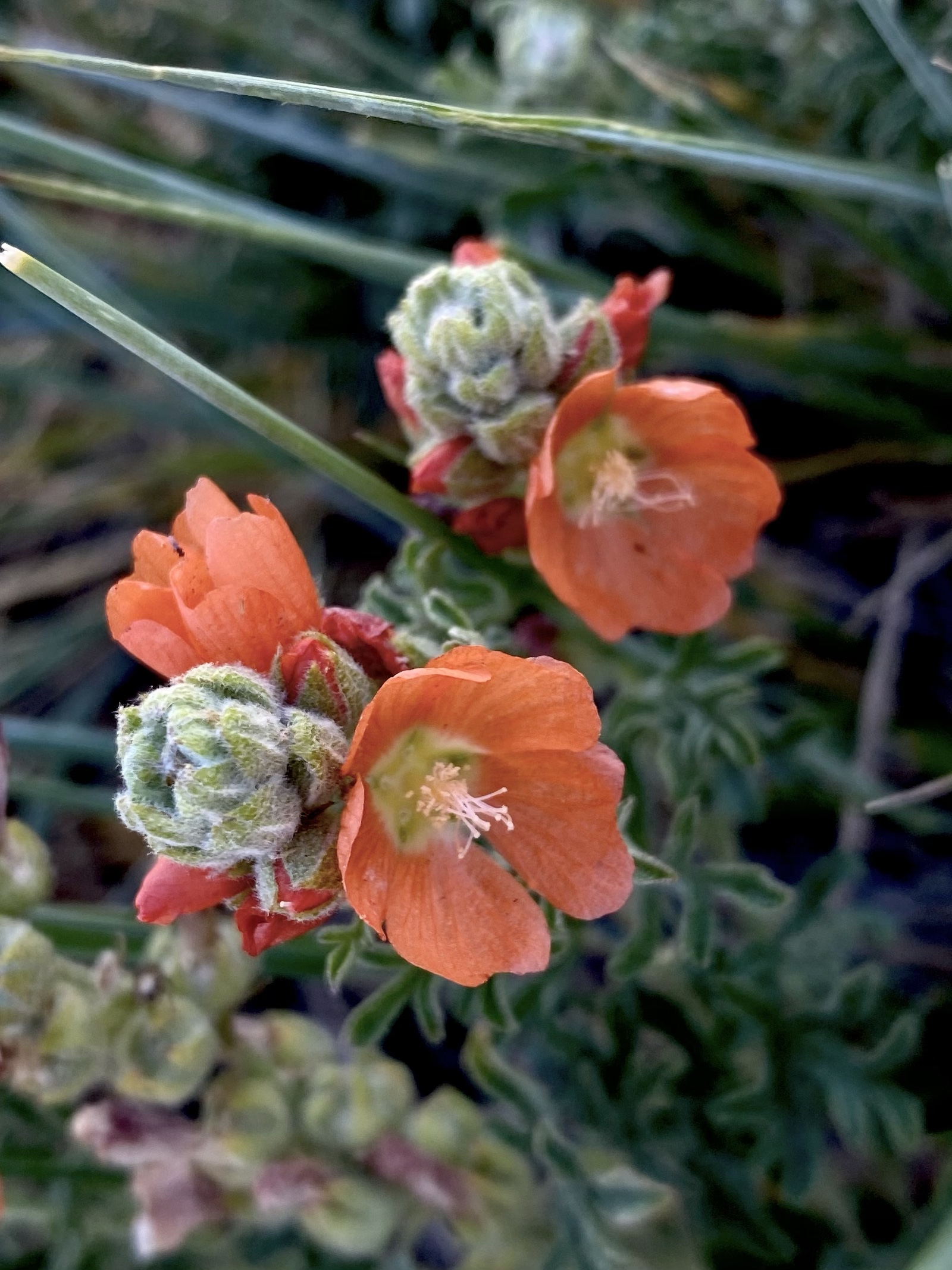
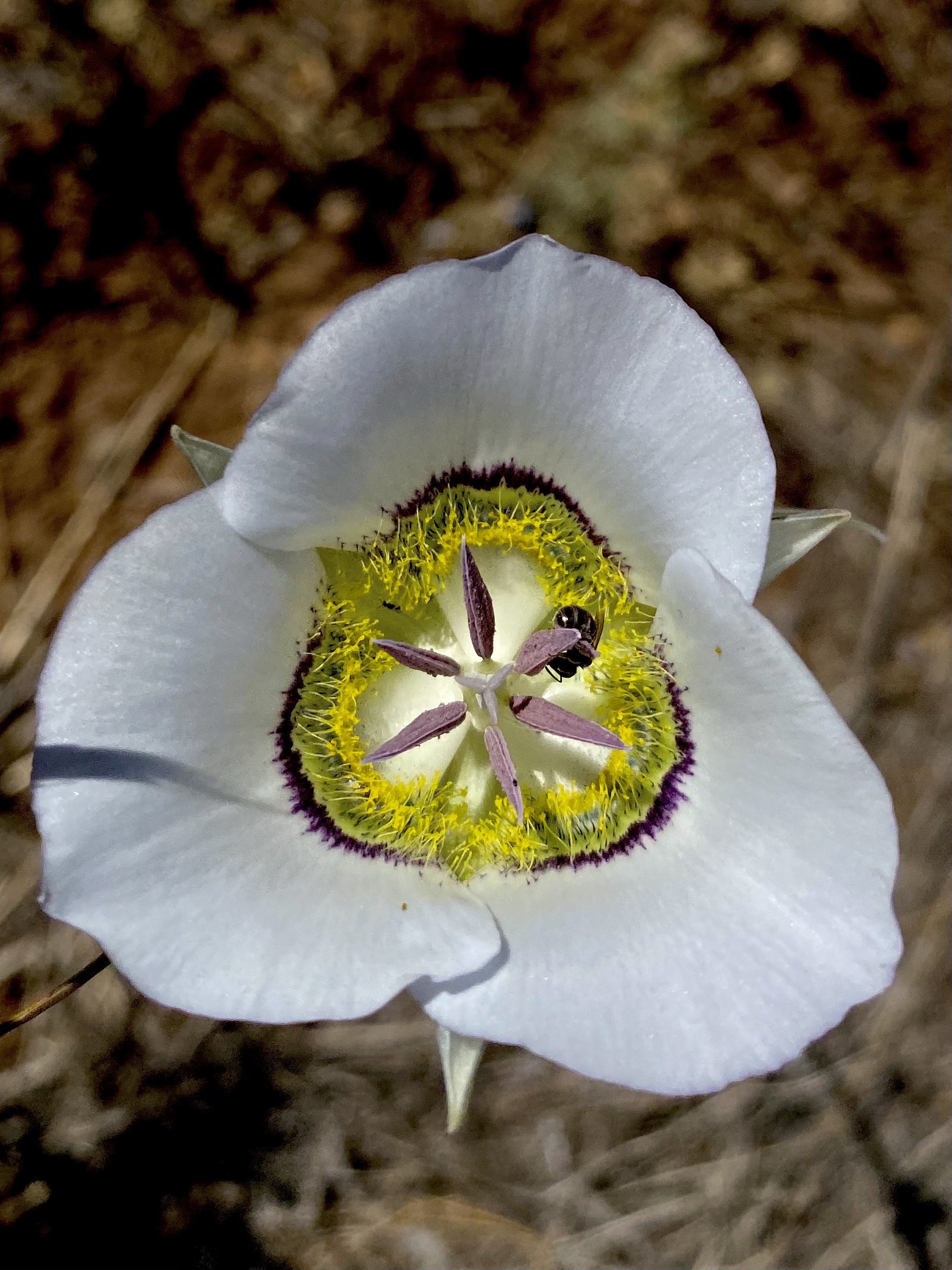
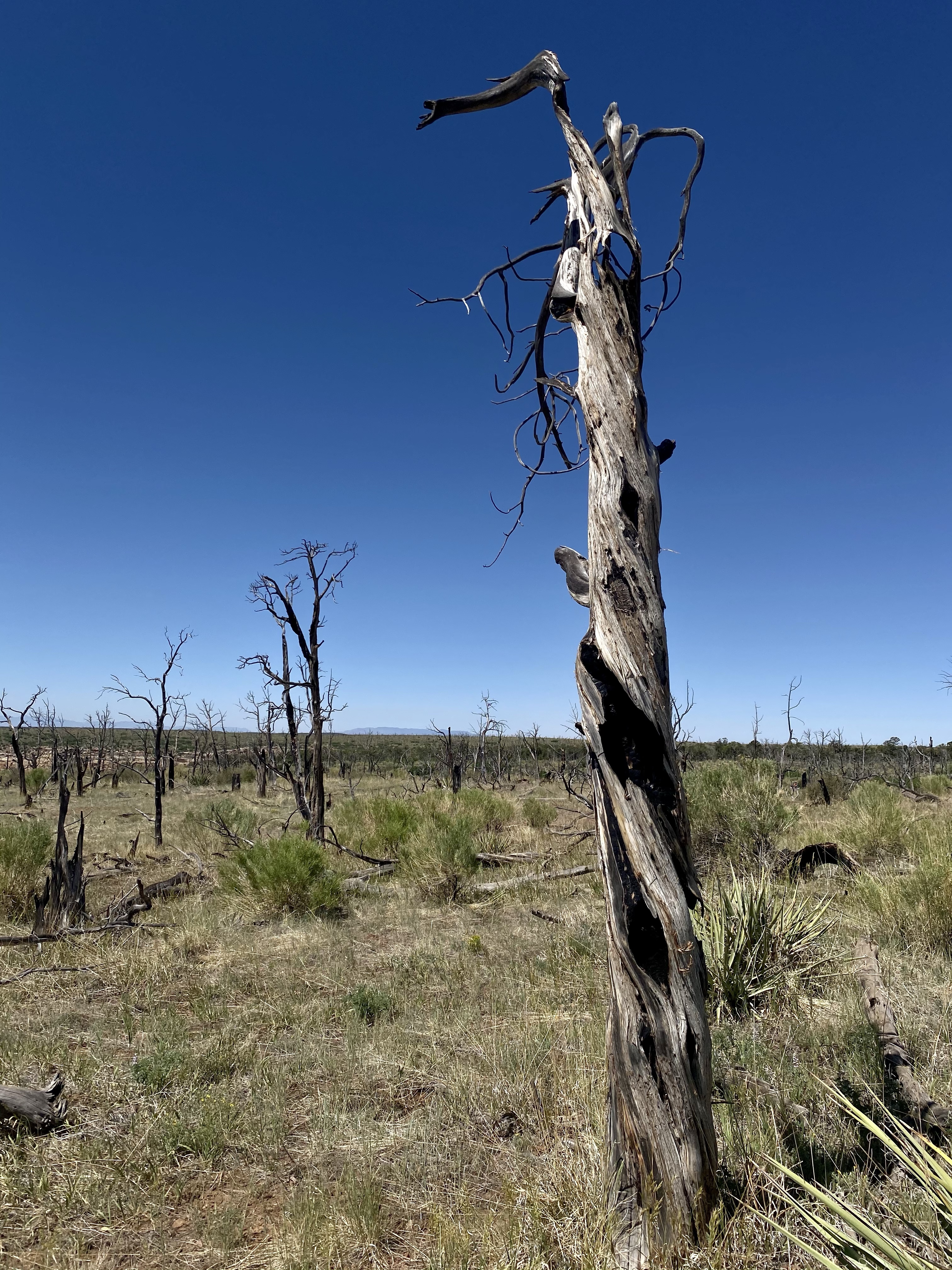
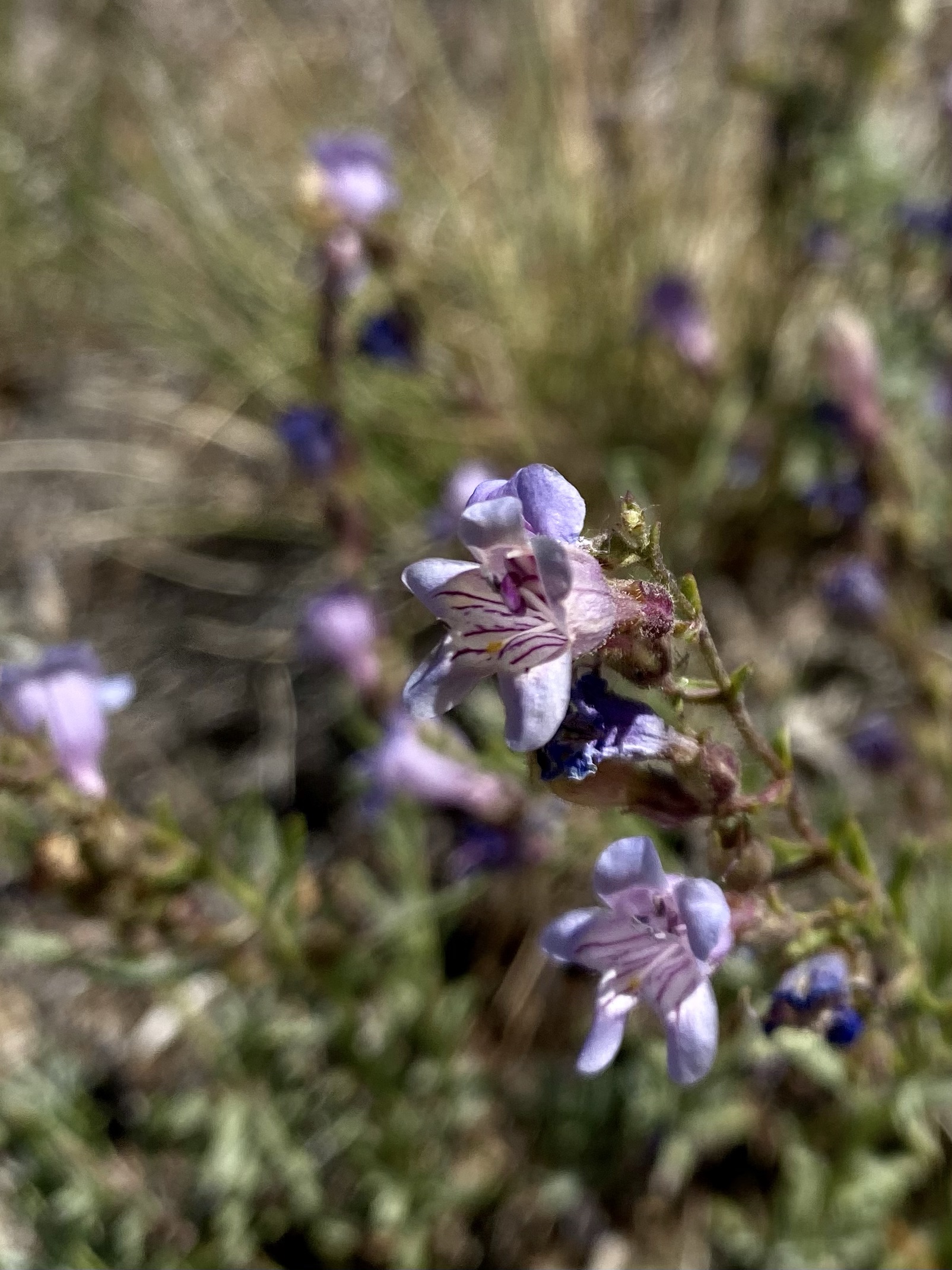
The mesa top is a recovering forest, burned in the recent past from a common forest fire. Gnarled tree trunks remain standing, surrounded by fields of green grass and bright wildflowers. Being on top of the mesa means you can see for a long distance on a clear day, mountains barely visible miles away.
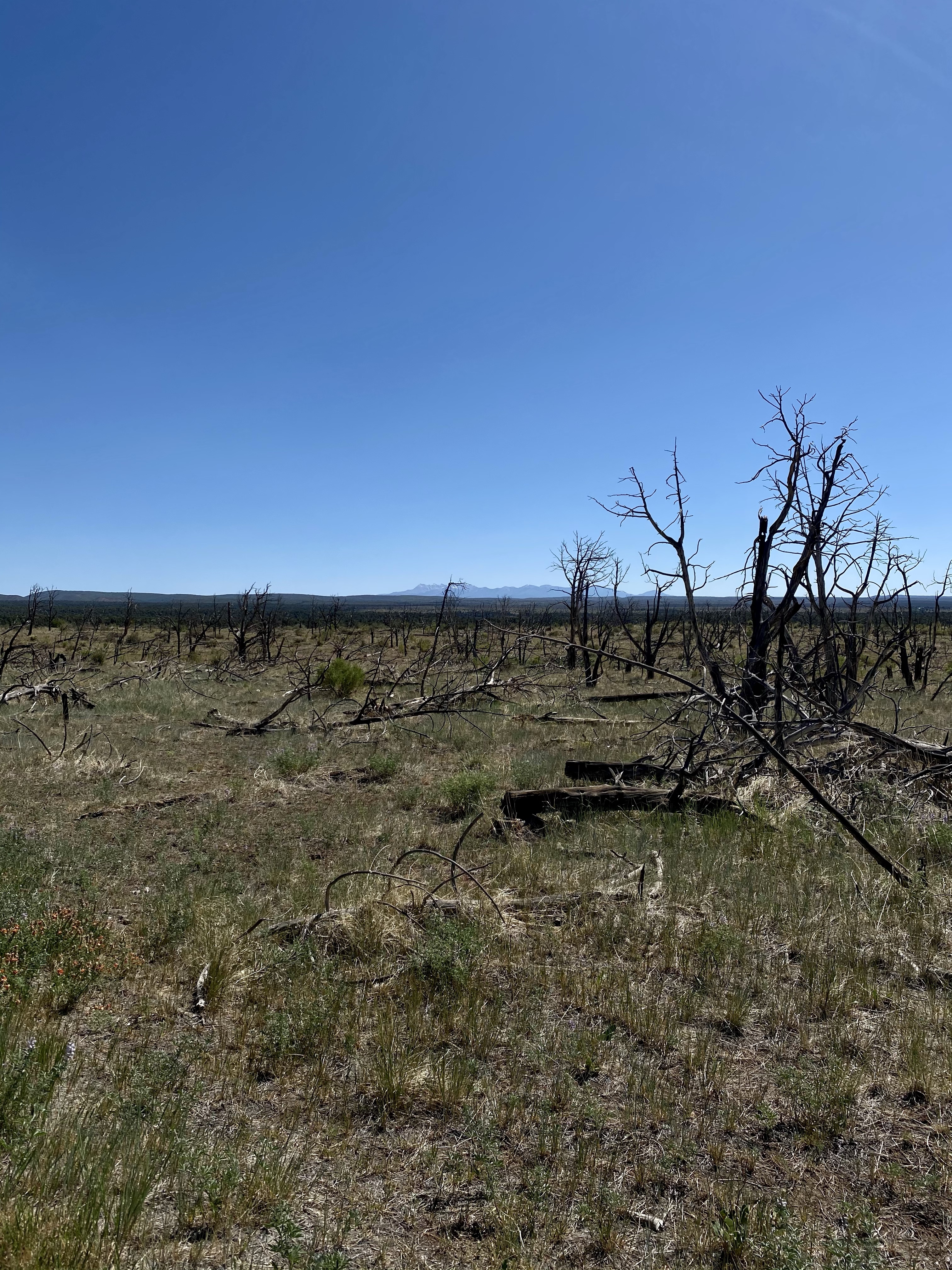
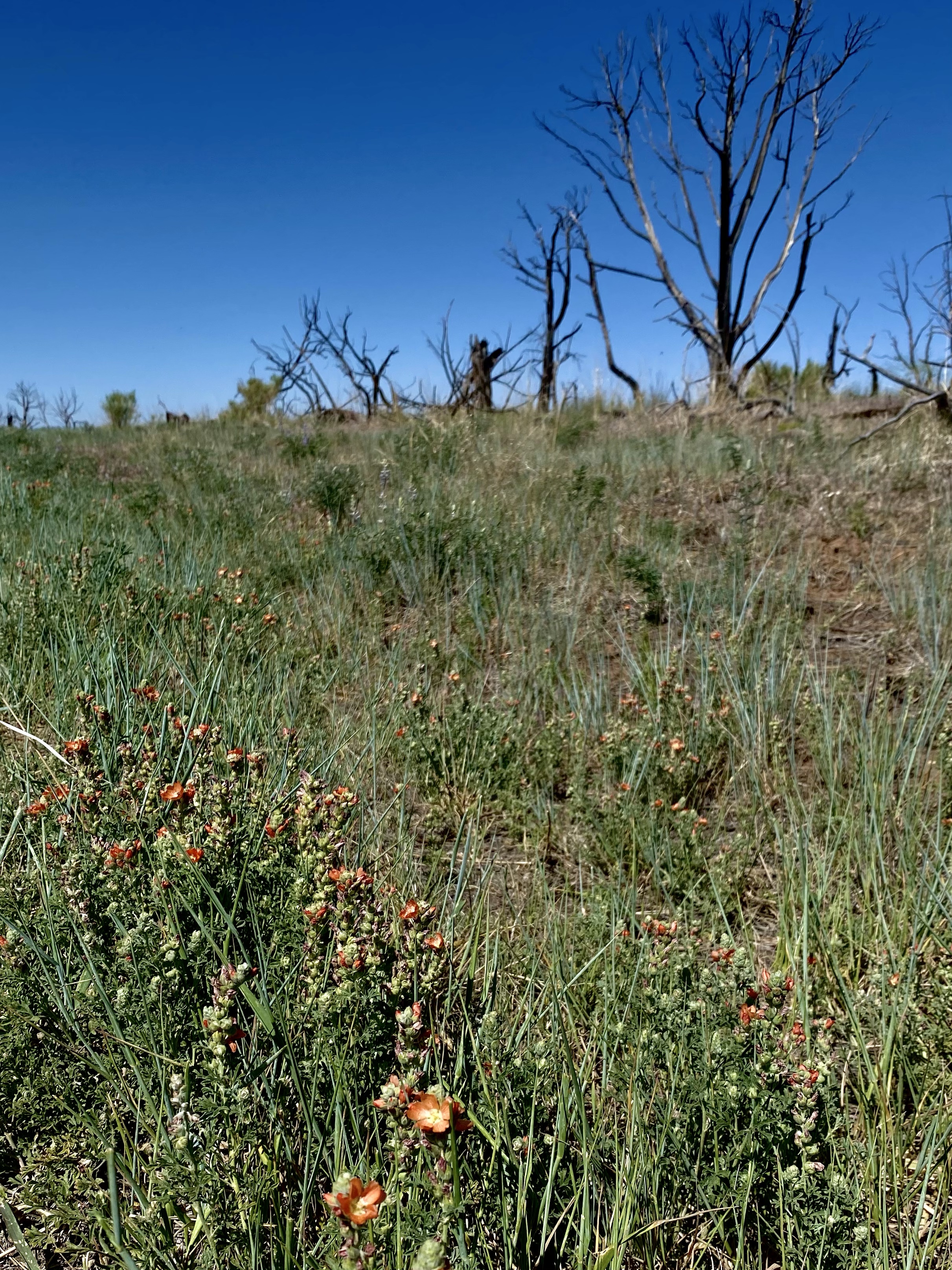
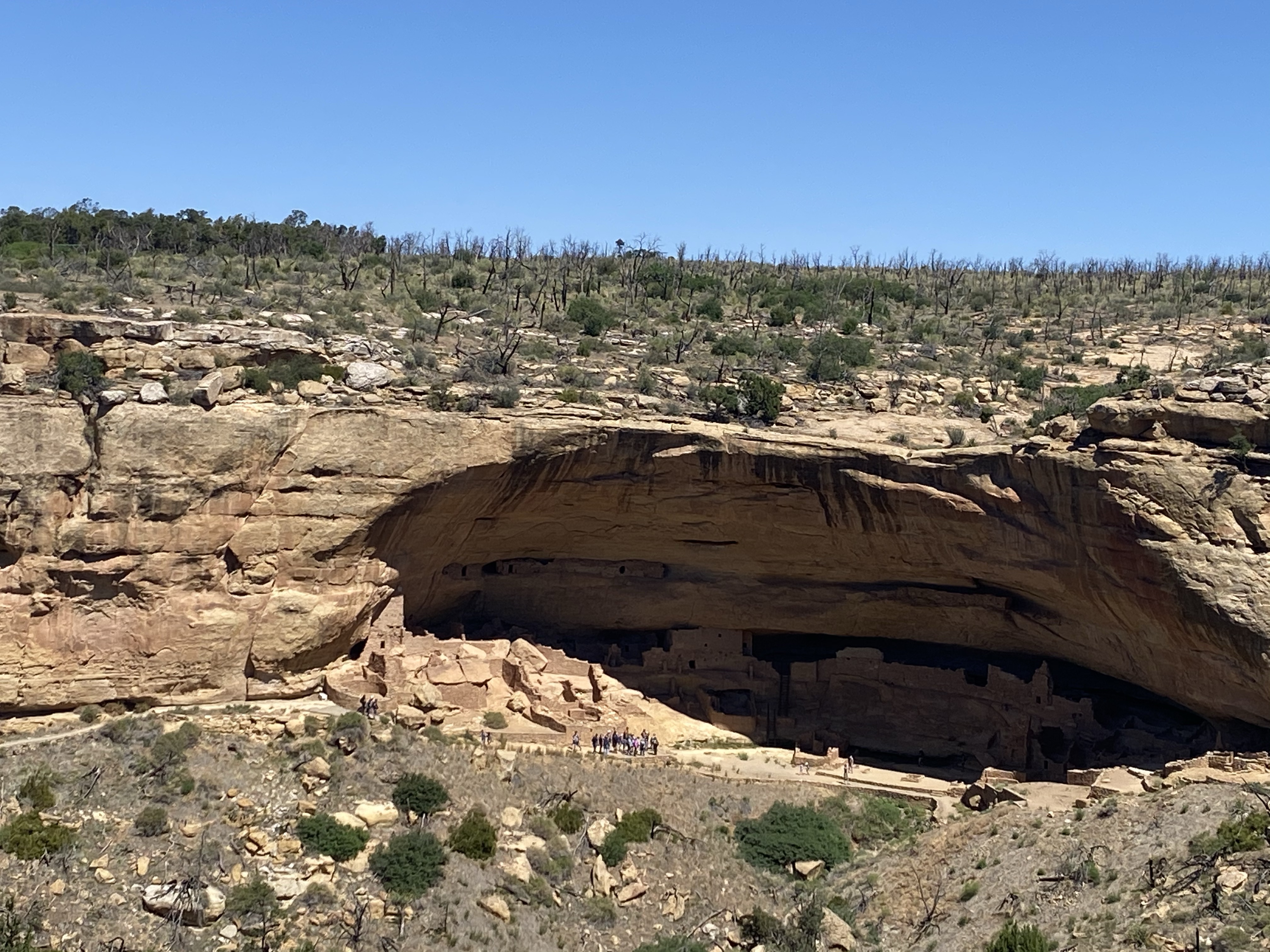
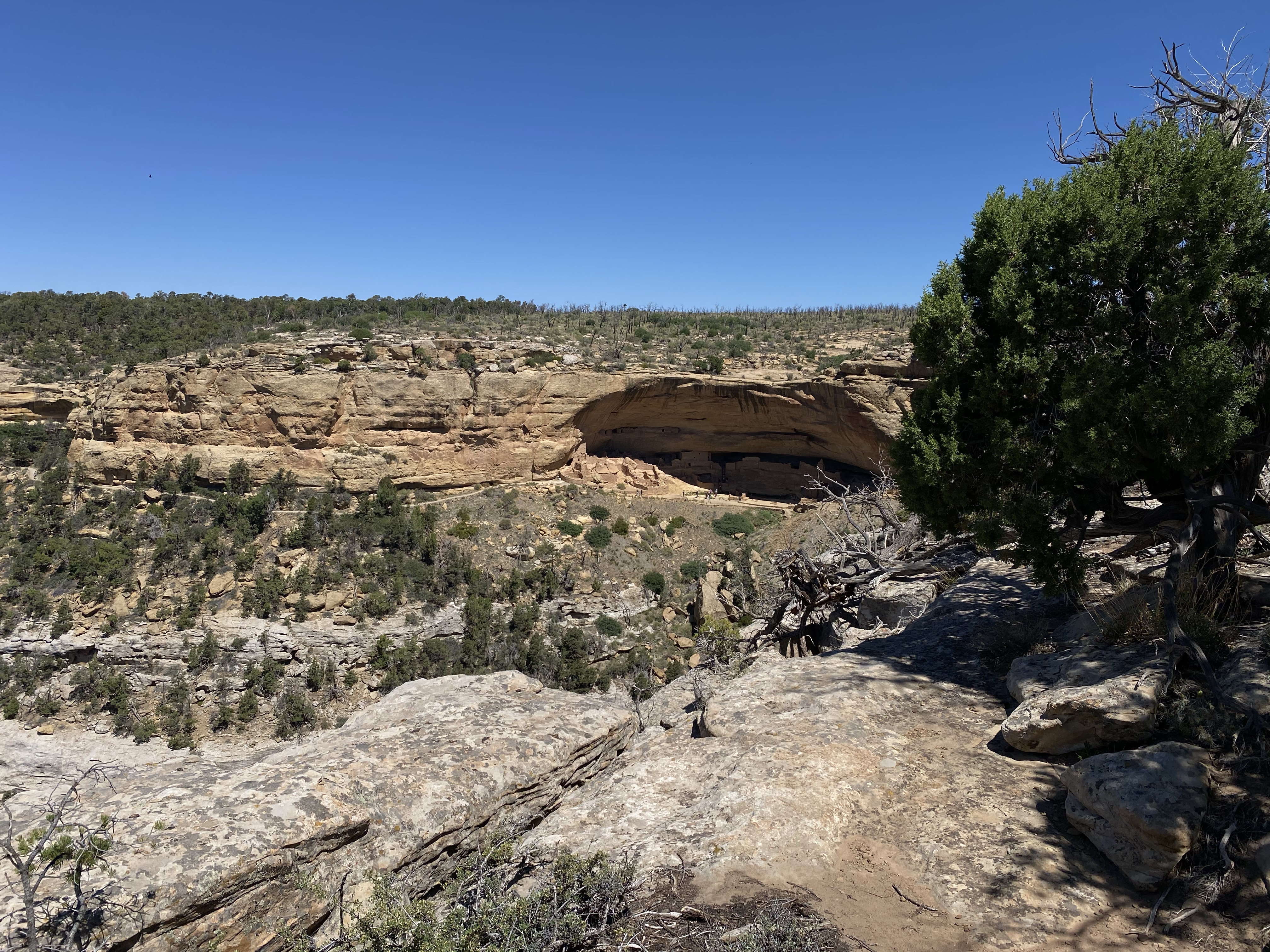
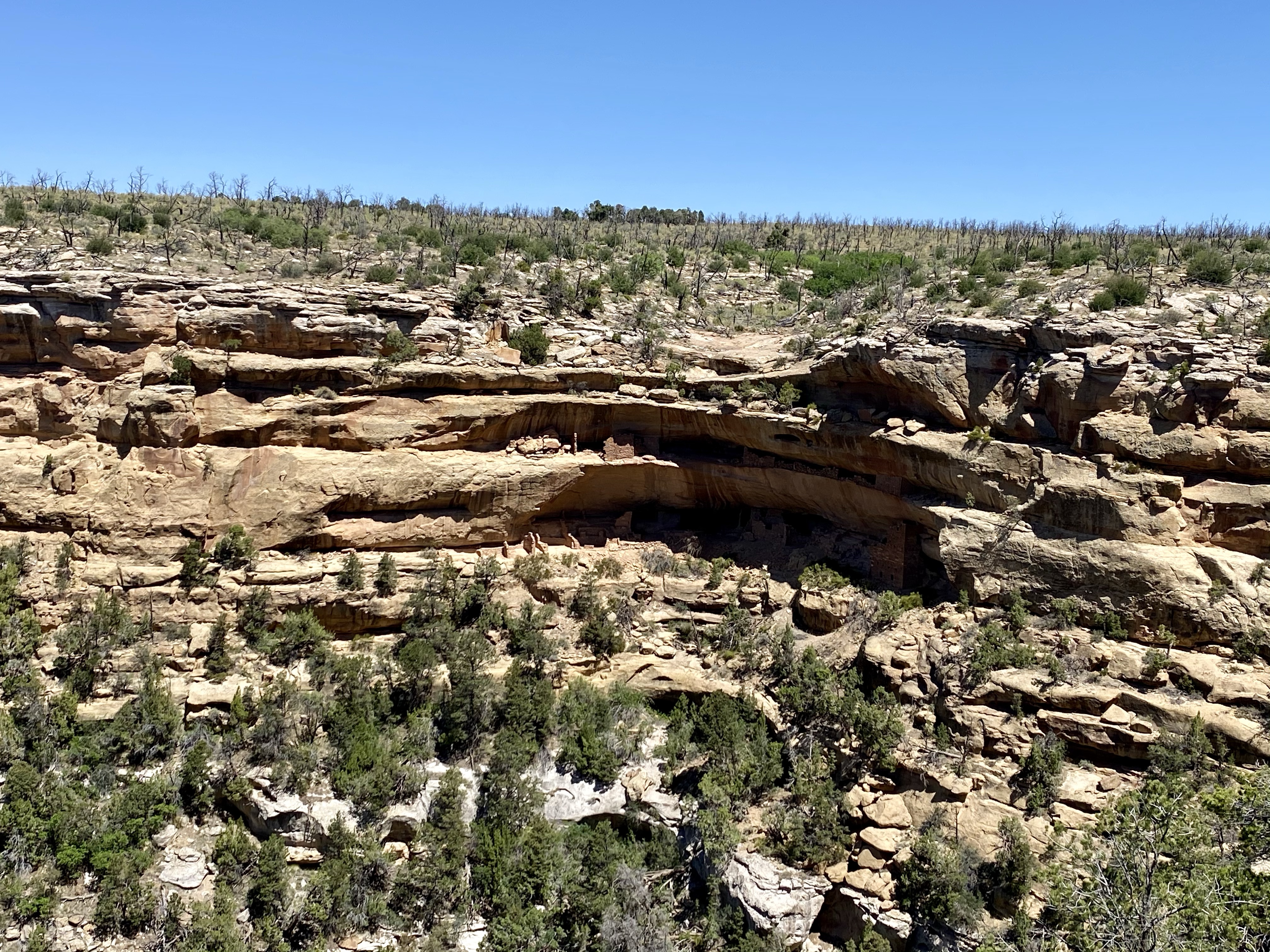
My first stop was the Long House Overlook. This cliff dwelling was discovered in 1889 by The Wetherill Brothers (hence the name of the mesa). They excavated a few rooms but the majority of the site was left untouched until 1961 when the National Park Service and National Geographic Society were collaborating in a massive, multi-year archeological project, the country’s first large-scale one. The Long House is set in a 298 foot long alcove and has about 150 rooms and 21 kivas. It dates back to AD 1145-1279 and was home to between 150-175 people. To visit, you climb down 130 feet! This cliff dwelling may have been a place to hold community gatherings or trade goods. It has an unusually large formal plaza and high number of rooms, suggesting it was an important place. While I couldn’t tell much of this from afar, I did marvel at home people constructed such a village 130 feet below the mesa top! Wow.
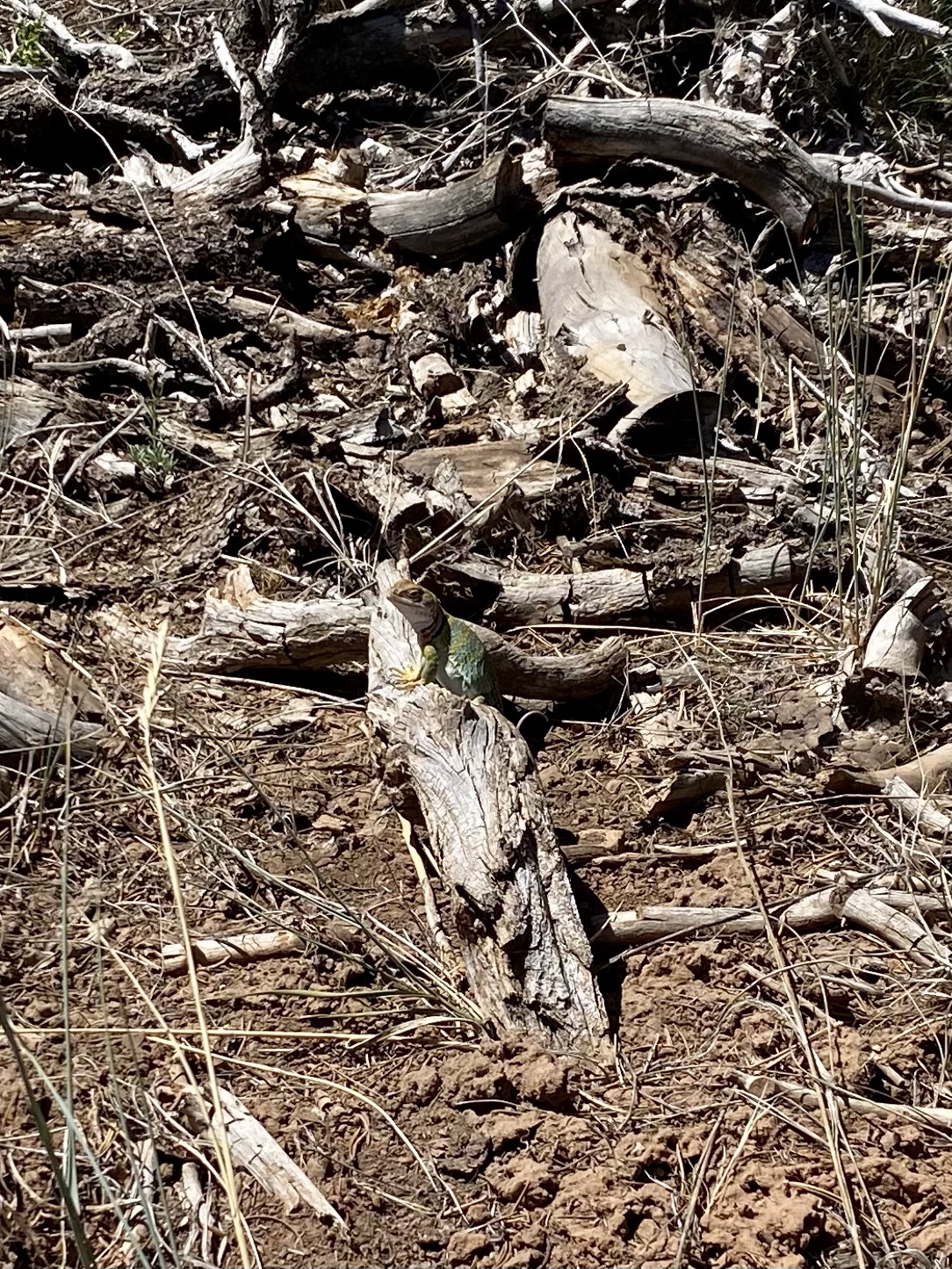
On my way to my next stop I was treated to a show from a colorful, far lizard posing nicely on a branch. What a treat!
From there I continued on to the Kodak House, another large community but not as well preserved. The interesting thing about the Kodak House is the ravine above it. The Ancestral Pueblo people dams such ravines to make fertile soil in the terraces above their communities. The dam here hold three feet of soil behind it, showing how successful this practice was.
As I continued my walk I had the company of a fellow learner. Good conversation helped pass the time and allowed us to share our newly gathered history lessons. Together we looked at the pit houses at Badger House Community, the red brick structures above and below ground. What surprised me most about these buildings were their small size! Due to little protein and genetics, it is assumed these Ancestral Pueblo people were of small stature. They must have been to fit in the rooms and doorways!
Below are pictures of more information about this style of construction.
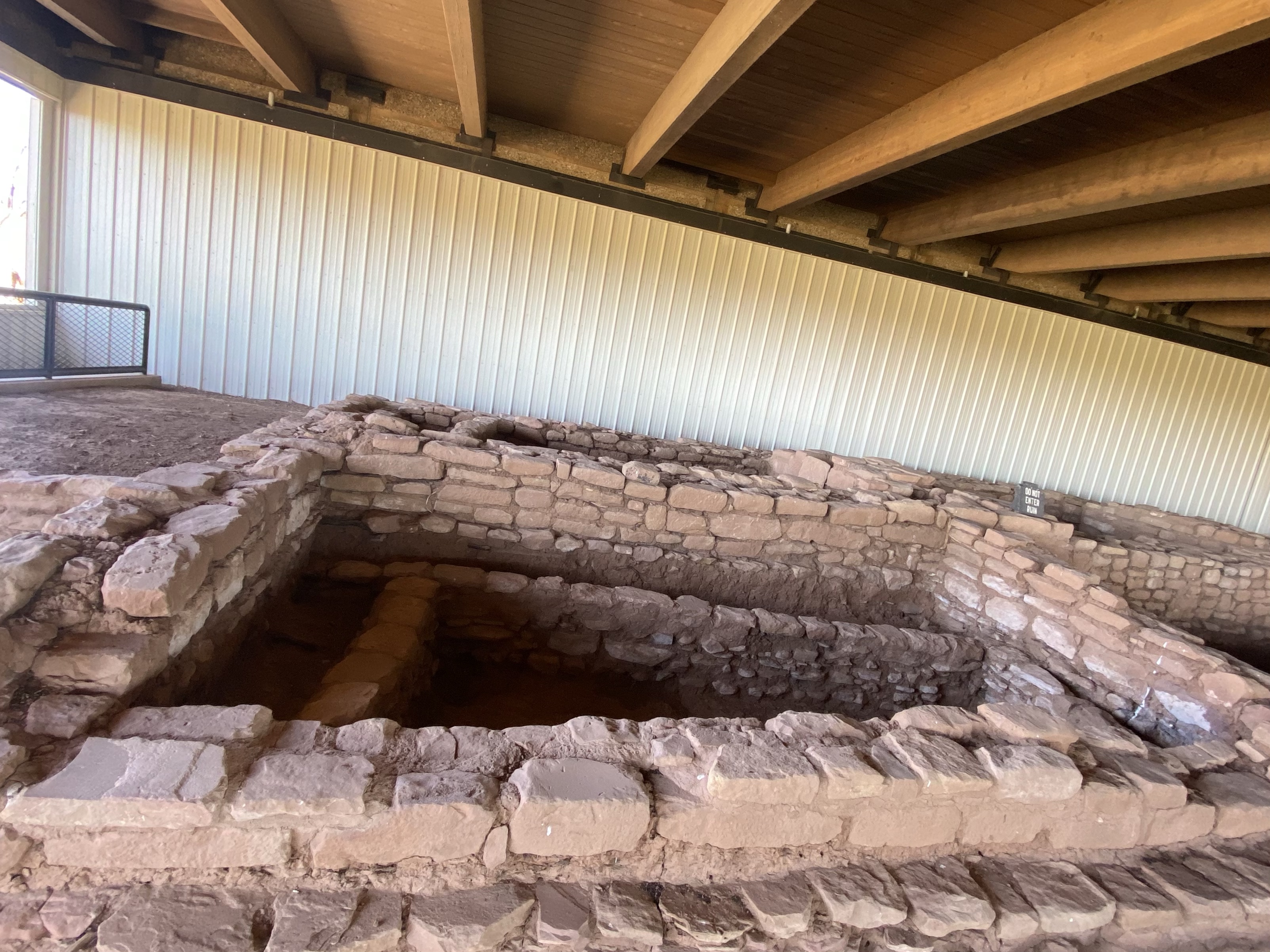
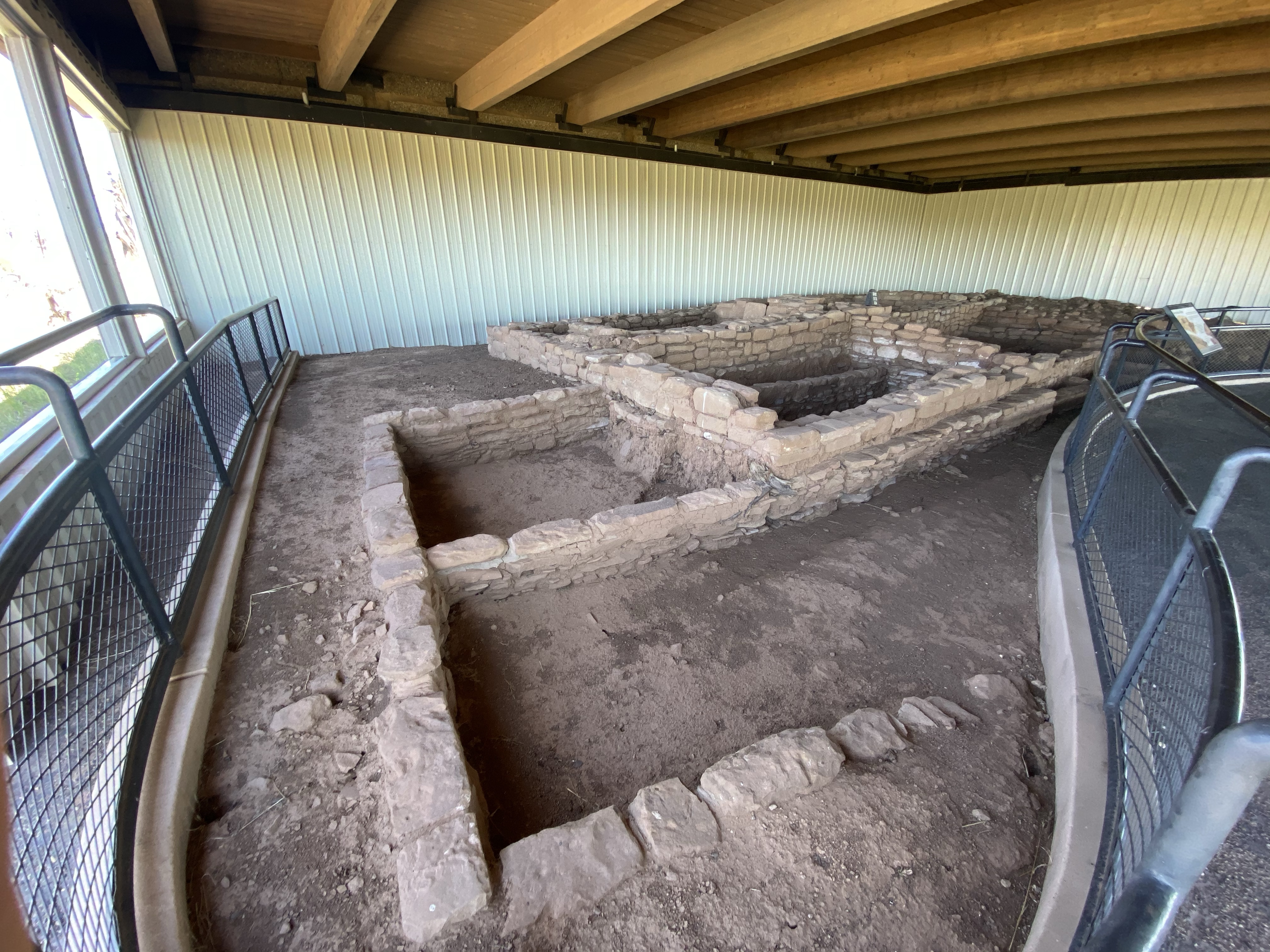
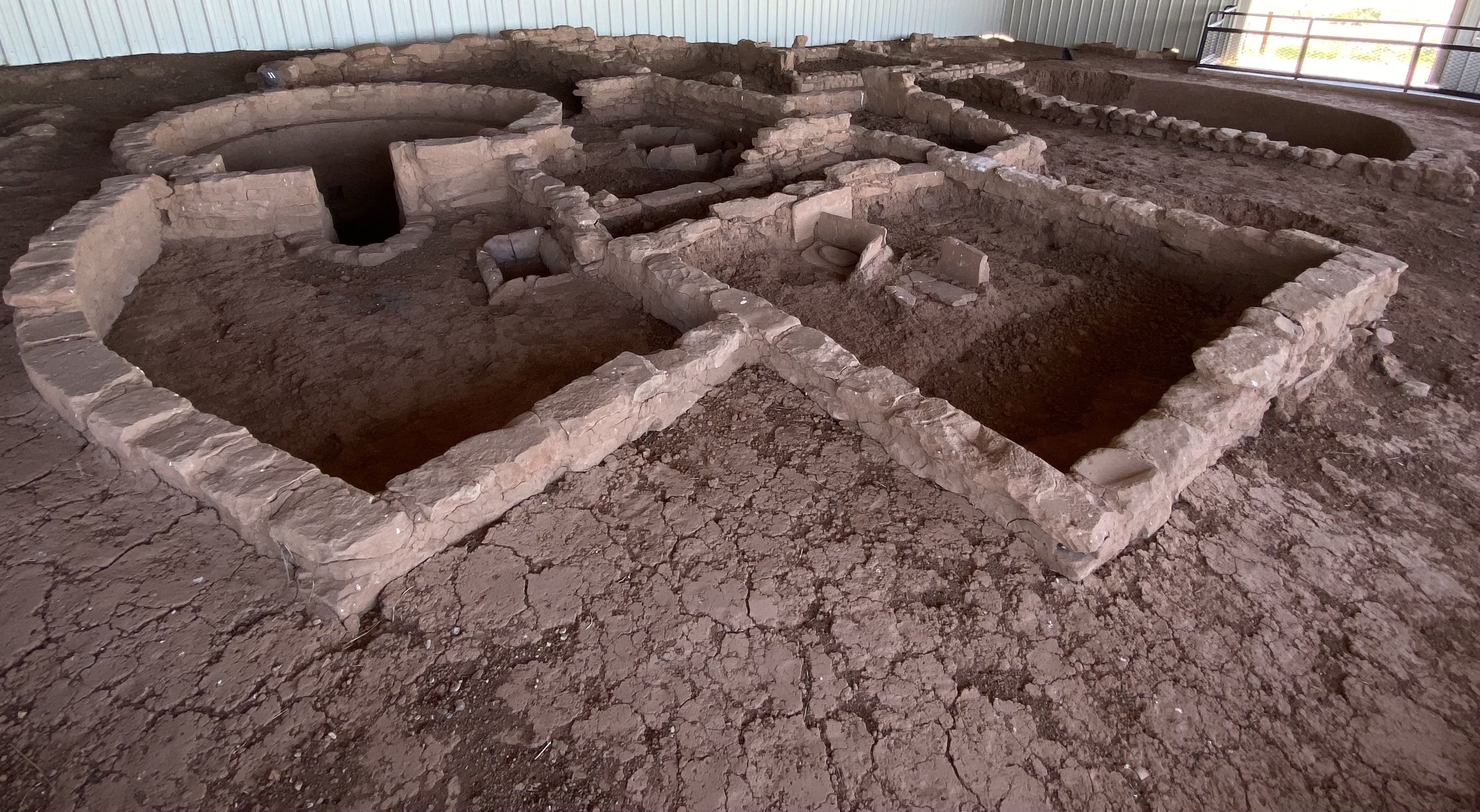
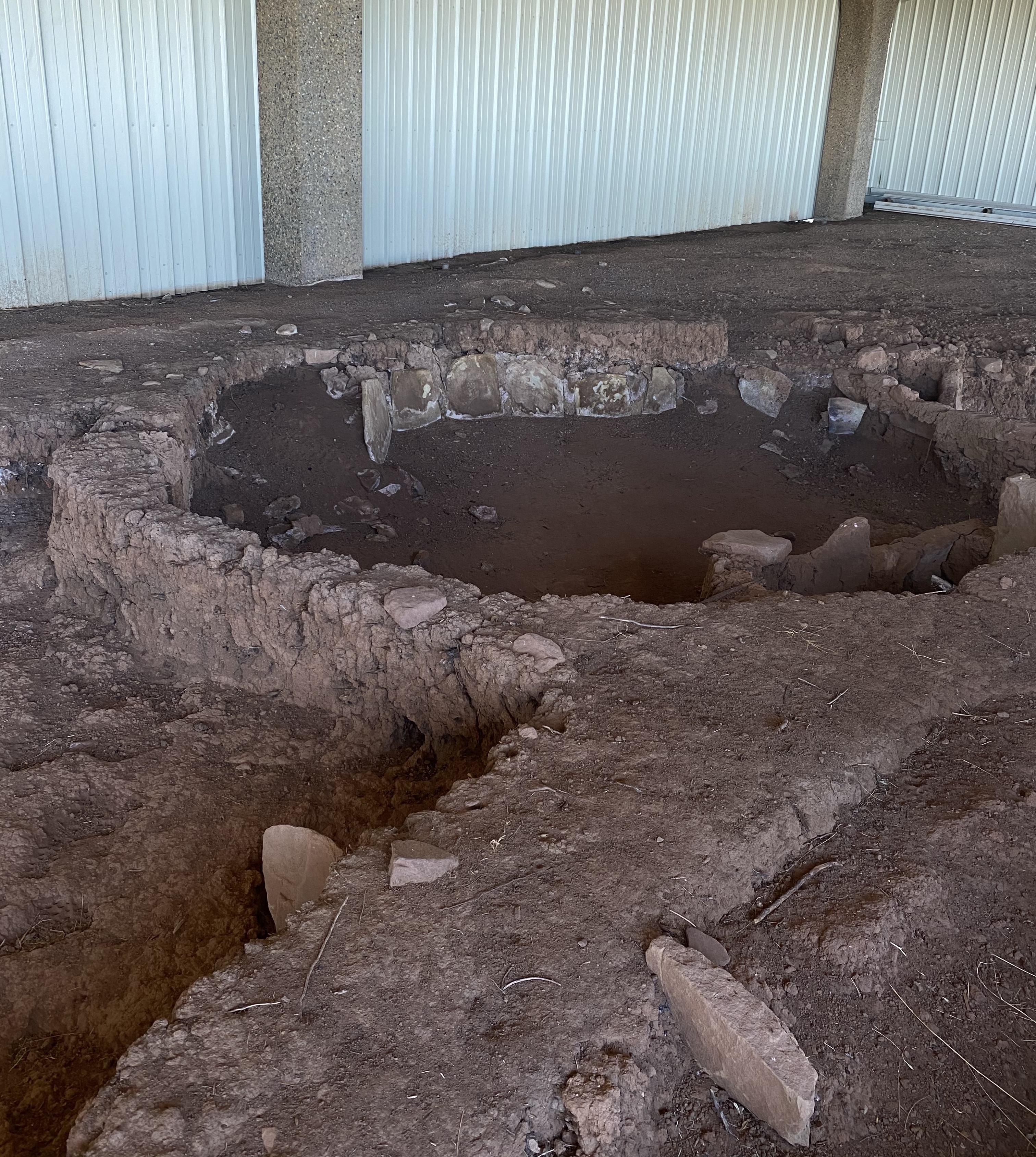
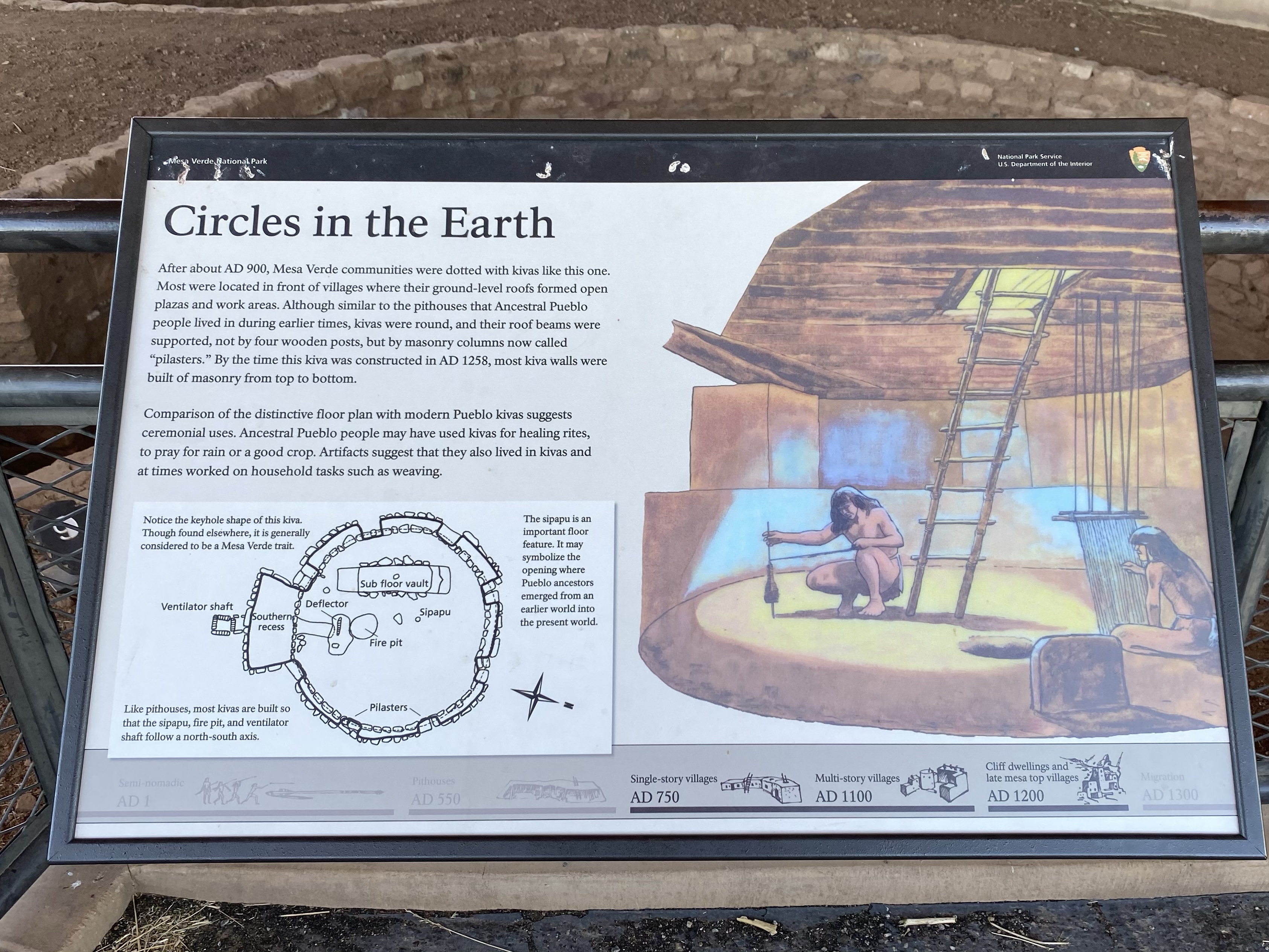

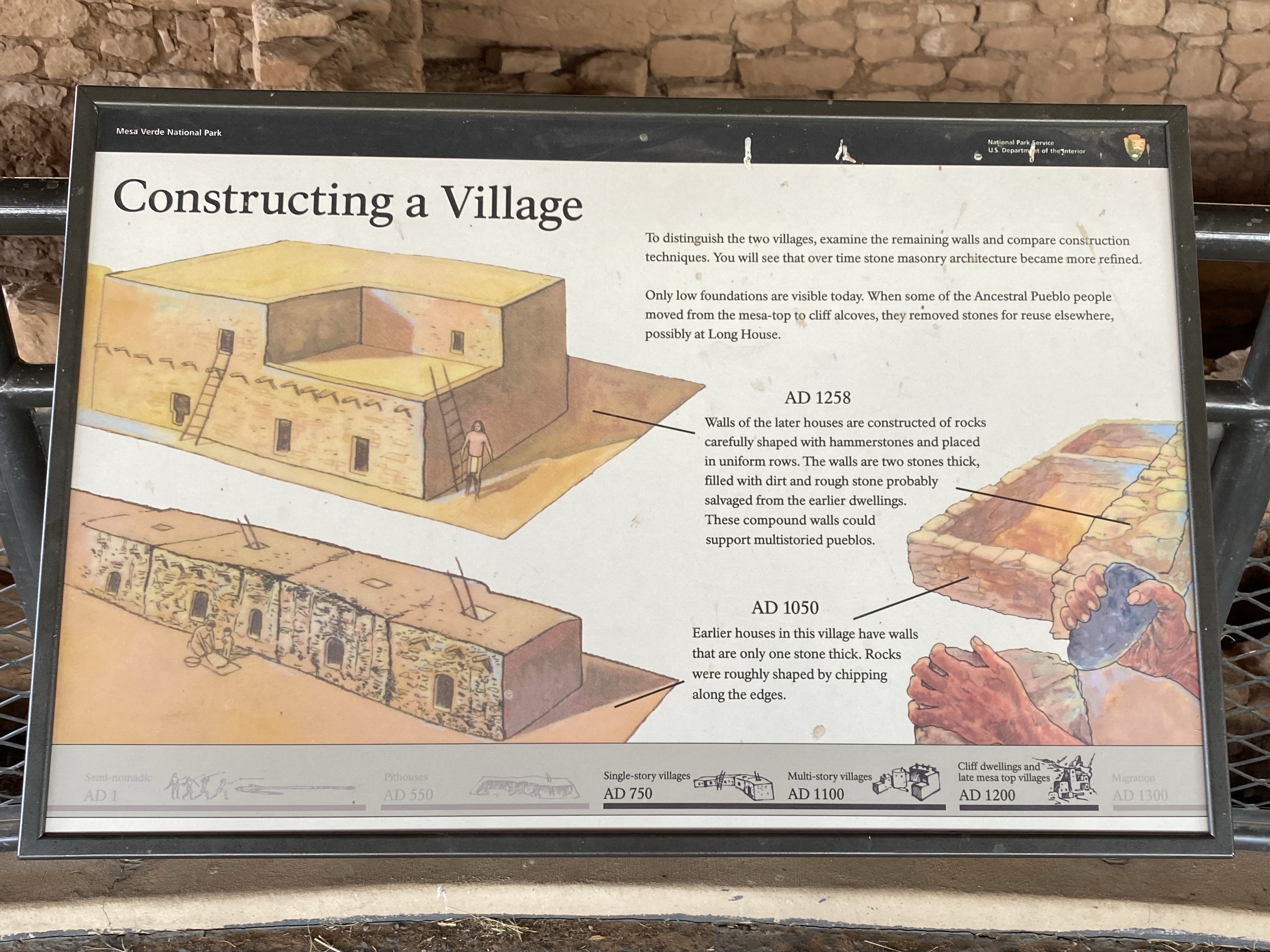
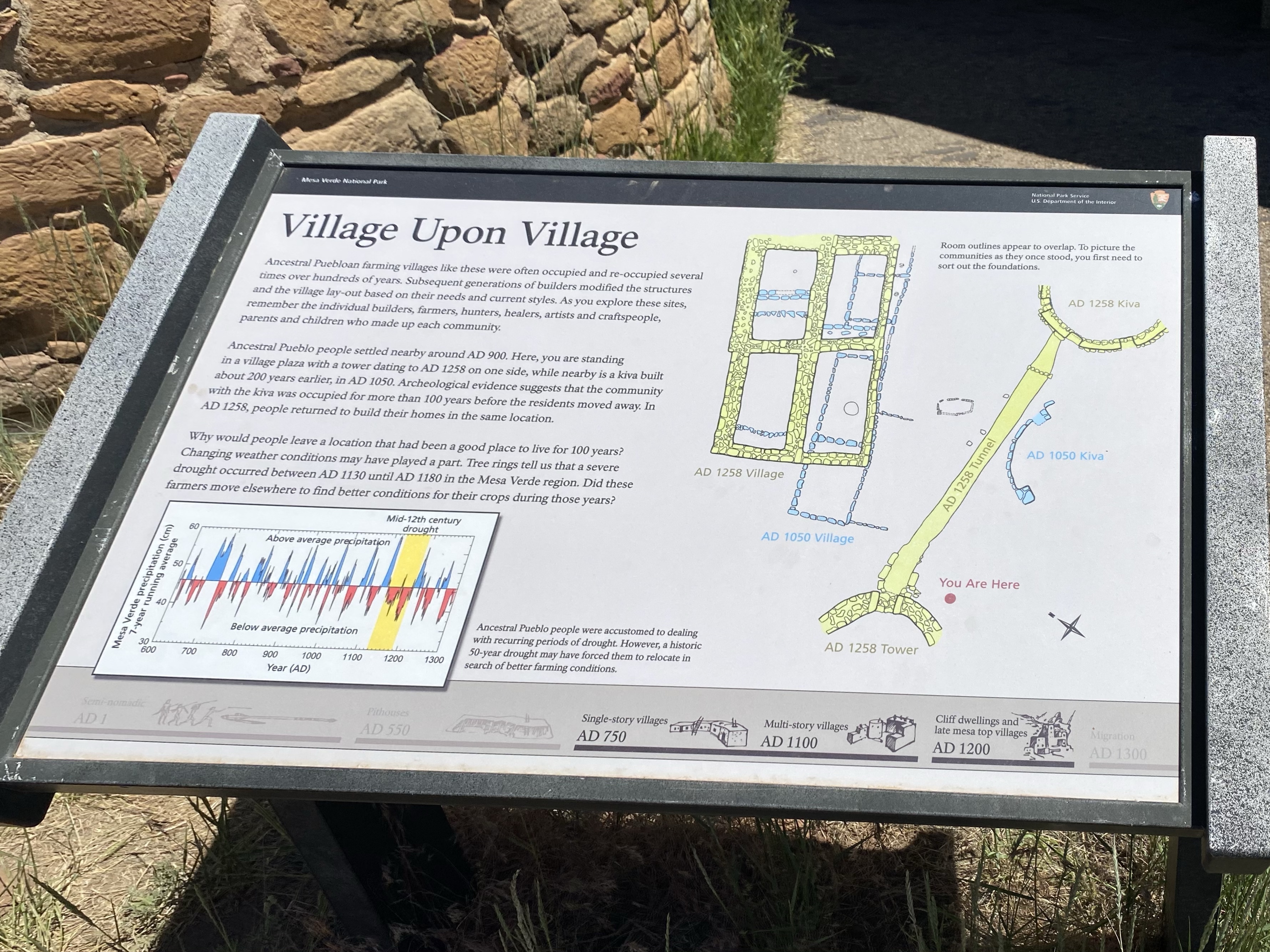
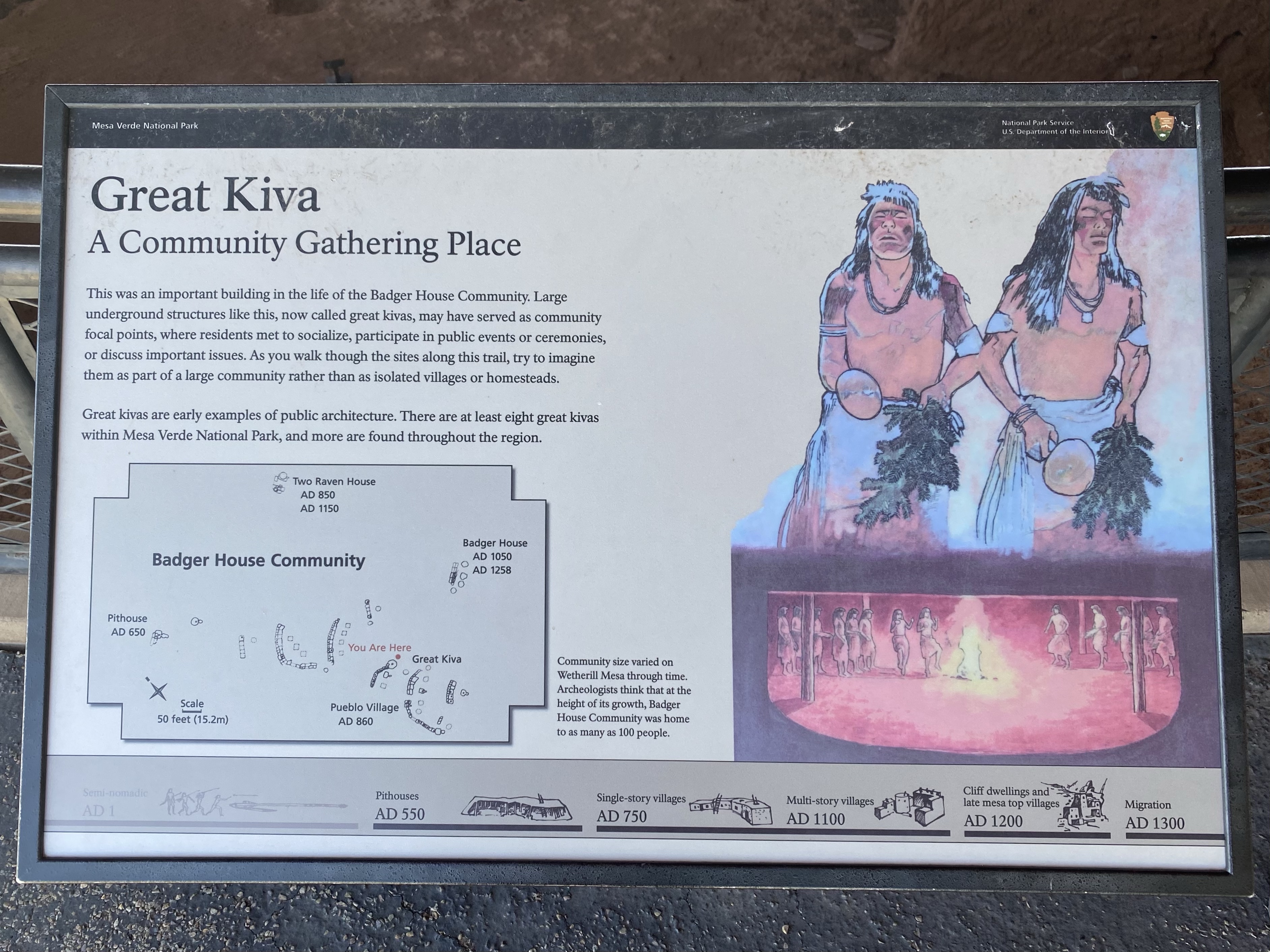
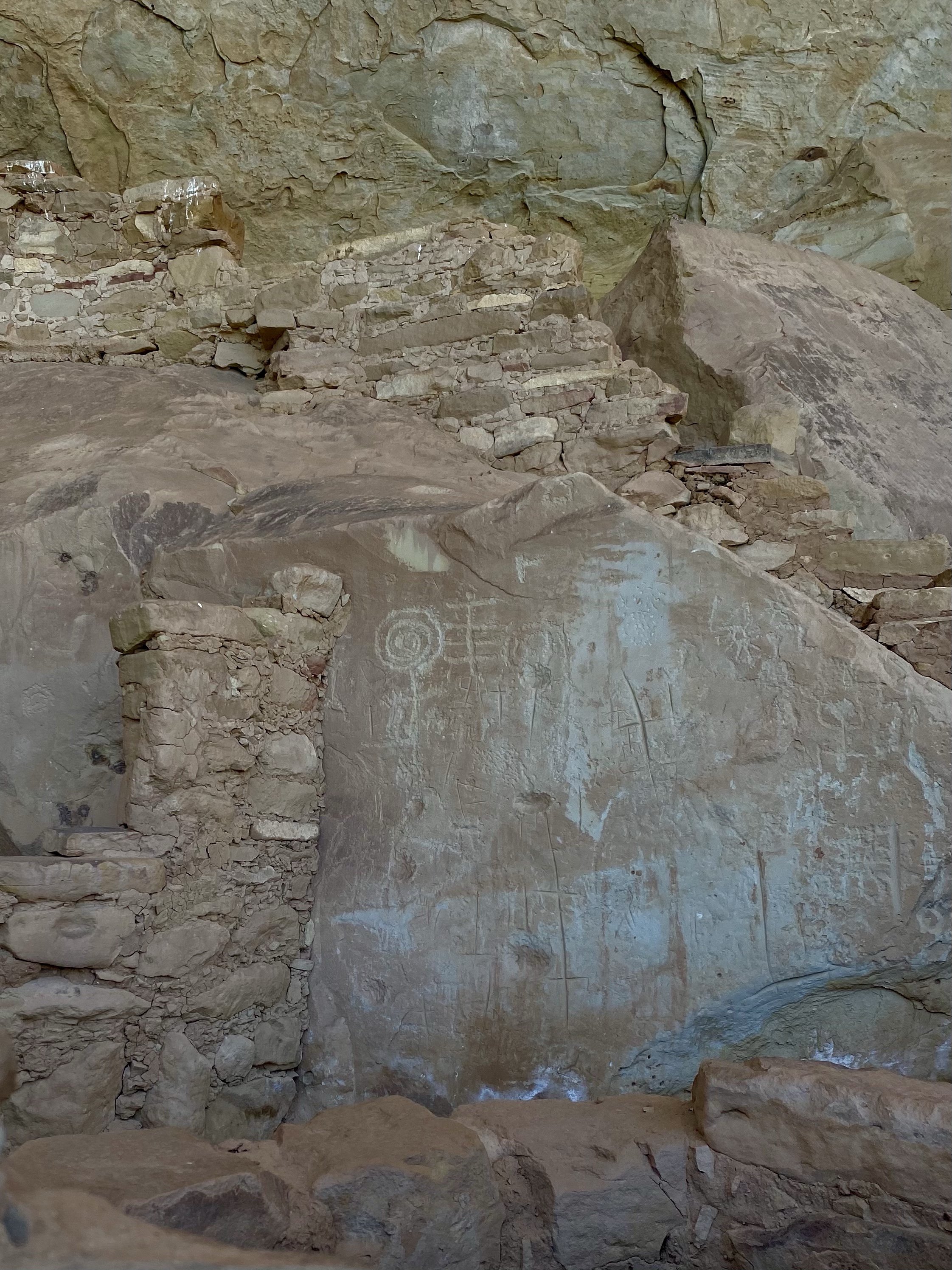
Back at the kiosk my walking buddy and I parted ways. I continued on to Step House, a place he had already visited. Step House is one of the only cliff dwellings you can visit without a tour, and is a reconstructed version of the small pit house village once there. Nestled into an alcove 100 feet from the mesa top, it’s called Step House because of the evidence of stairs used to access this historical home. I’d like to live here! Stairs rather than scaling a wall!
This space was used by two different generations of people, first as pit houses in the 500-600 range and then again as a cliff dwelling in the 1200s. Here you can take a self-guided tour with a handy booklet and learn about many interesting features. (If you’d like to borrow the booklet, let me know! I have a copy.) my favorite part was the Petroglyphs carved into the boulder.
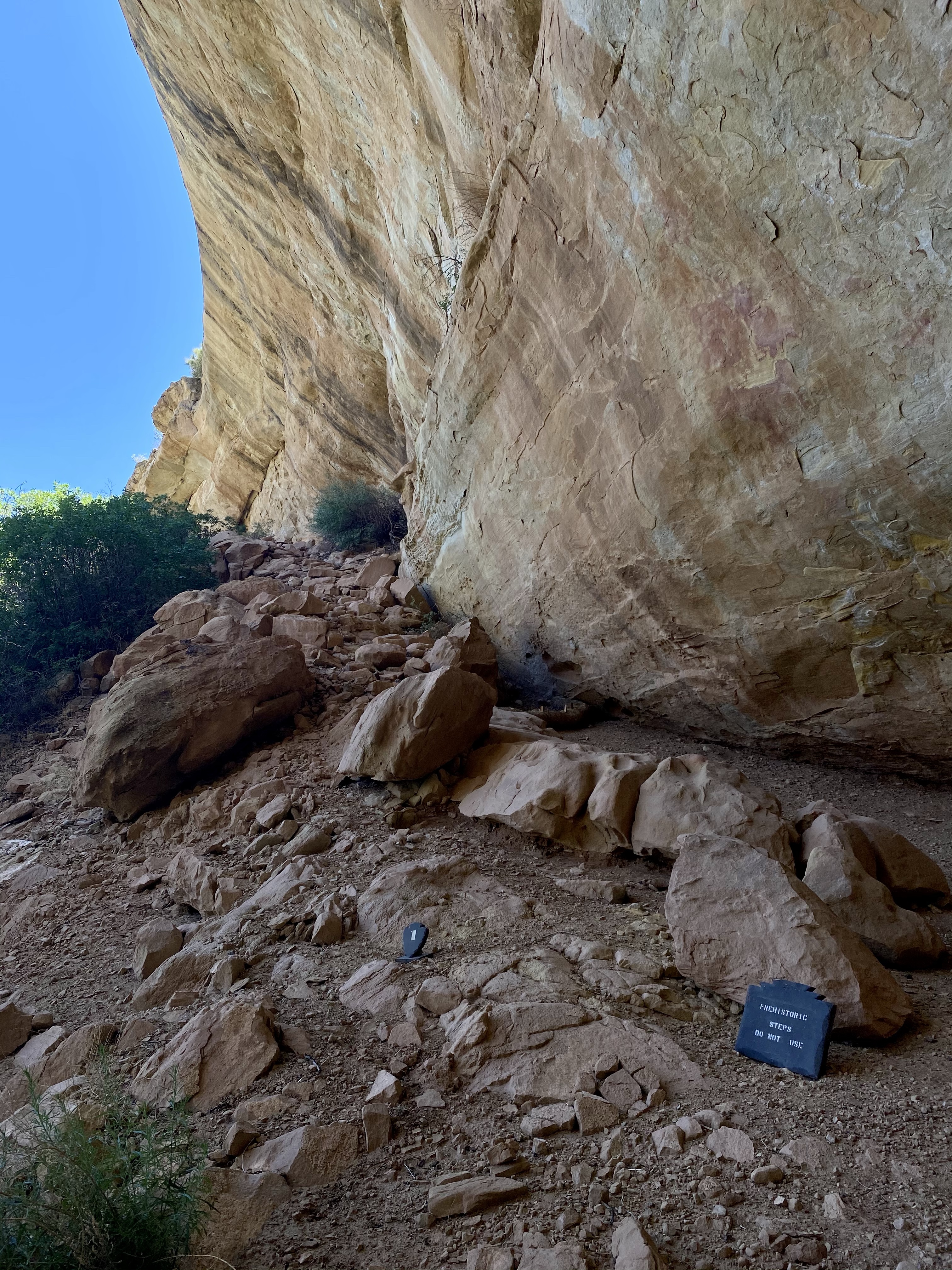
After hiking out of the Step House, I drove to my campsite and settled in for the evening. My feet were tired! After a rest and long chat with my mom, I ate dinner and decided to go on an easy sunset walk.
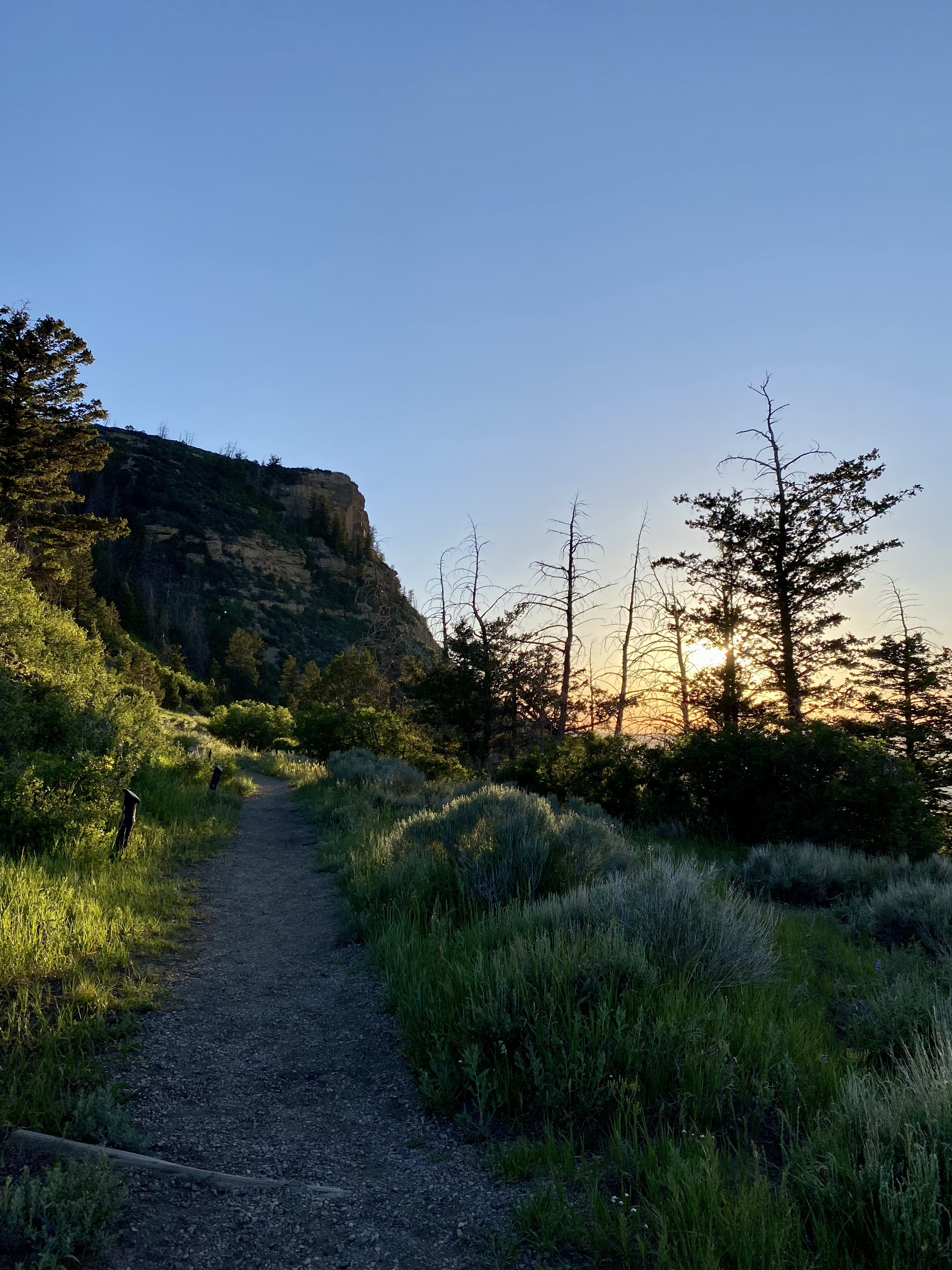
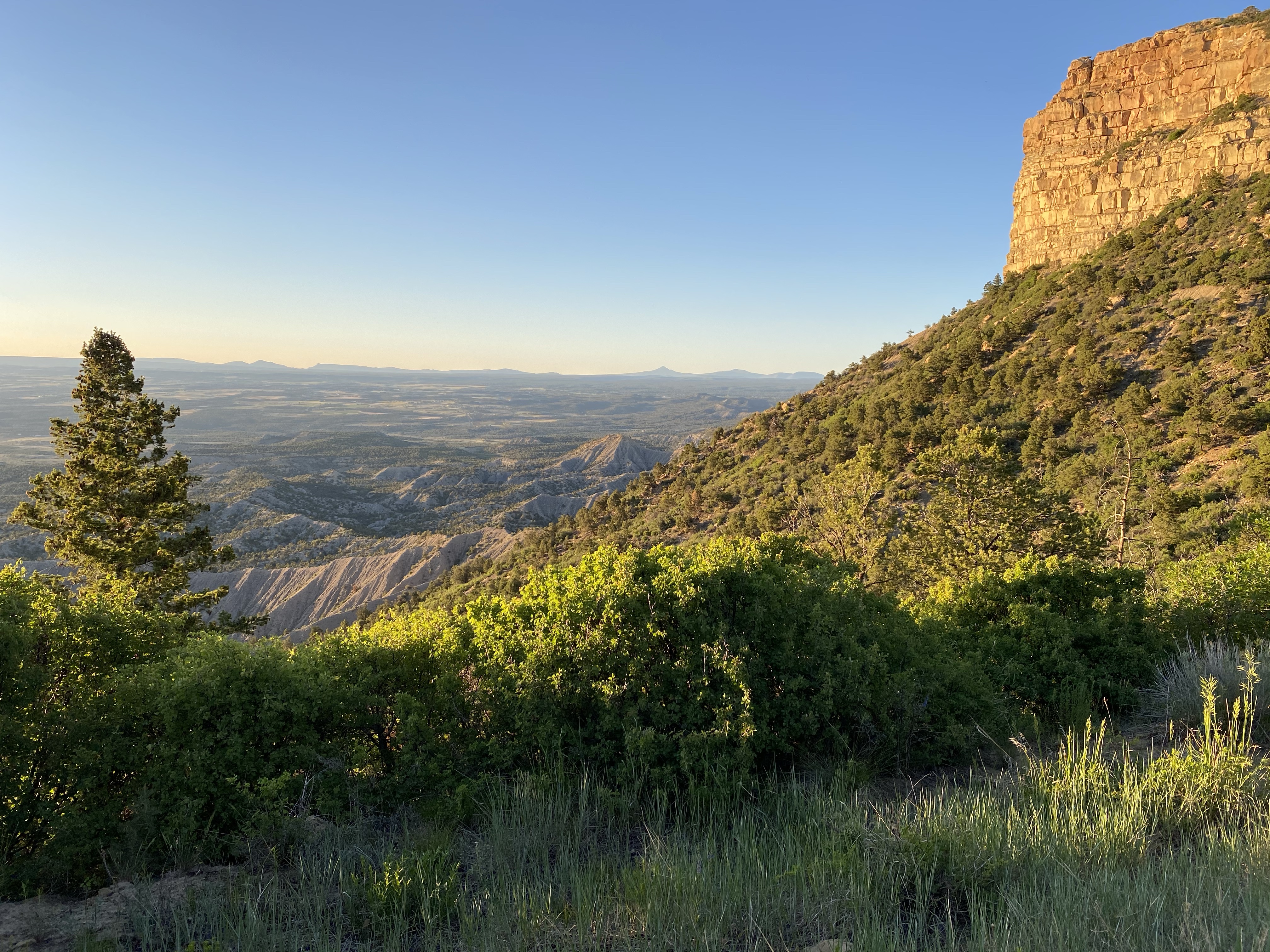
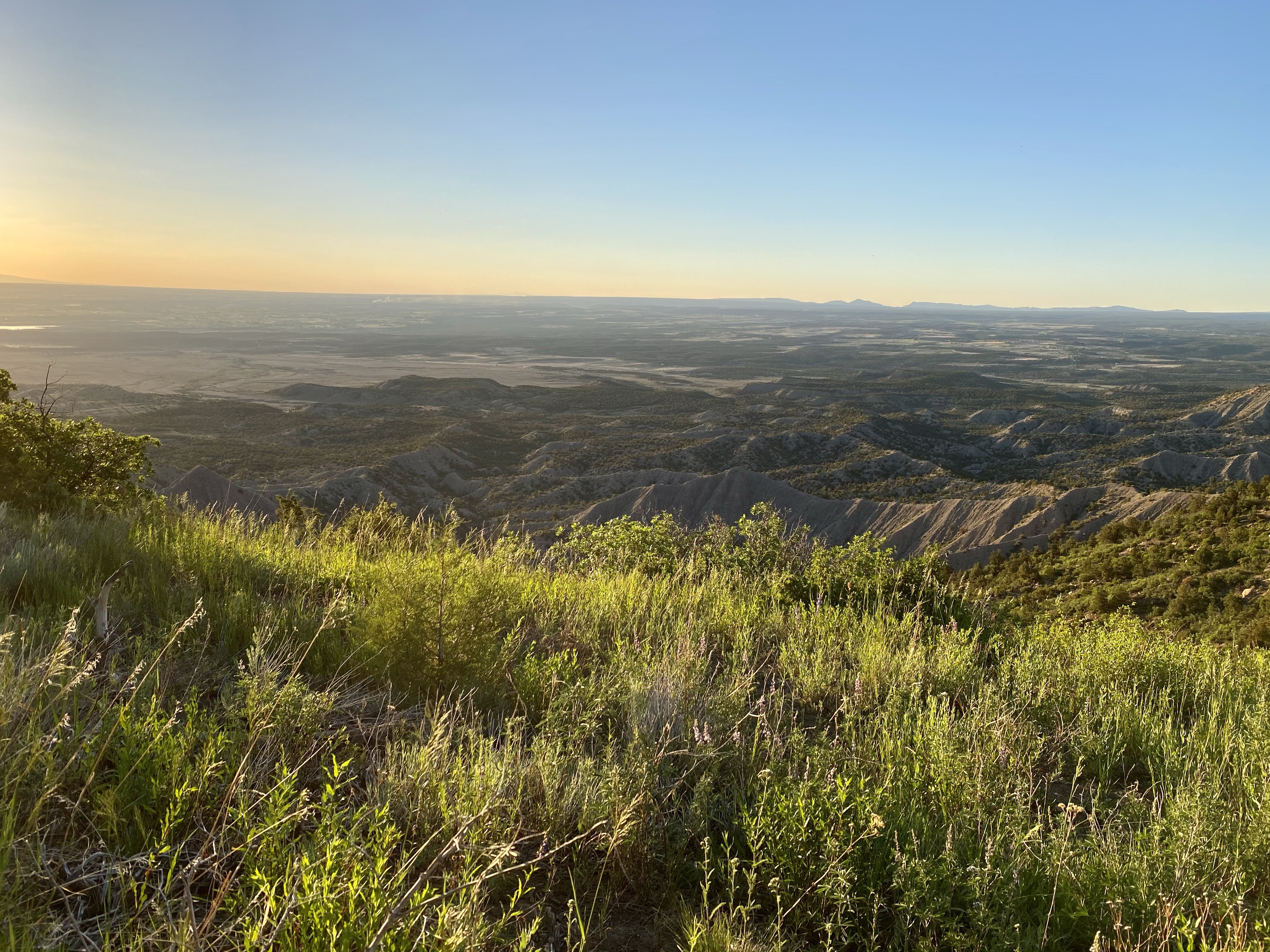
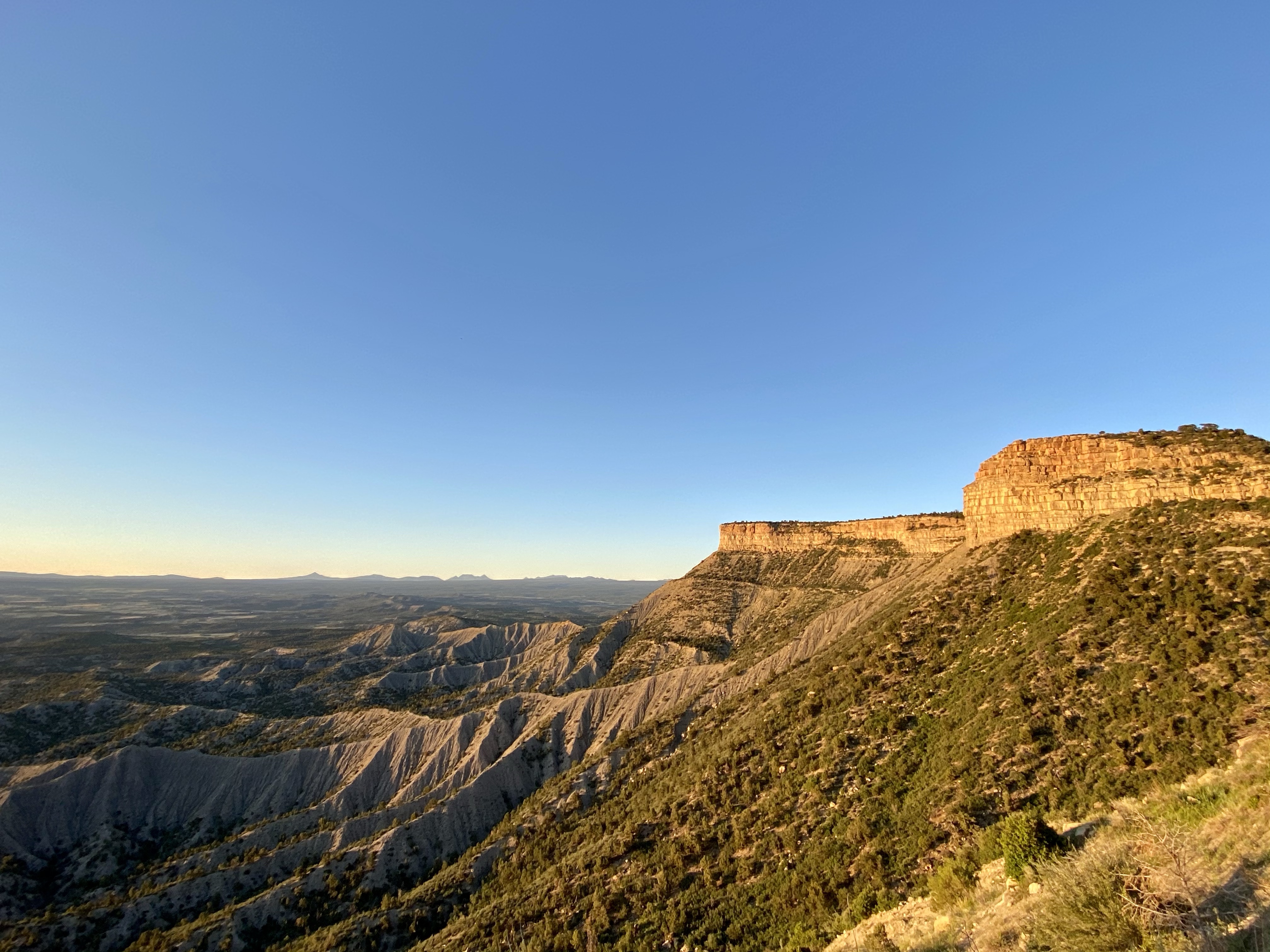
I headed down the path as golden hour was in prime time and listened to the chorus of bugs sing around me. The cliffs glowed as the sun lowered, the fields sparkled. Out at the viewpoint I had a good view of the craggy valley below, the lights of a fair blinking in the distance. The sun did what is does best, casting beautiful colors across the sky. As I walked back that night I turned my headlamp off and looked at the rising stars and moon. Any crankiness I had that day evaporated. Grateful to enjoy these sites and views.



My second day in the park I headed to Chapin Mesa early, as it was a Saturday. My goal was to visit Spruce Tree House and hike to the petroglyphs before driving to the different viewpoints. I pulled into the quiet parking lot and headed out.
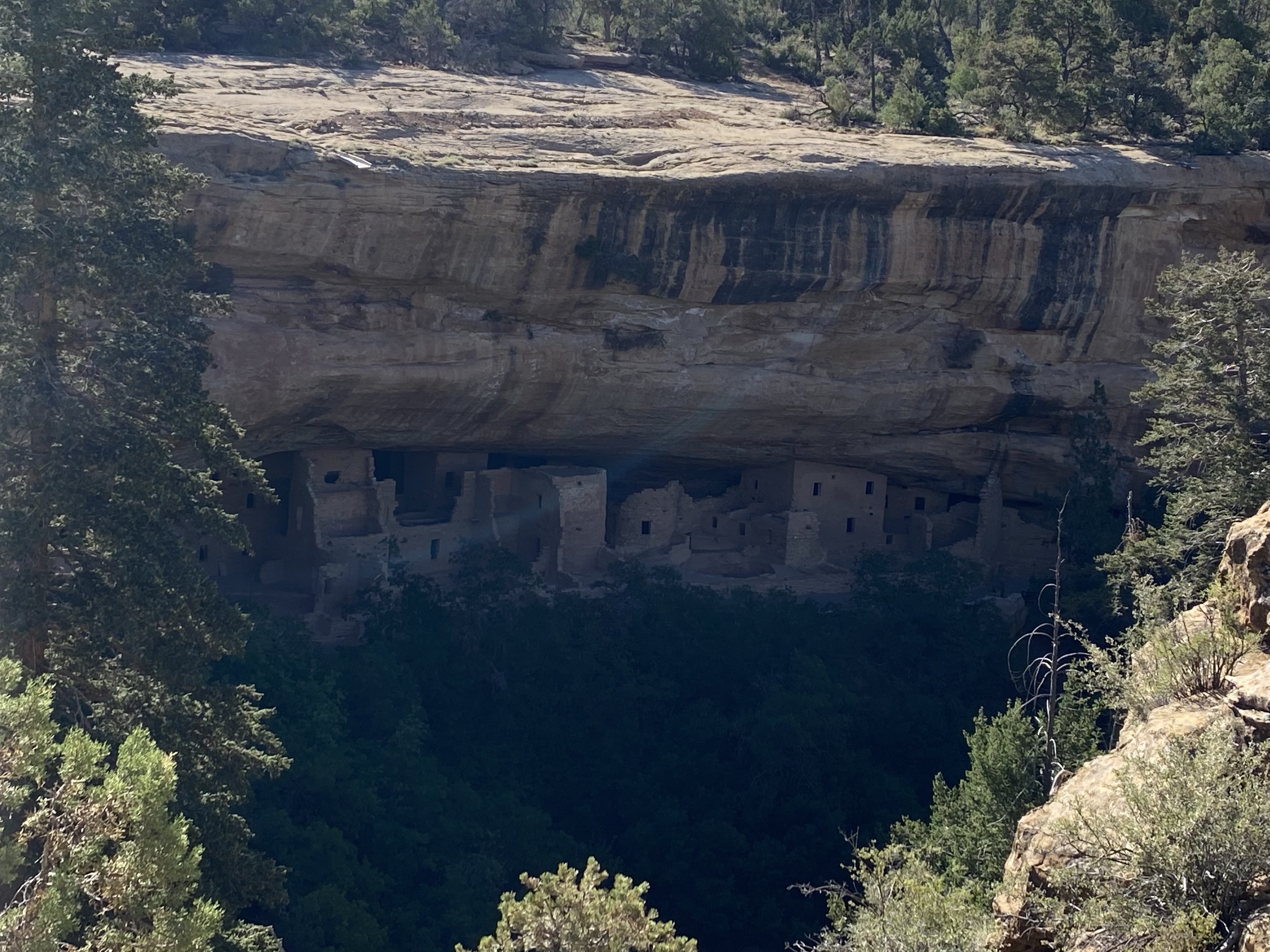
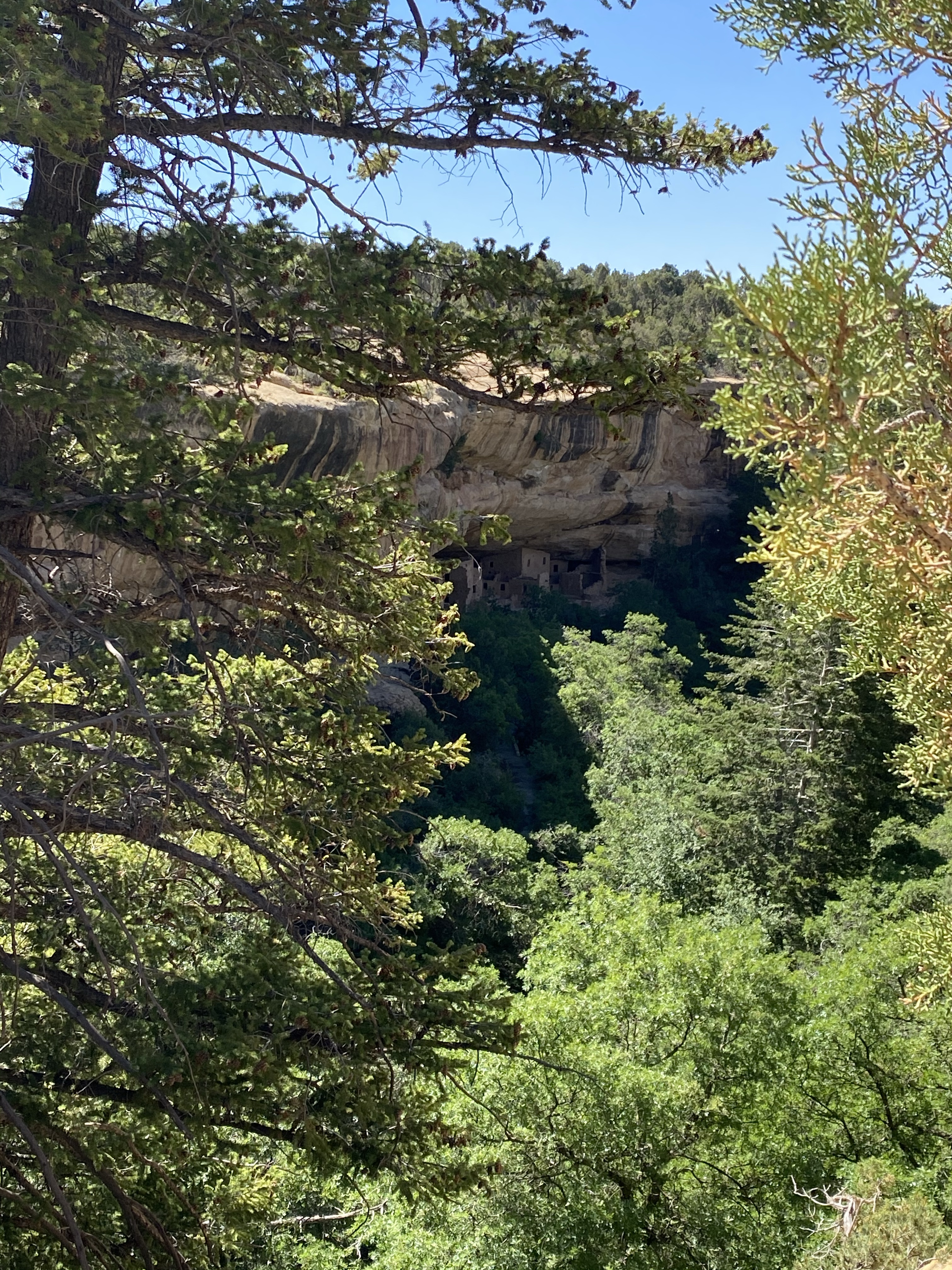
Unfortunately, Spruce Tree House and the museum were both closed for renovation. Womp womp. I was
Able to view the cliff dwellings from afar, and then continued down the trail.
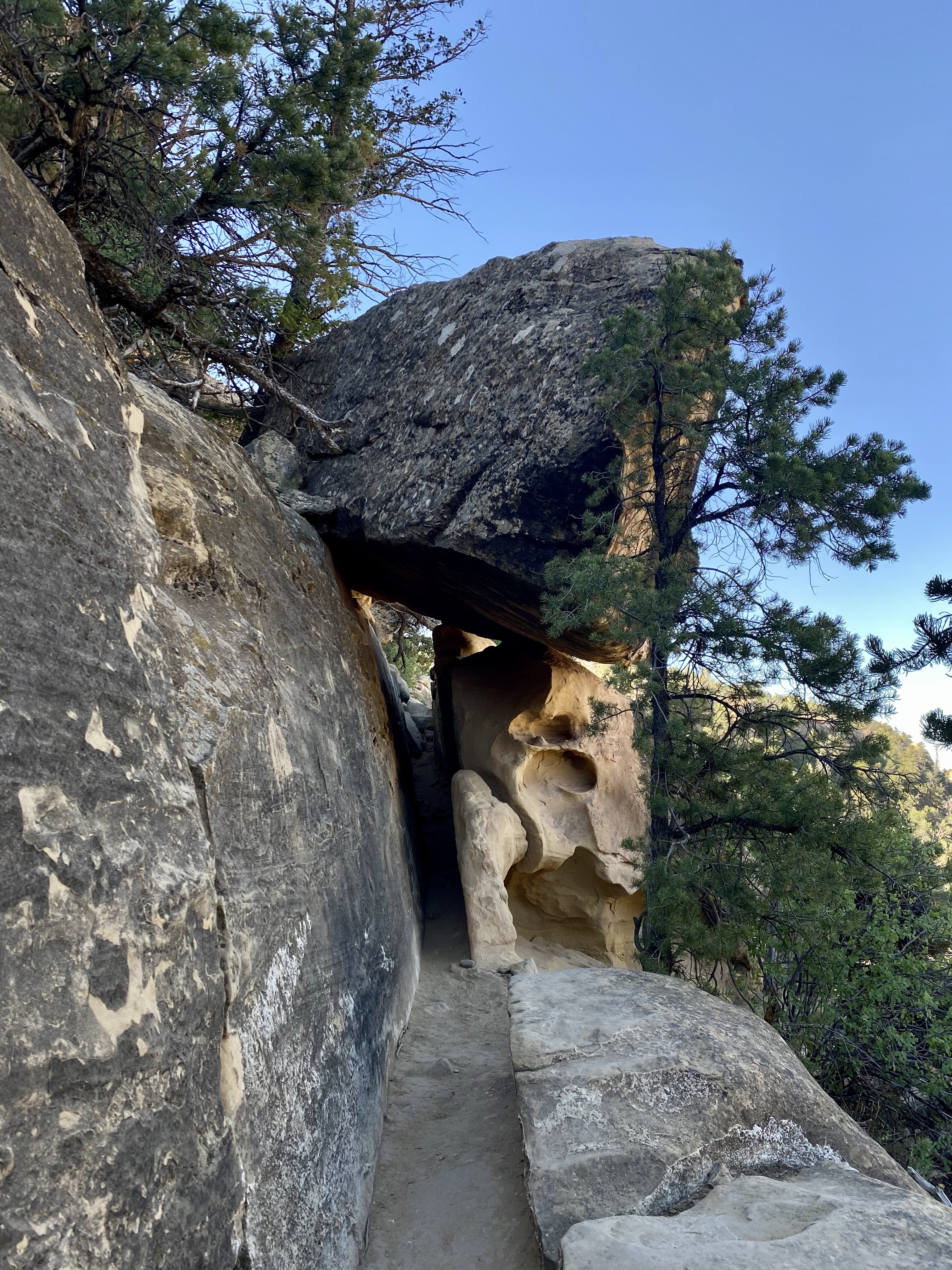
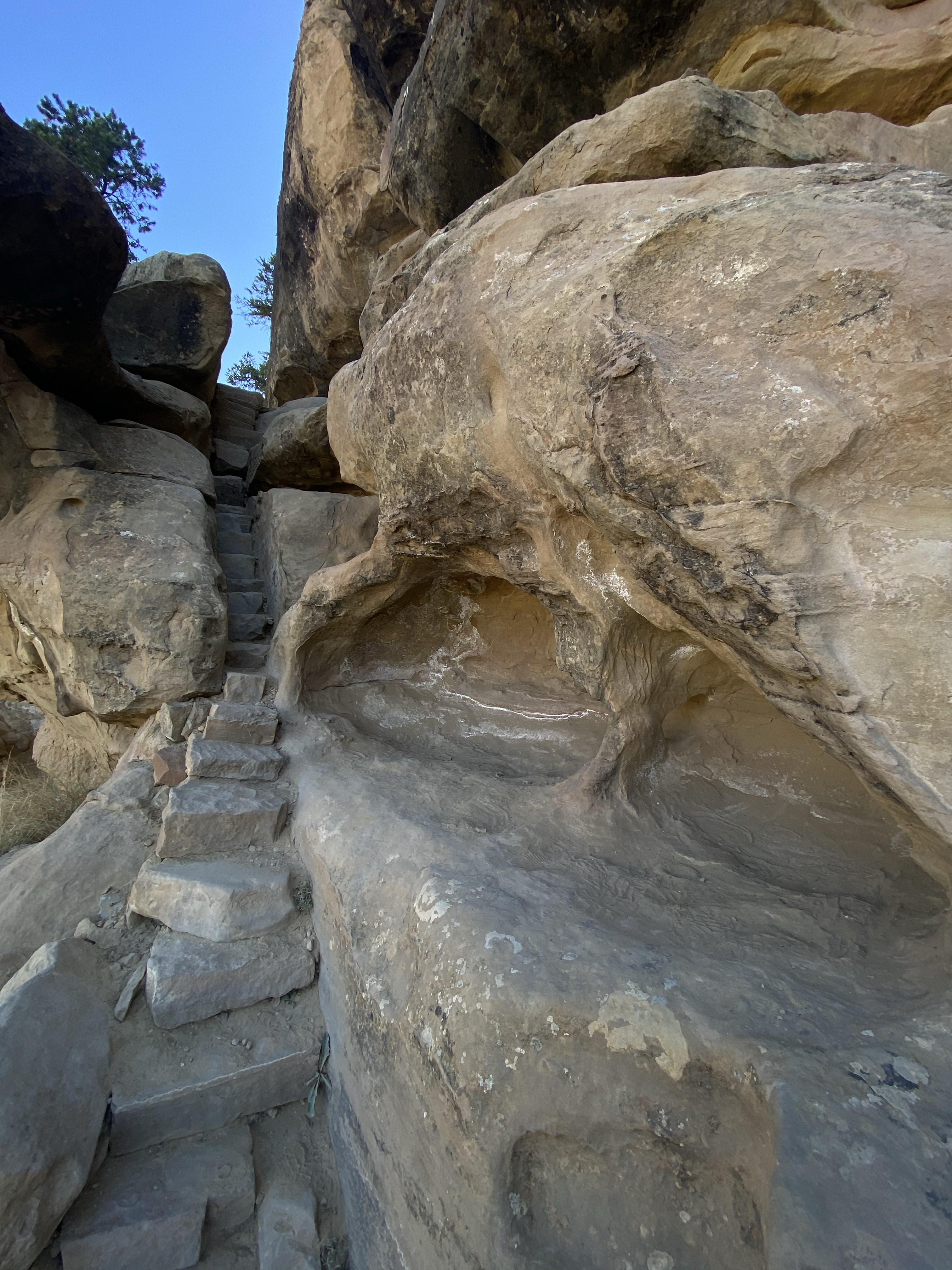
The path was narrow, edging around the cliff wall. It was tree lined on the other side, so not scary, just narrow. I climbed over small boulders, squeezed between some fallen rocks, and down several steps. The cliff wall provided a lot of welcome shade, and an attractive distraction. At times it hung over me like an awning, other times providing small caves for little people to crawl into. Light yellow with splashes of red and black, it was ever changing as I looped around.
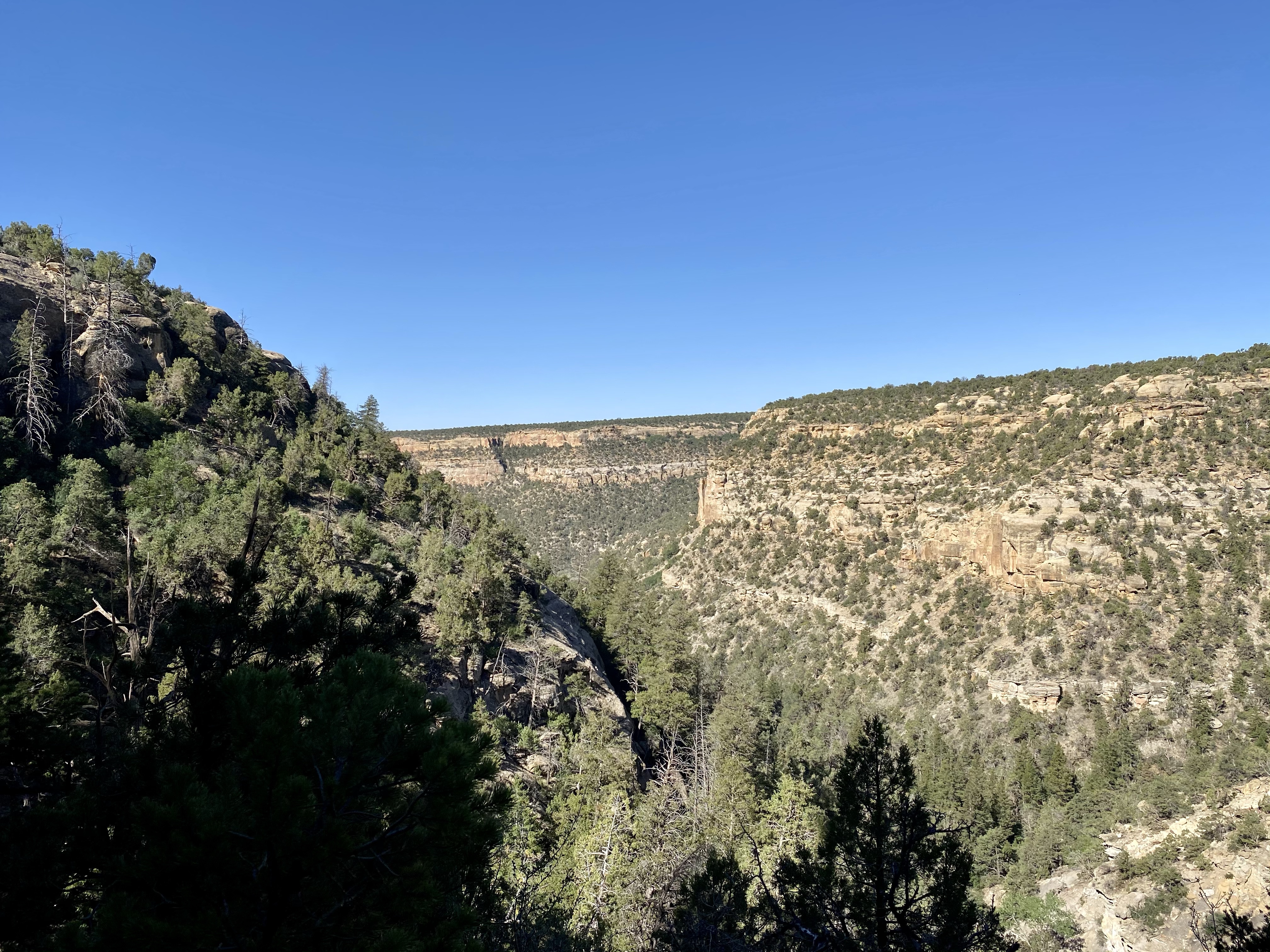
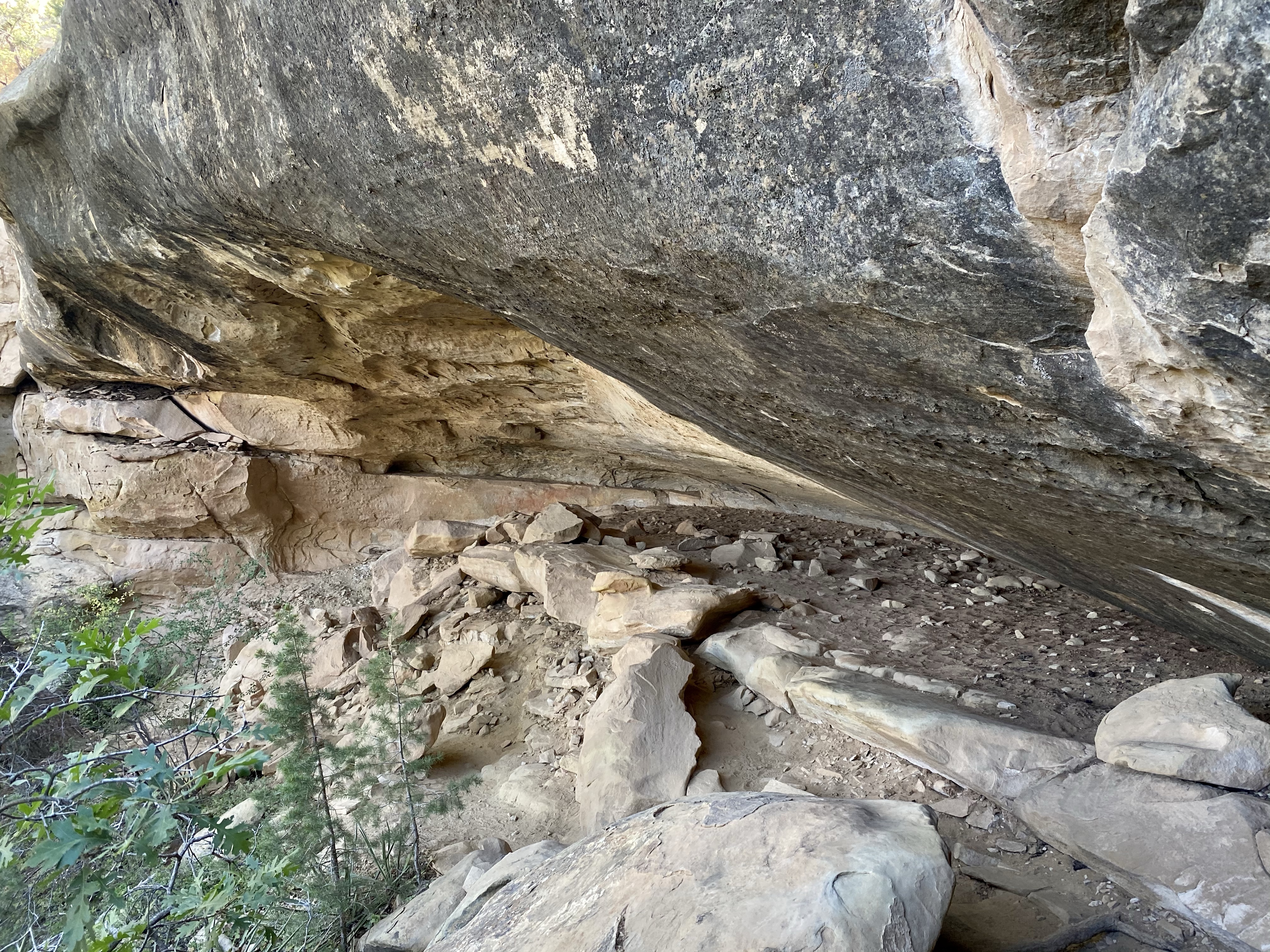
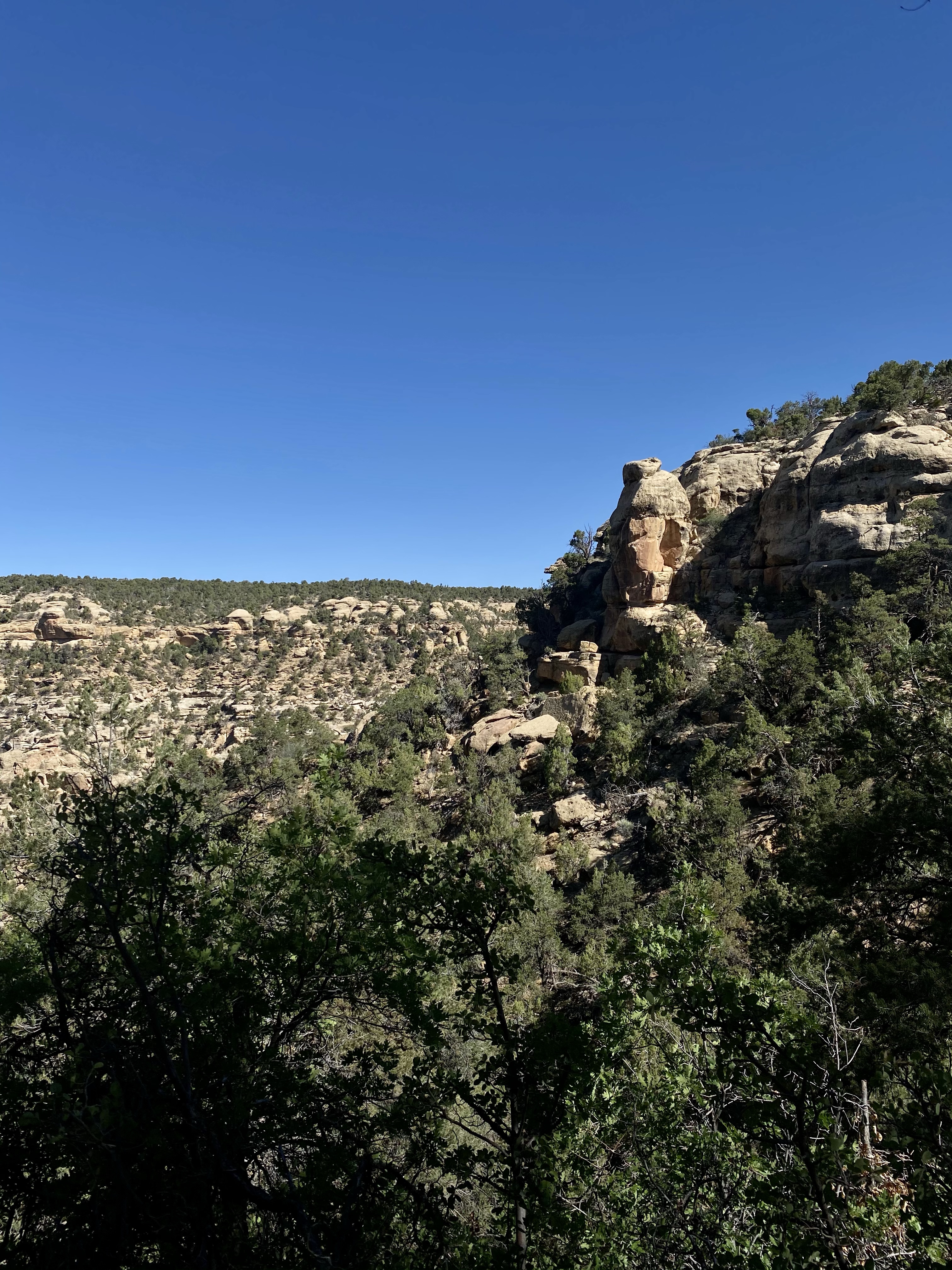
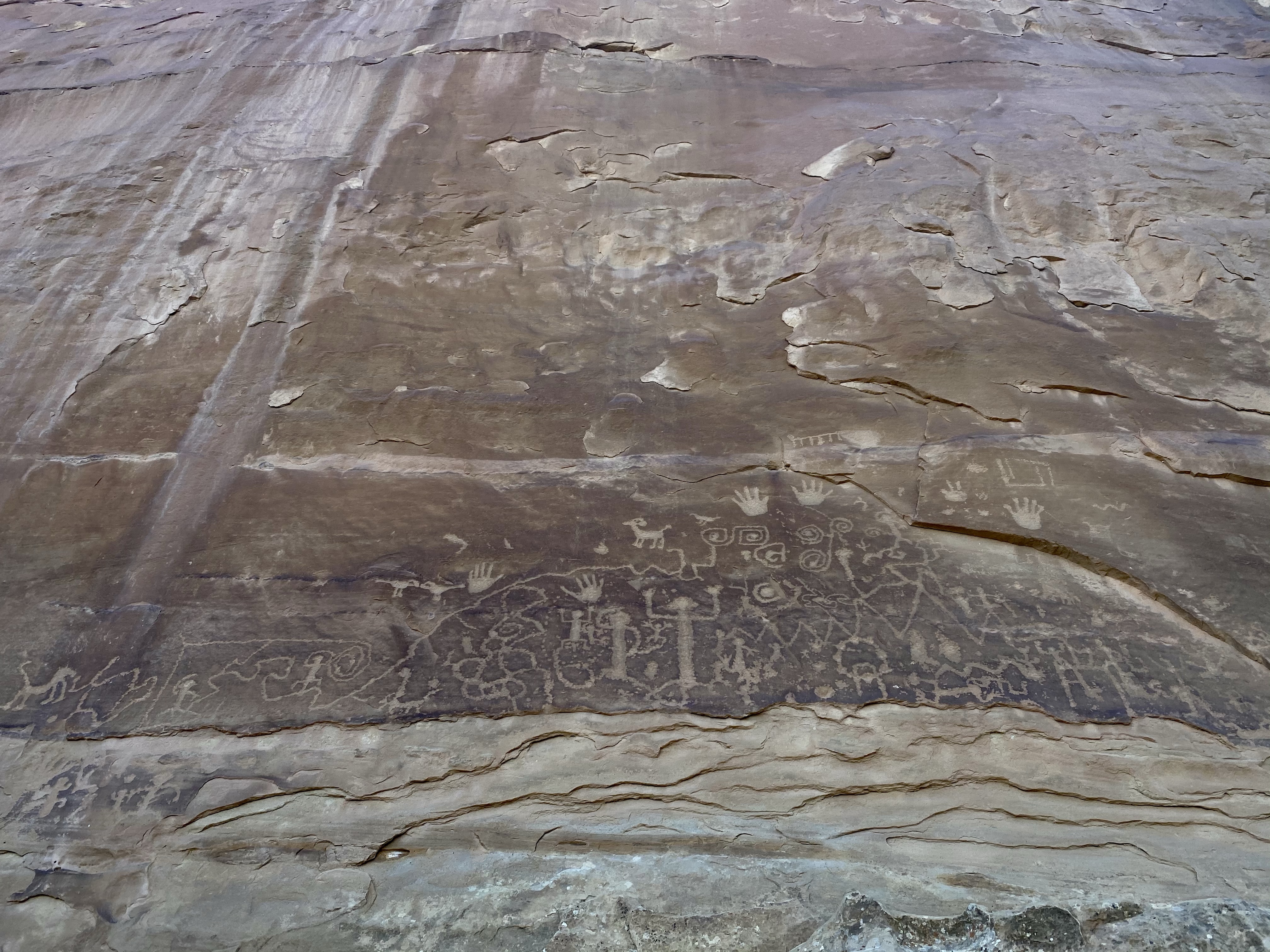
I passed a few hikers on the way, anxiously waiting for the petroglyphs. It seemed like they’d never appear. I kept looking up and around, but no sightings yet. Up ahead I heard a group laughing about their ascent up some large steps and boulders and slowed down to give them space. Just then, the petroglyphs! It was one small area well preserved, no explanation provided, but interesting to admire and try to decipher.
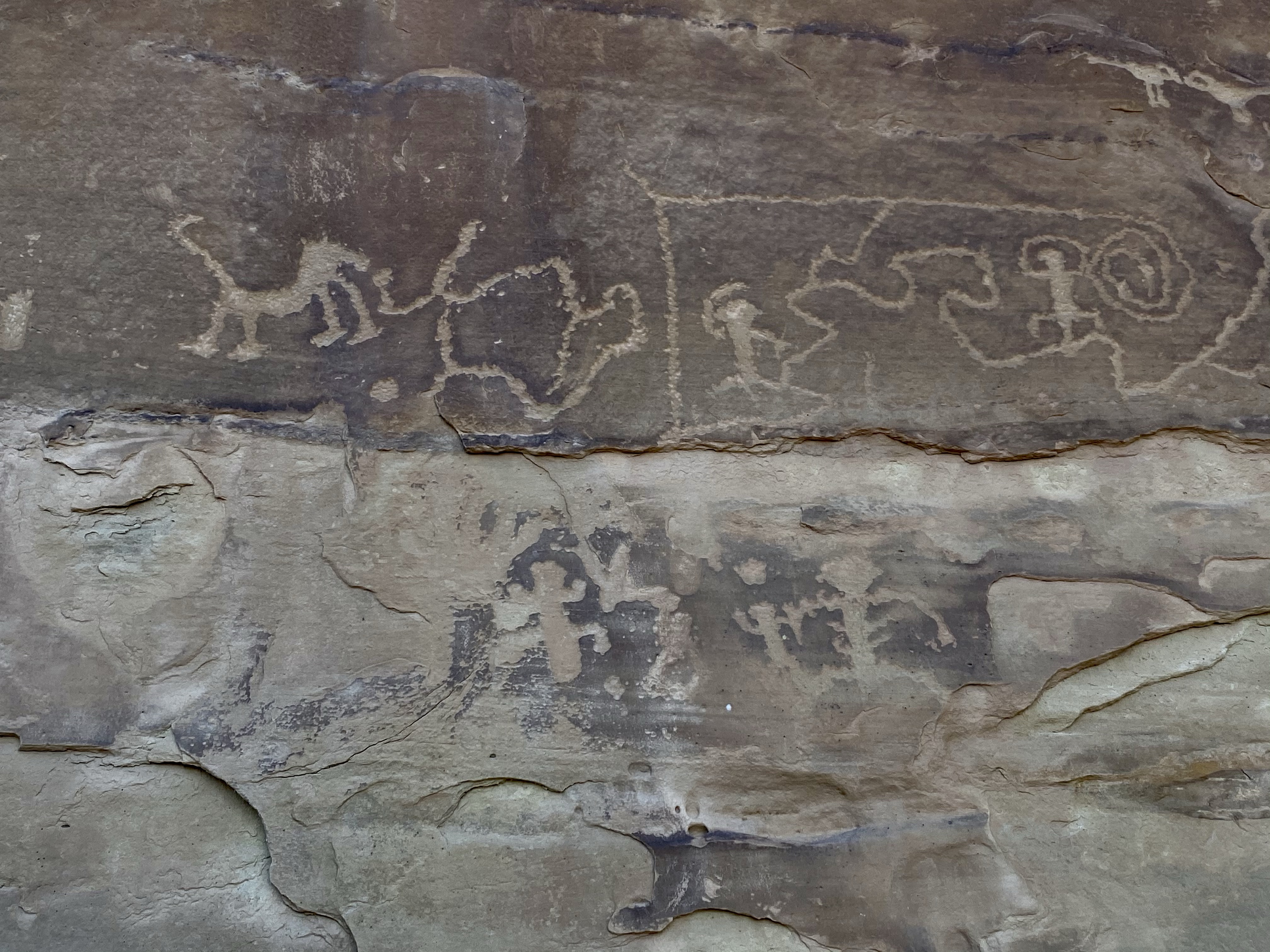
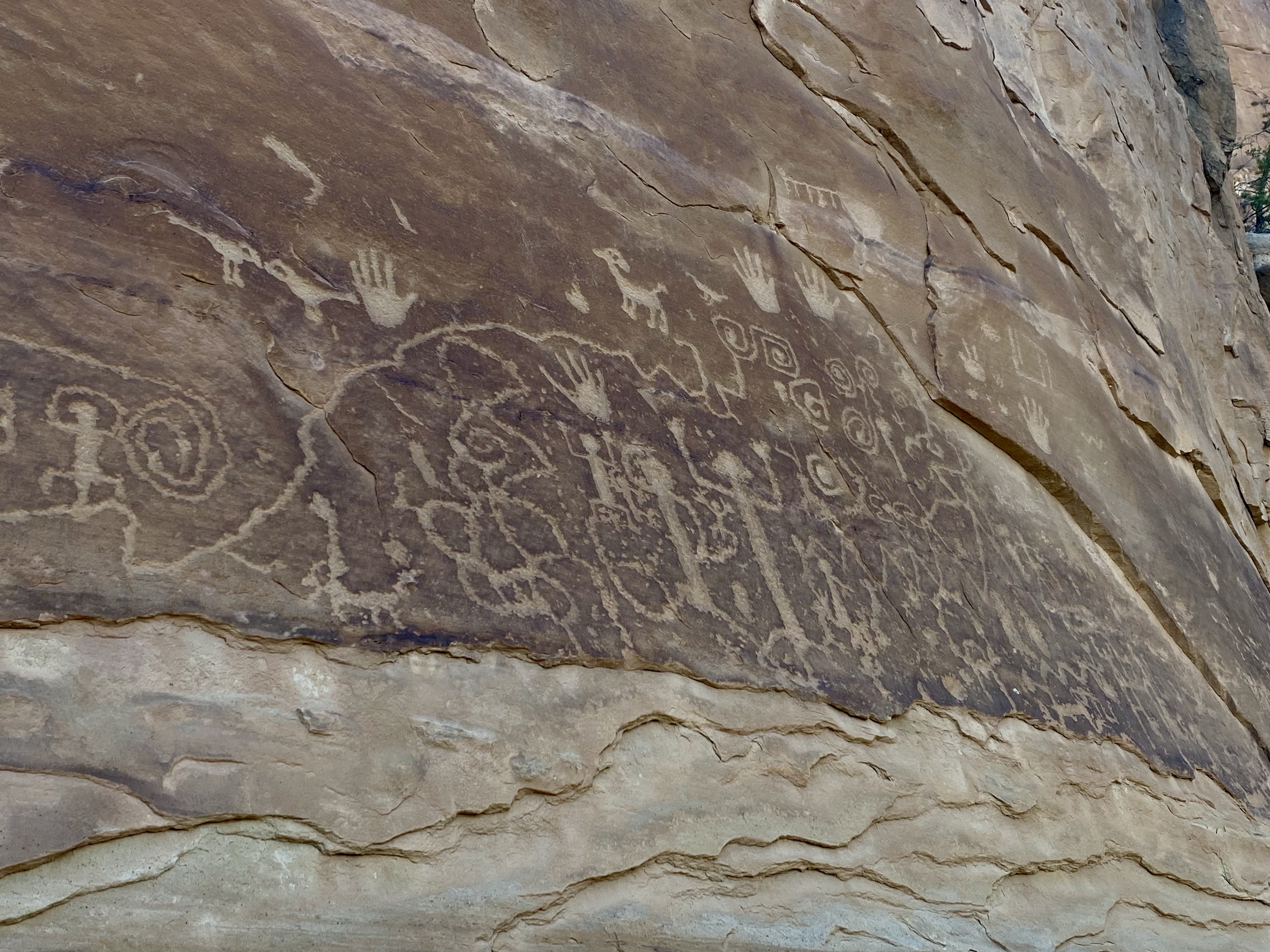
When the path was clear, I climbed up. And up and up, and series of stairs brought me to the top of the mesa. From there it was easy going, flat trail circling back to the parking lot. As I approached, crossing over the bridge, I had a surprise second view of Spruce Tree House! From this angle you could really see it nestled in the cliff alcove, a few short, tiny dwellings on the outskirts of the village. So neat.
Another community where citizens had to climb up to the mesa to farm their corn, squash, and beans, and then down the toe and hand holds to rest. While I didn’t get to see it up close, I did learn that Spruce Tree House has an unusual feature, a large sub-floor cistern that may have been used for water storage! This village was in a space 216 feet long and 89 feet deep with 120 rooms, 10 associated ledge rooms, 7 kivas and 2 towers! Not everything was created at once but rather grew over time as the communities needs changed. Occupied between 1200 and 1278, it is estimated that 60-90 people across 19 households lived here. Another interesting aspect of this dwelling is the T-shaped doorways, which may have been created to allow easier entry for people carrying large loads!
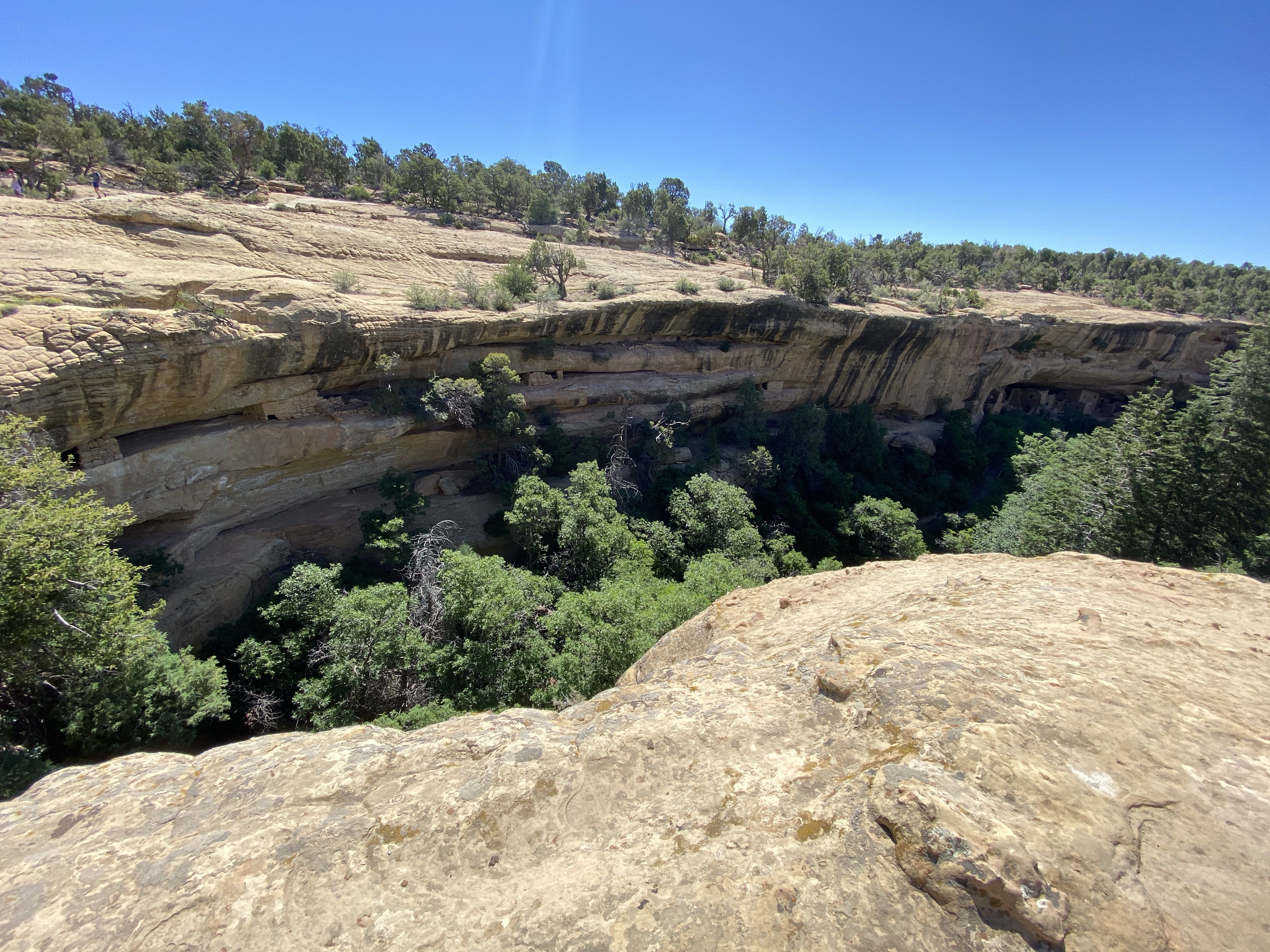
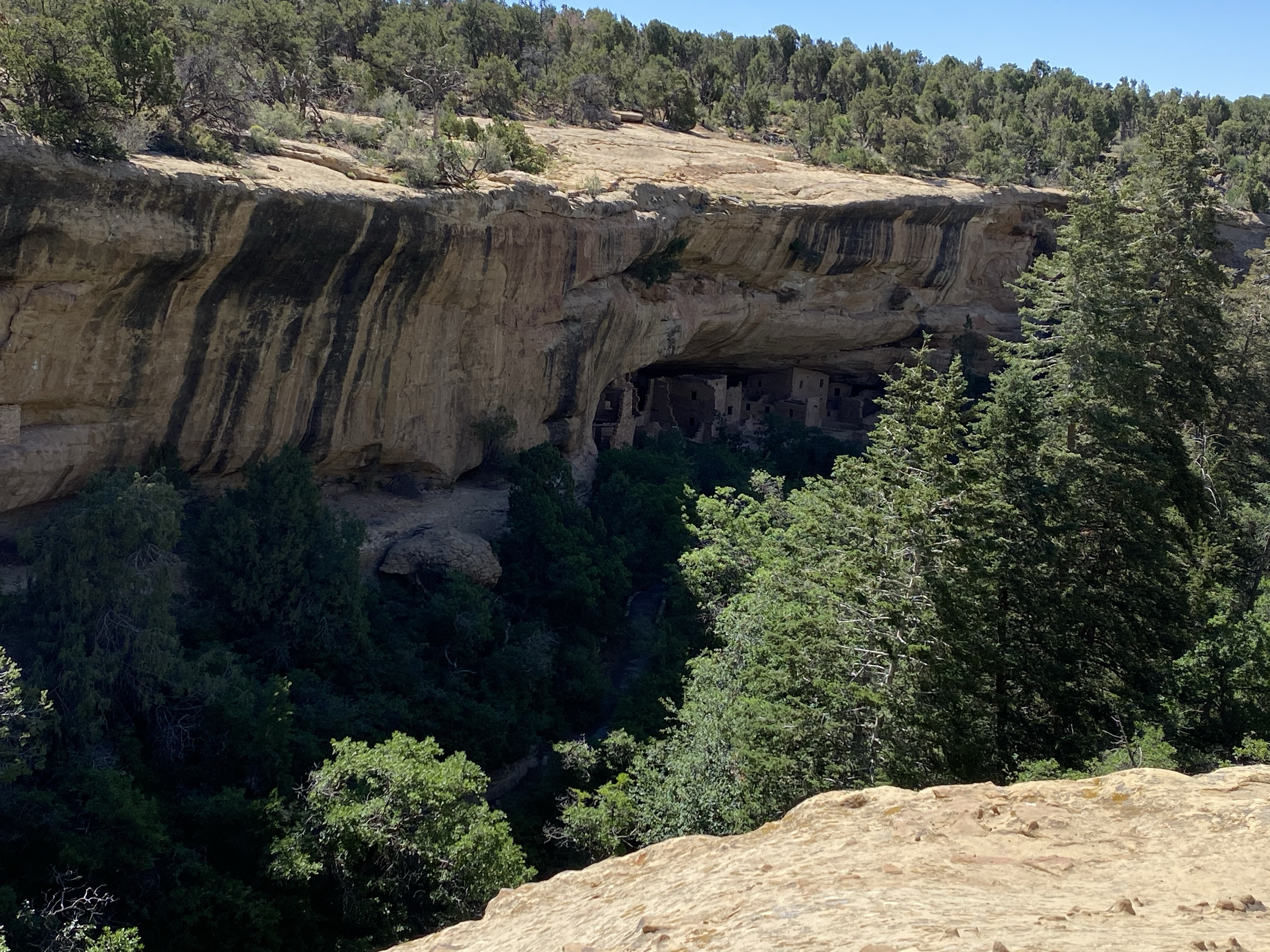
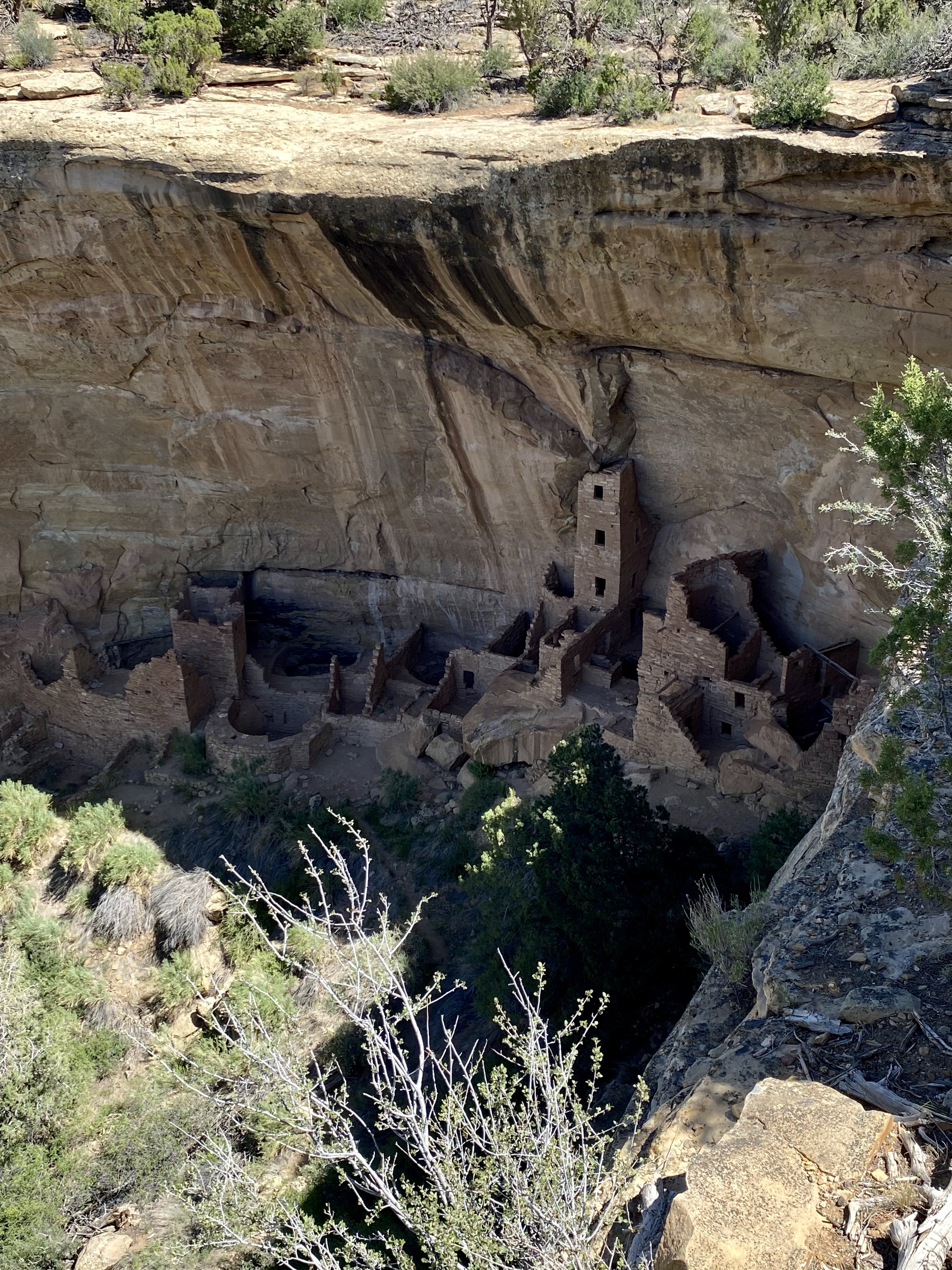
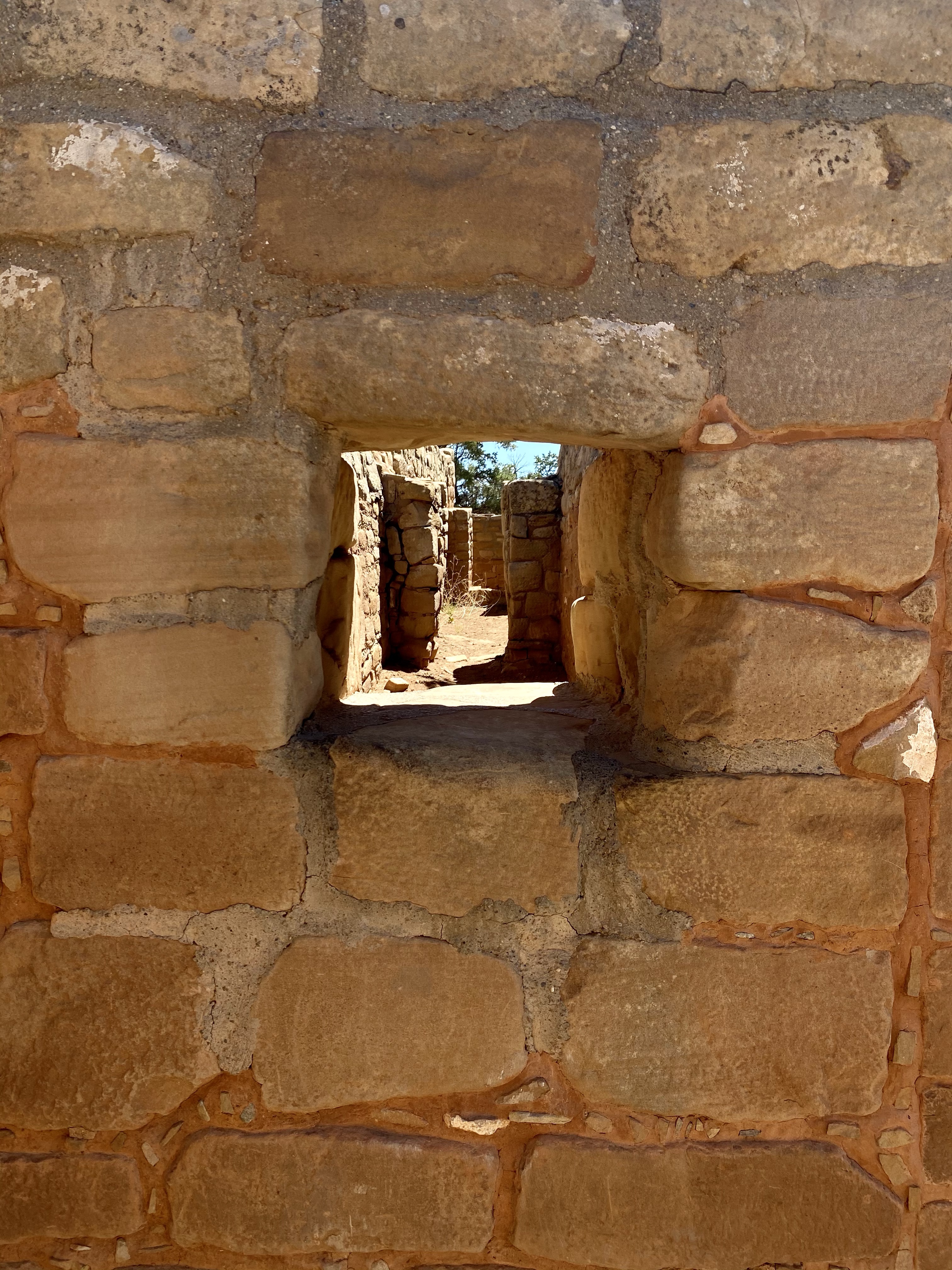
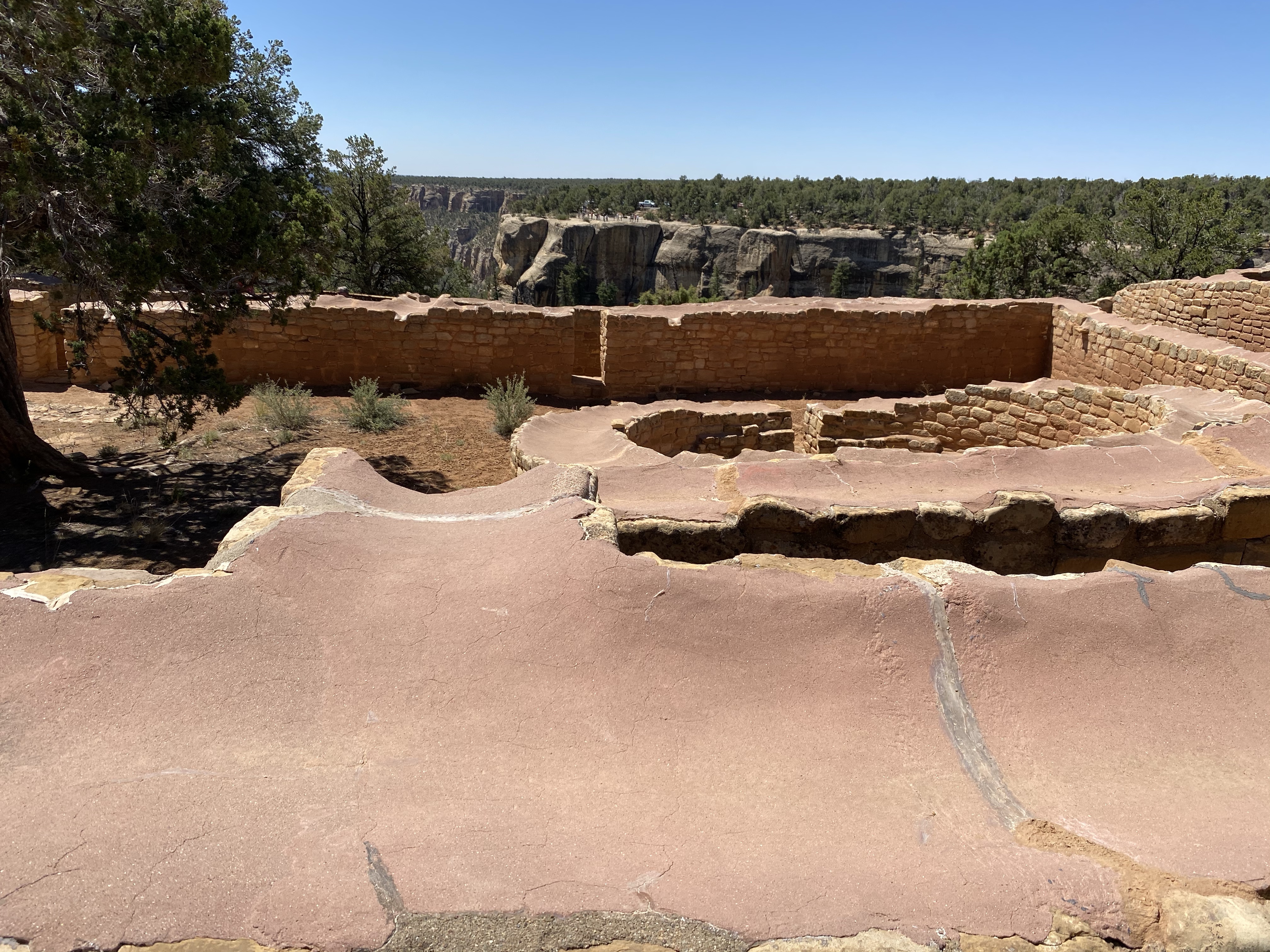
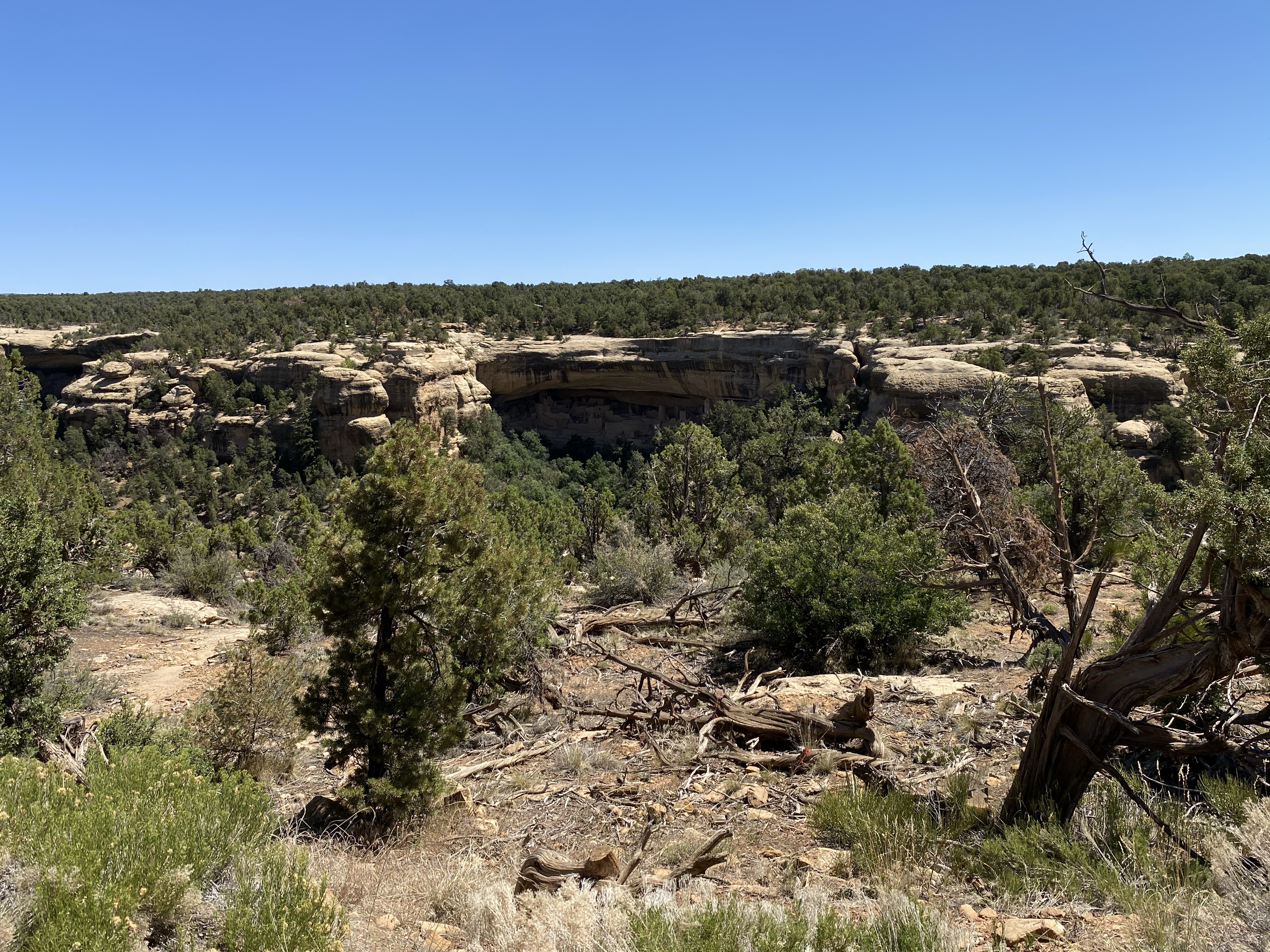
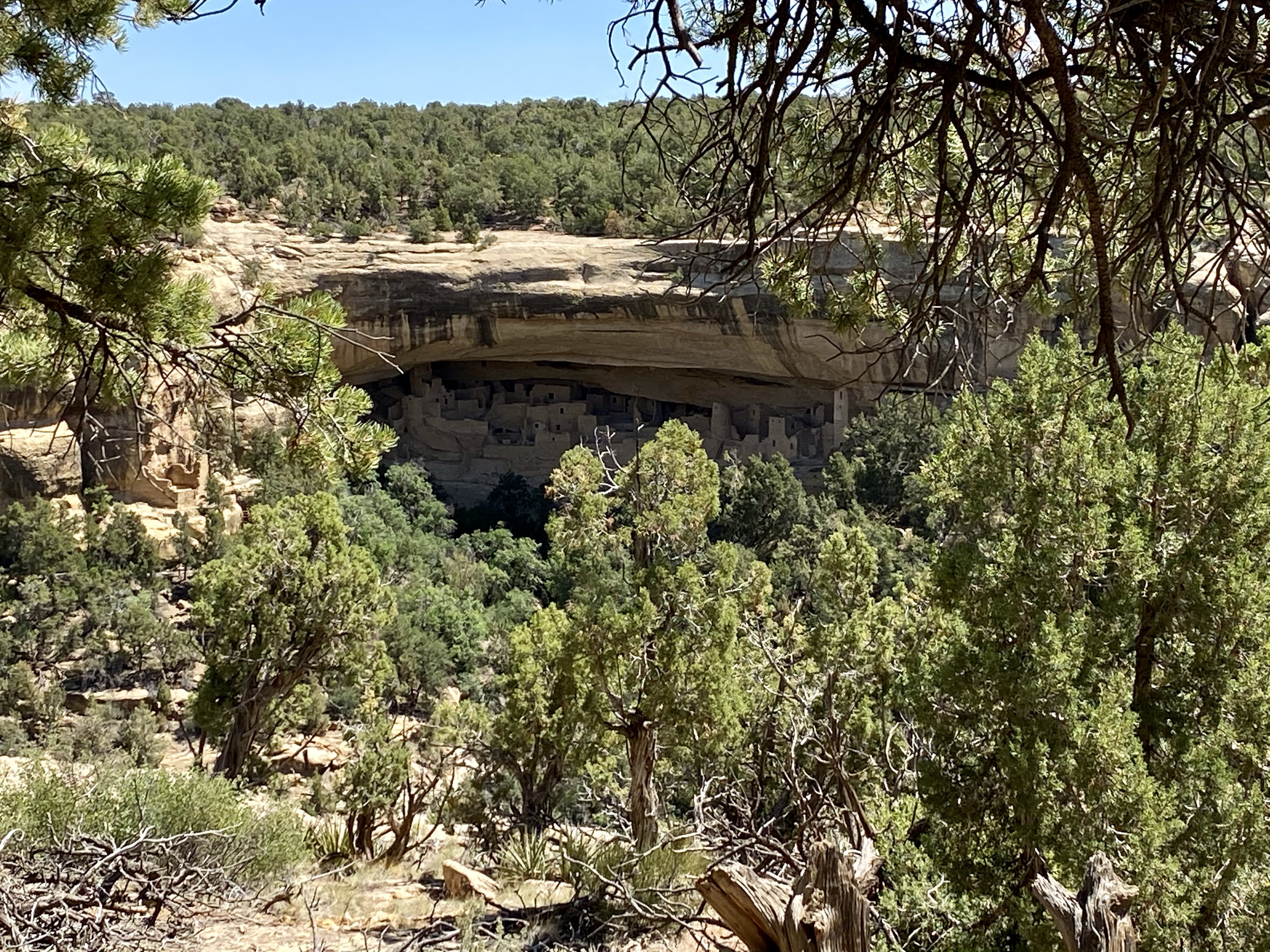
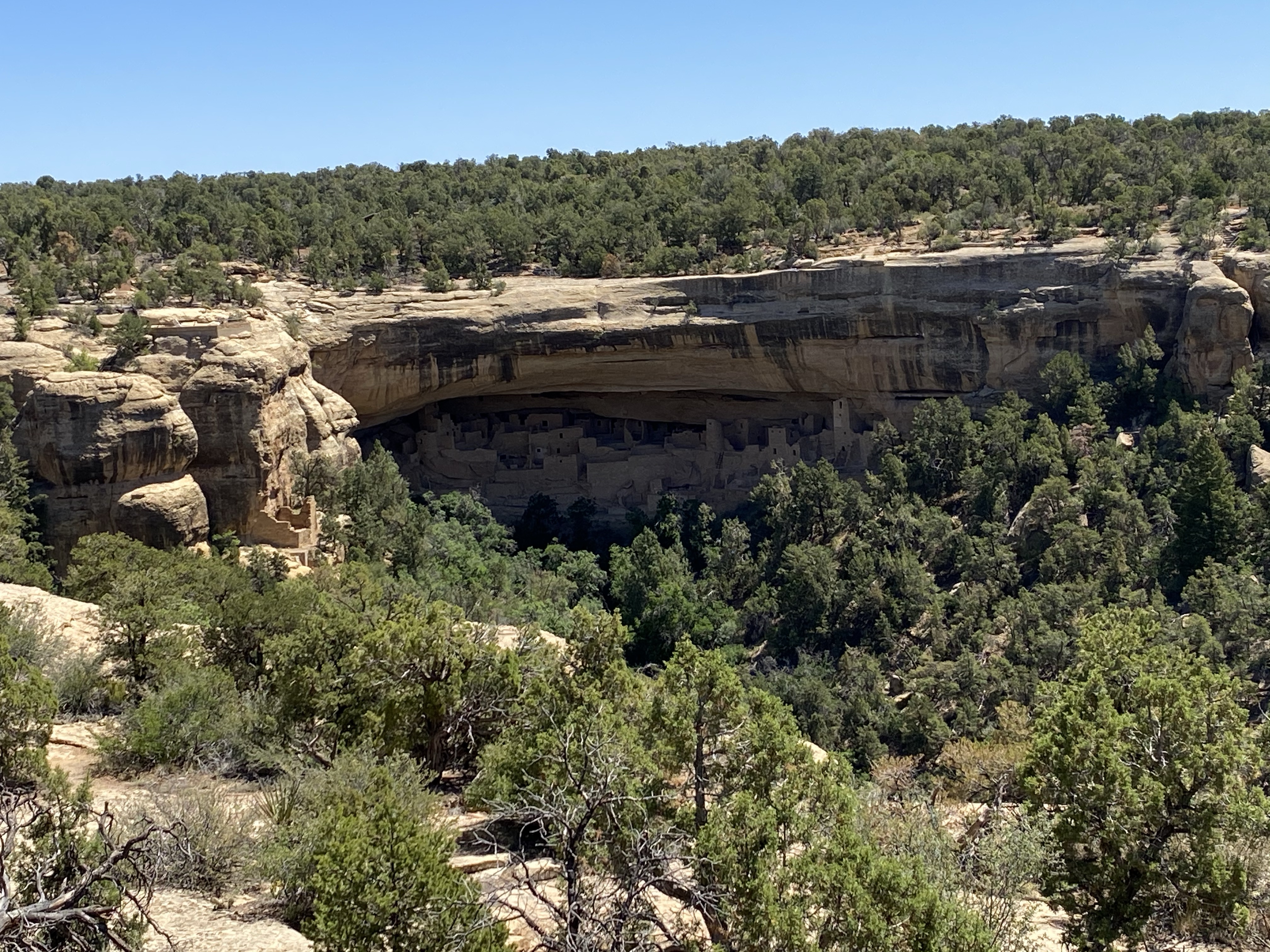
Back at the car, I drove around to a few of the other historic sites but didn’t linger long or visit them all as the crowds were growing. I did make sure to see Sun Temple and Cliff Palace, two of the main attractions. Sun Temple is unique in that it is a D-shapes structure with no doorways but instead two windows that reveal a maze of three circular structures inside. It is thought that this space may have astronomical significance, perhaps having to do with the solstices. It is the only building of this kind in the Pueblo world. Cliff Palace is the largest cliff dwelling in the park and thought to be a government center, place of business, or cultural exchange center rather than living quarters. All these sites are awesome from afar, and I hope one day I can enjoy them up close!
I spent the rest of the afternoon doing laundry, showering, and relaxing at the campsite in the quiet. I headed to bed early because the next morning I wanted to catch the sunrise!
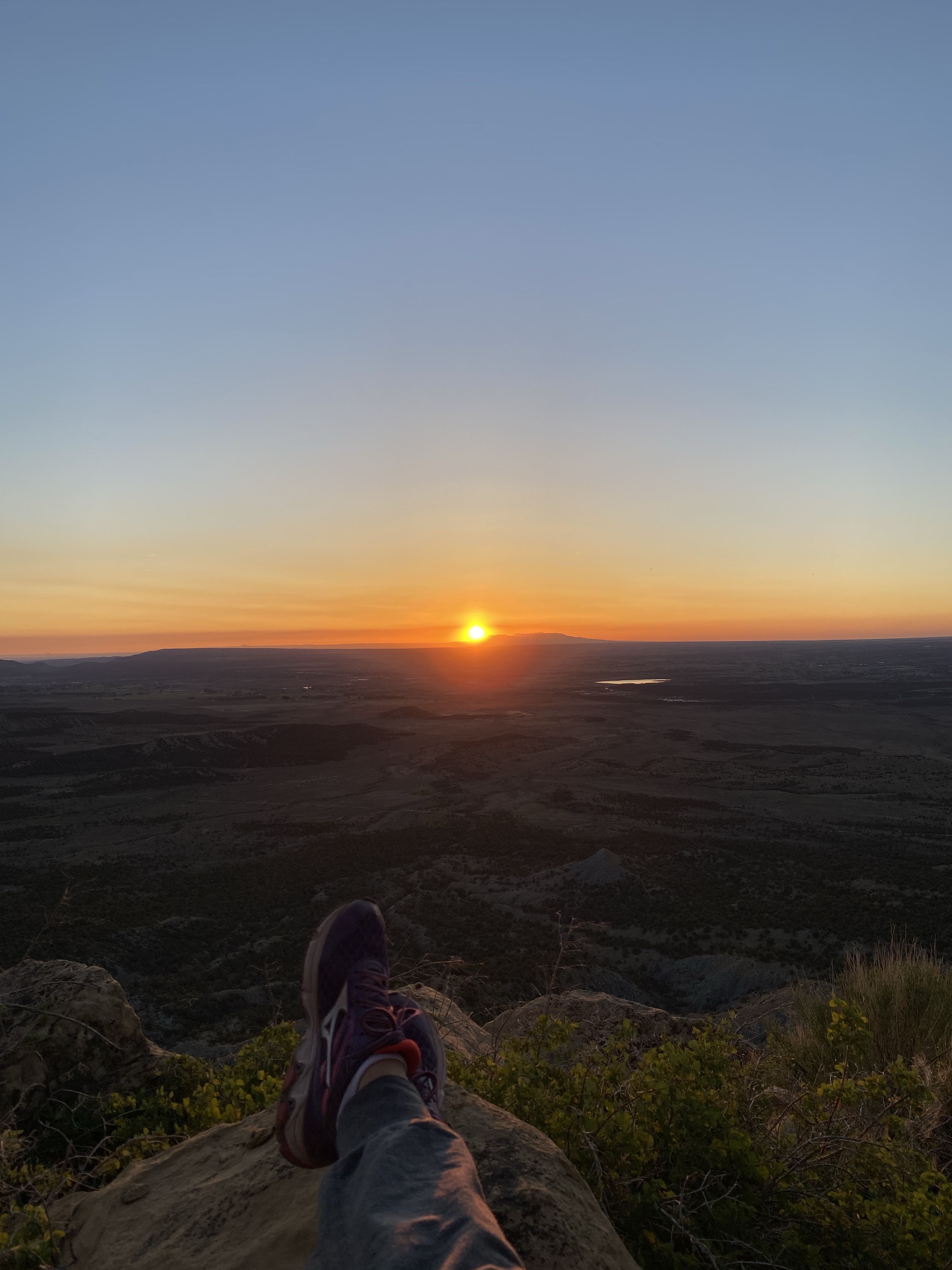
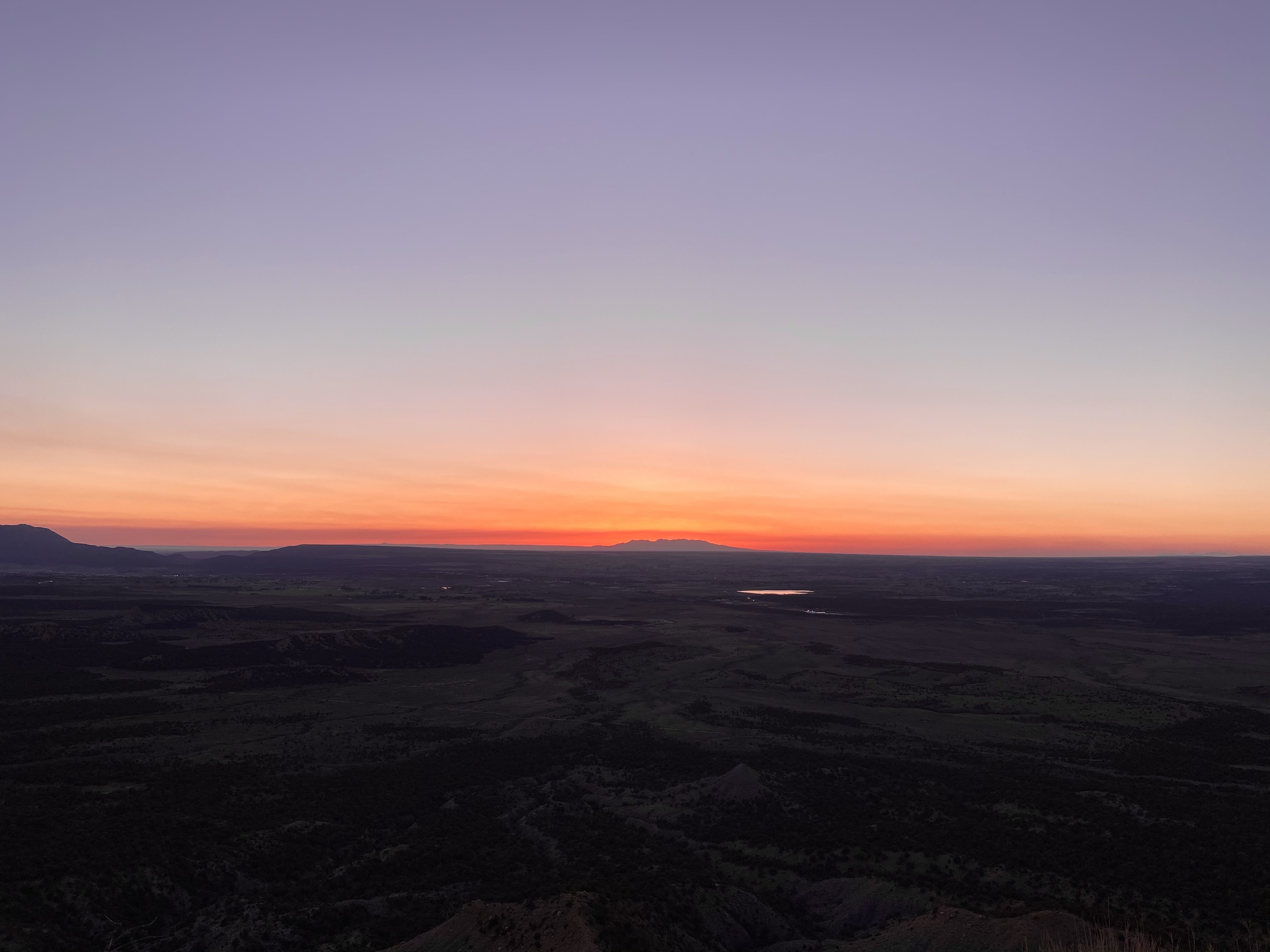
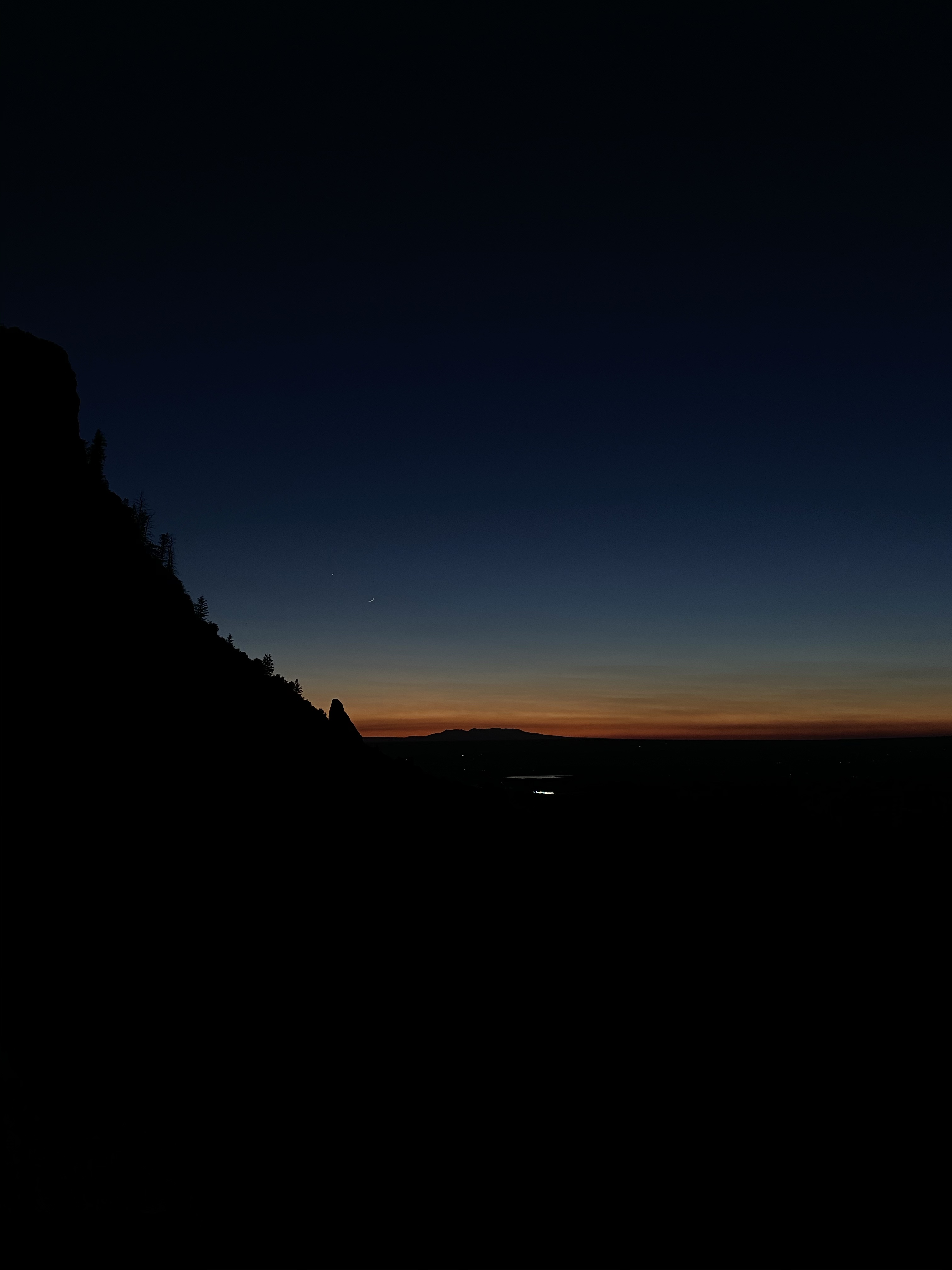
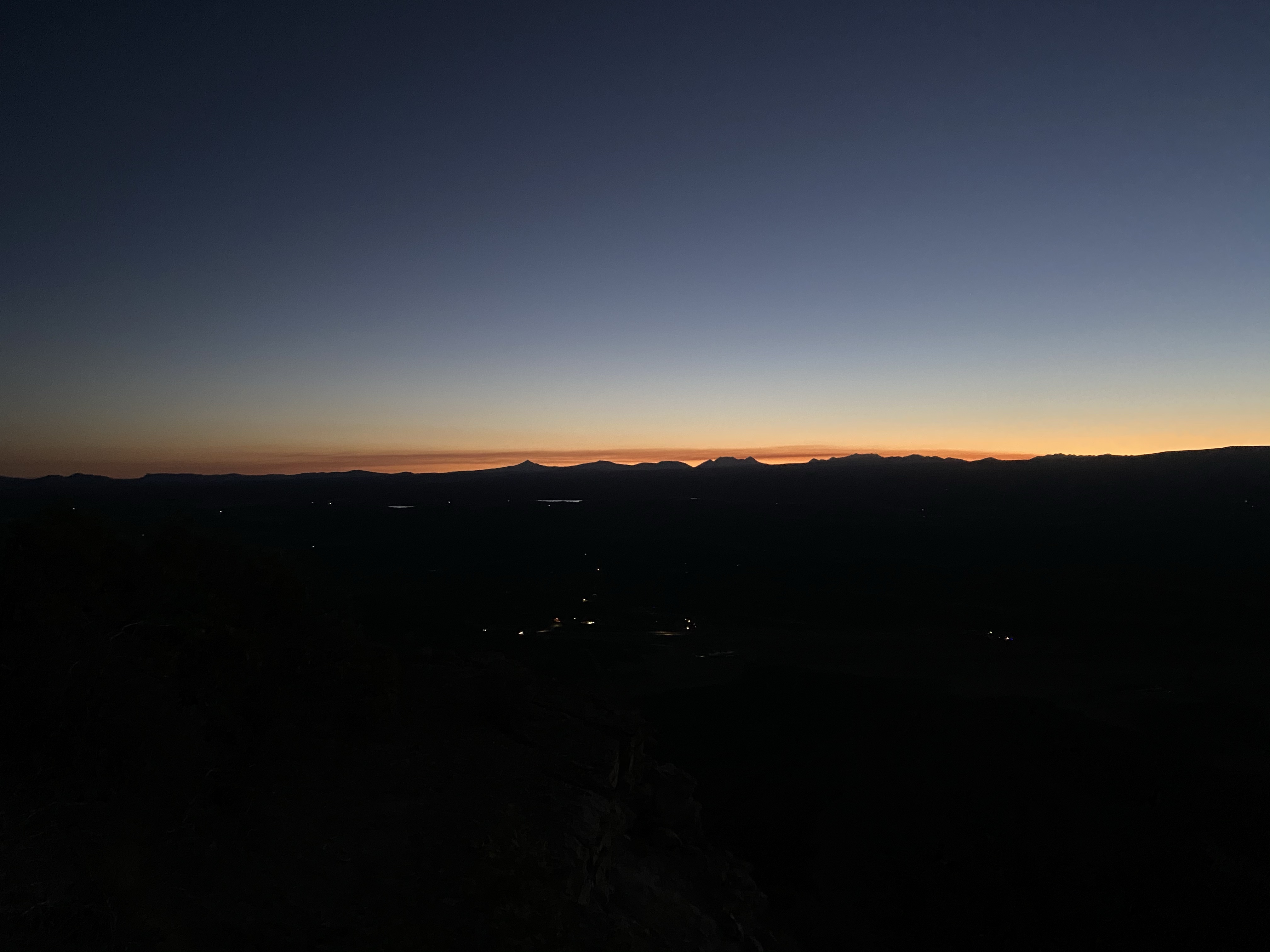
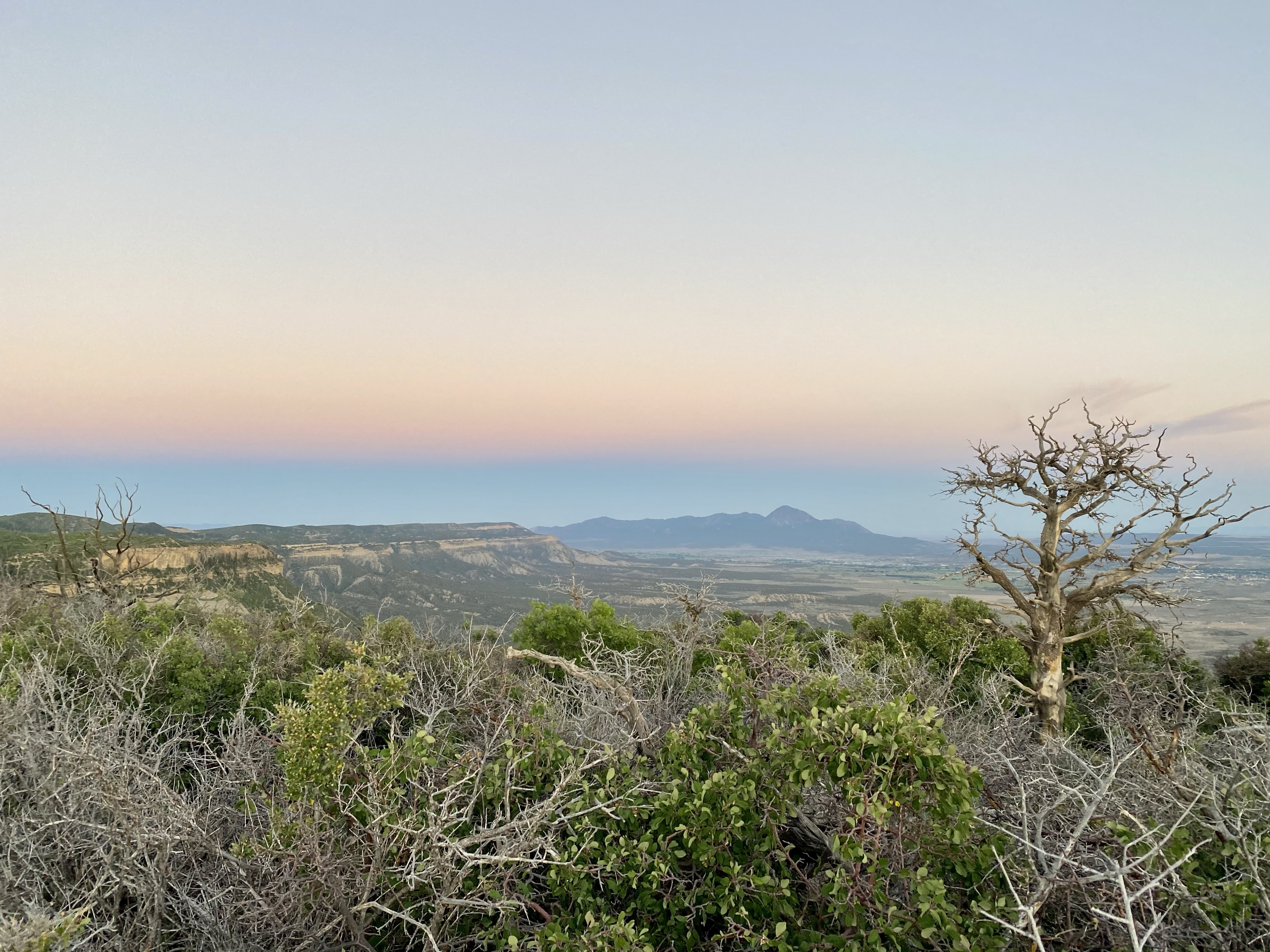
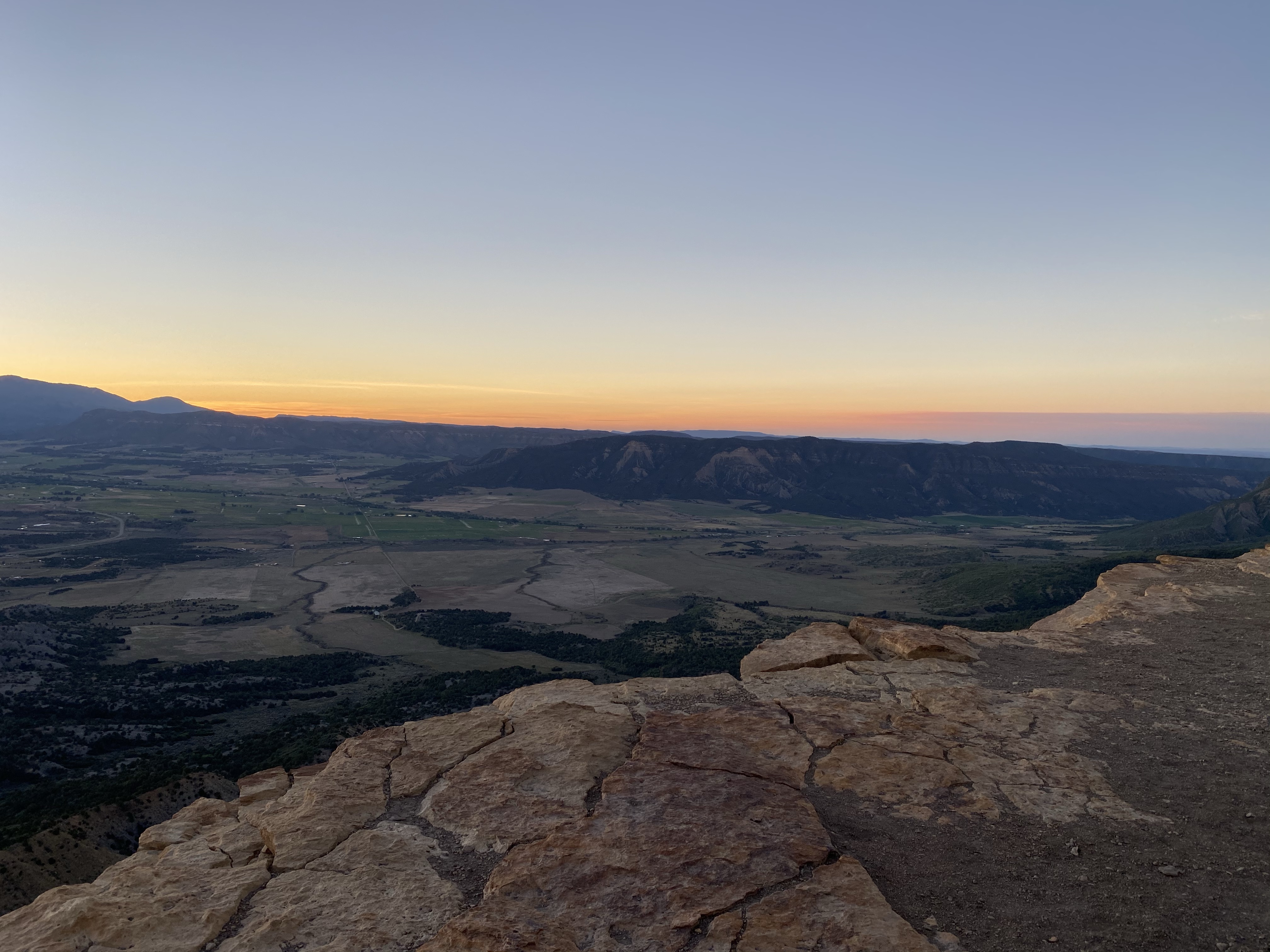
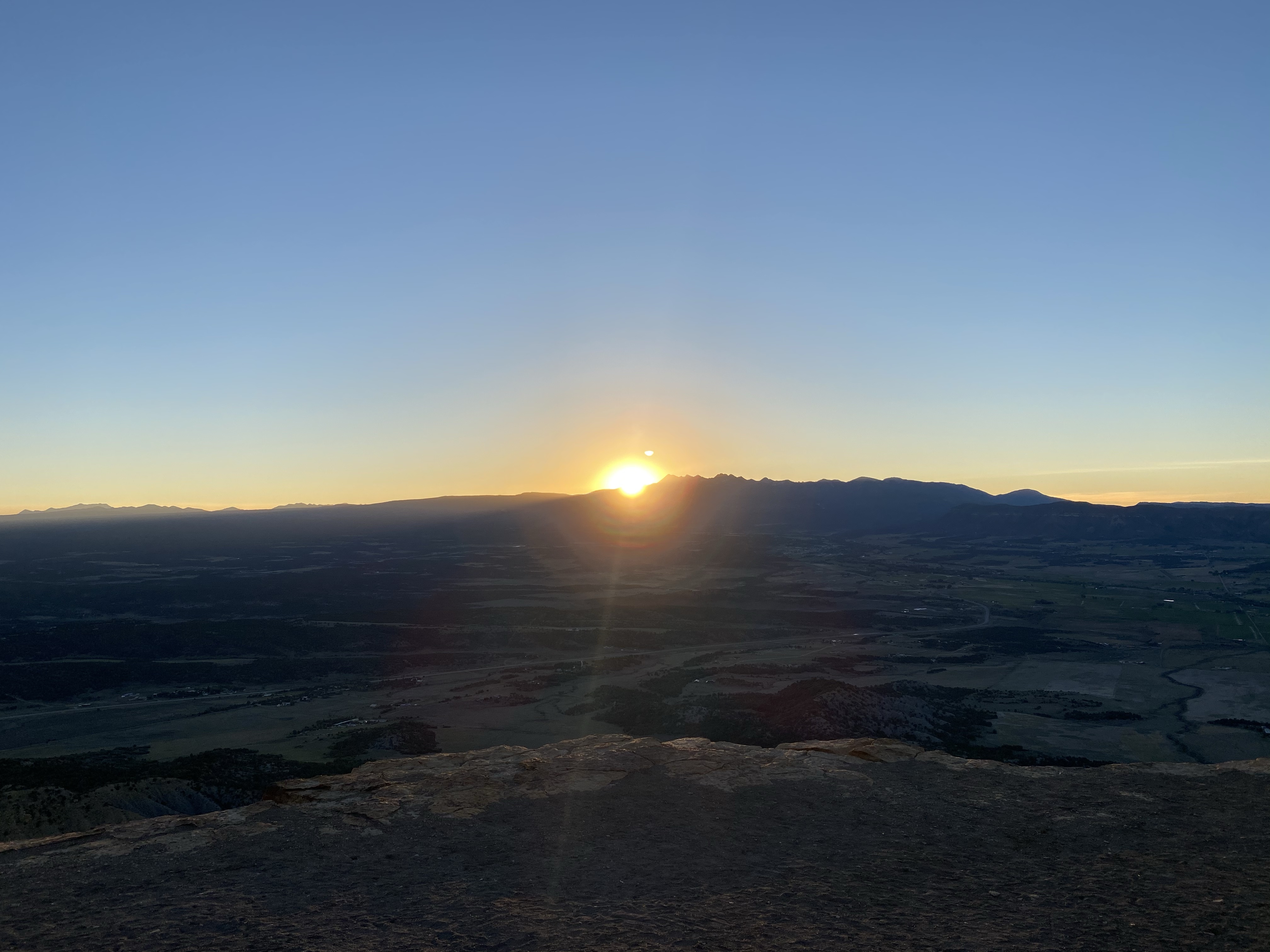
Before leaving, I woke up before sunrise for my final hike in the park. Another first for me! With my headlamp on and keys in hand to jangle and warn any waking animals, I set off on the trail. Climbing switchbacks quickly warmed me up. I hurried along, admiring the lingering stars overhead and waking lights down in the city. I traveling along the ridge and out to the clearing, the whole place to myself.
I sat down, bundled in my coat, and watched the ever changing sky. If you’ve never purposefully woken to watch the sun rise, I highly recommend it. A peaceful and spiritual experience, a good reminder that there is always another day ahead. I watched quietly for a while, moving slowly to different angles, and enjoyed these early morning moments.


After enjoying the calm and slowness of the morning, I called my mom for another chat. Bundled in another layer to ward off the slight breeze, it was nice to hear her voice and see her face.
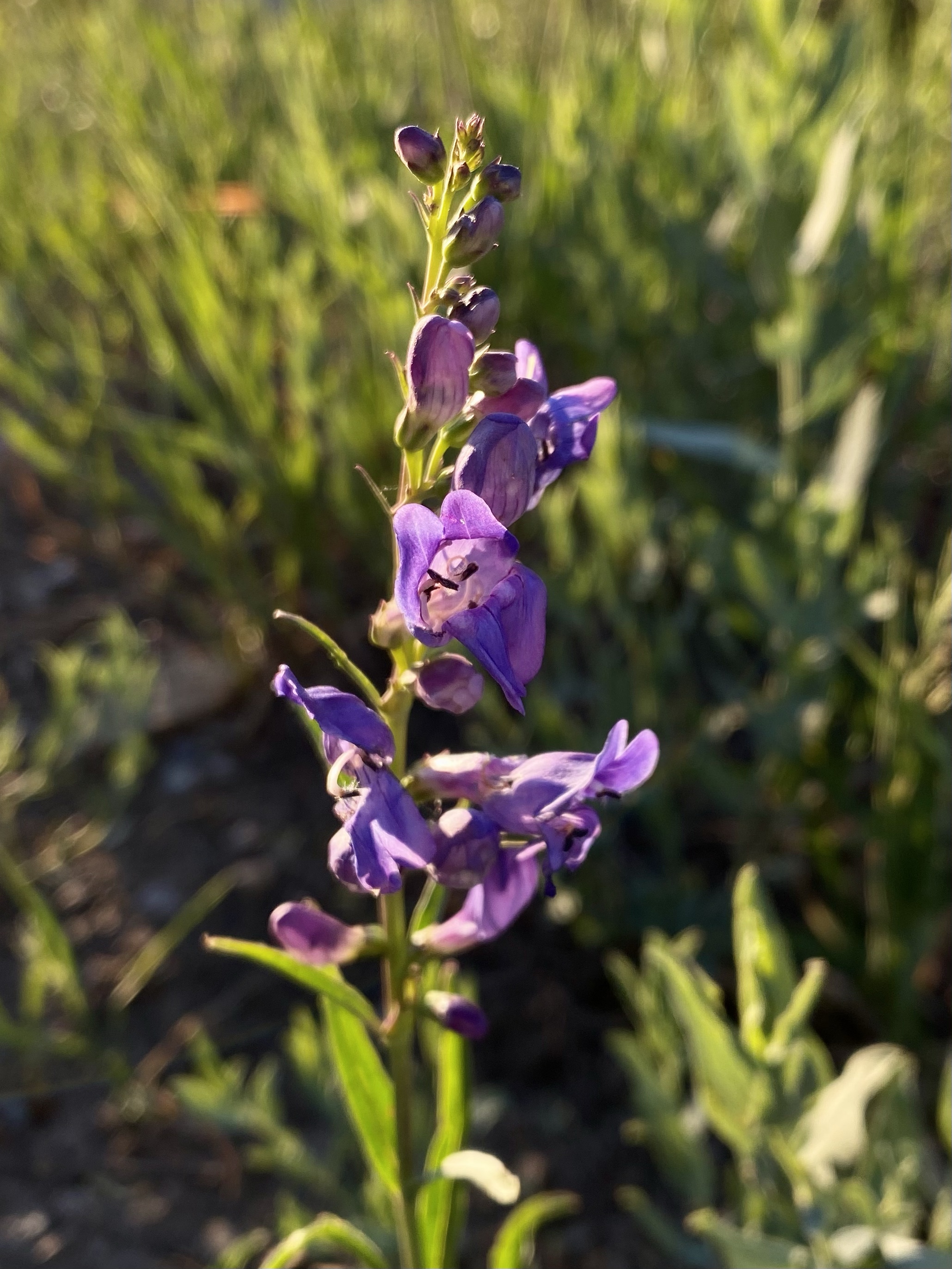
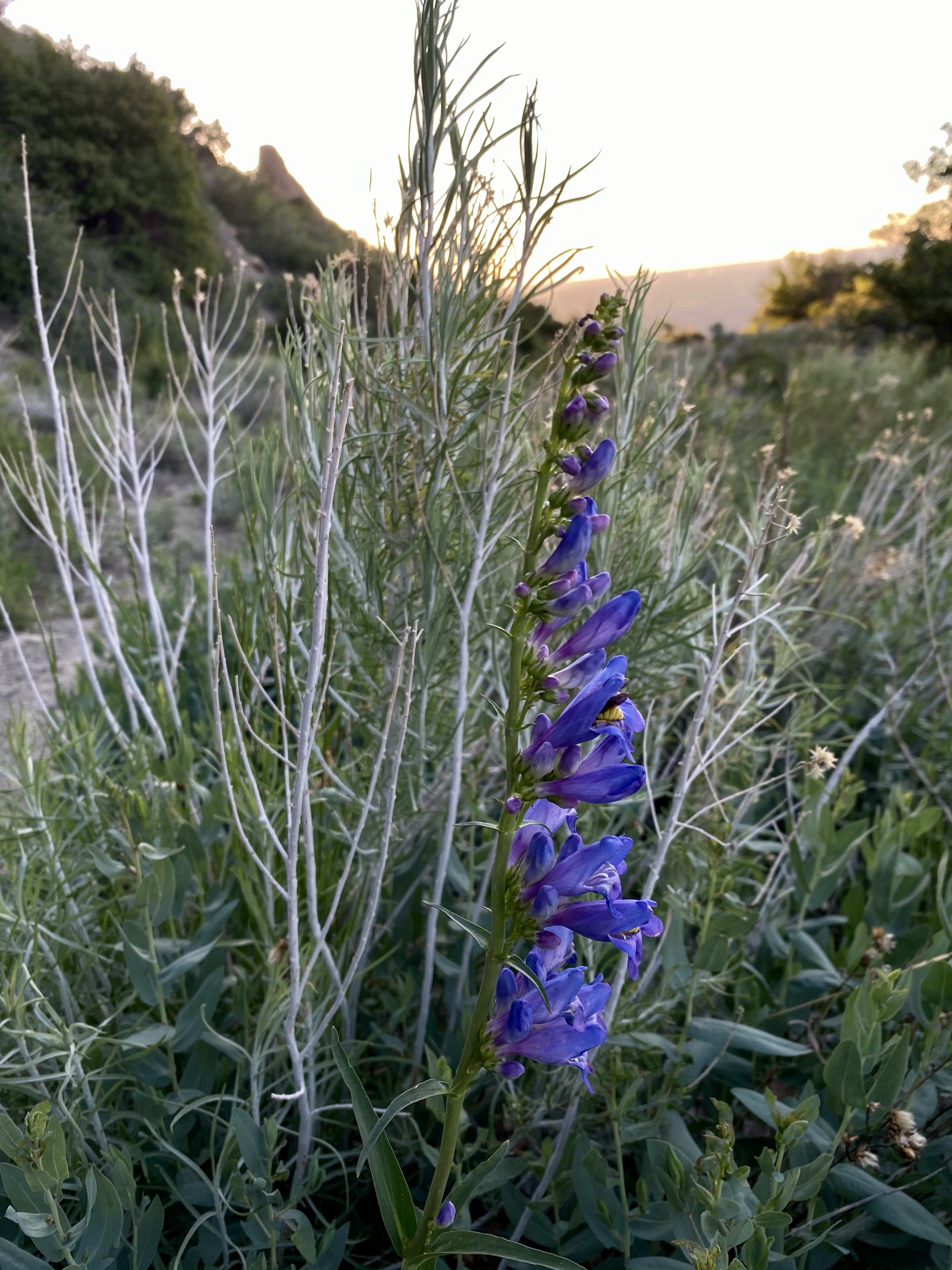
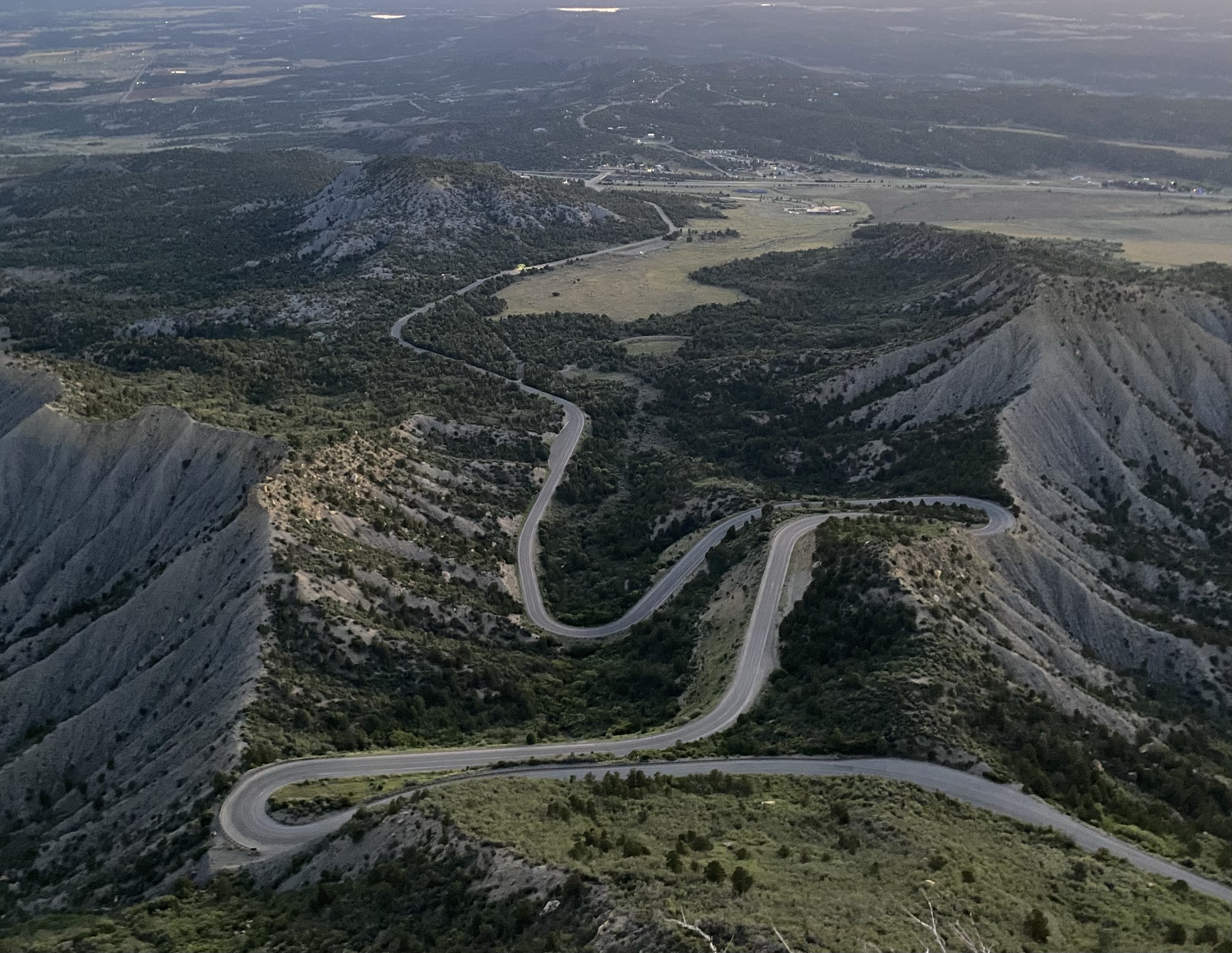
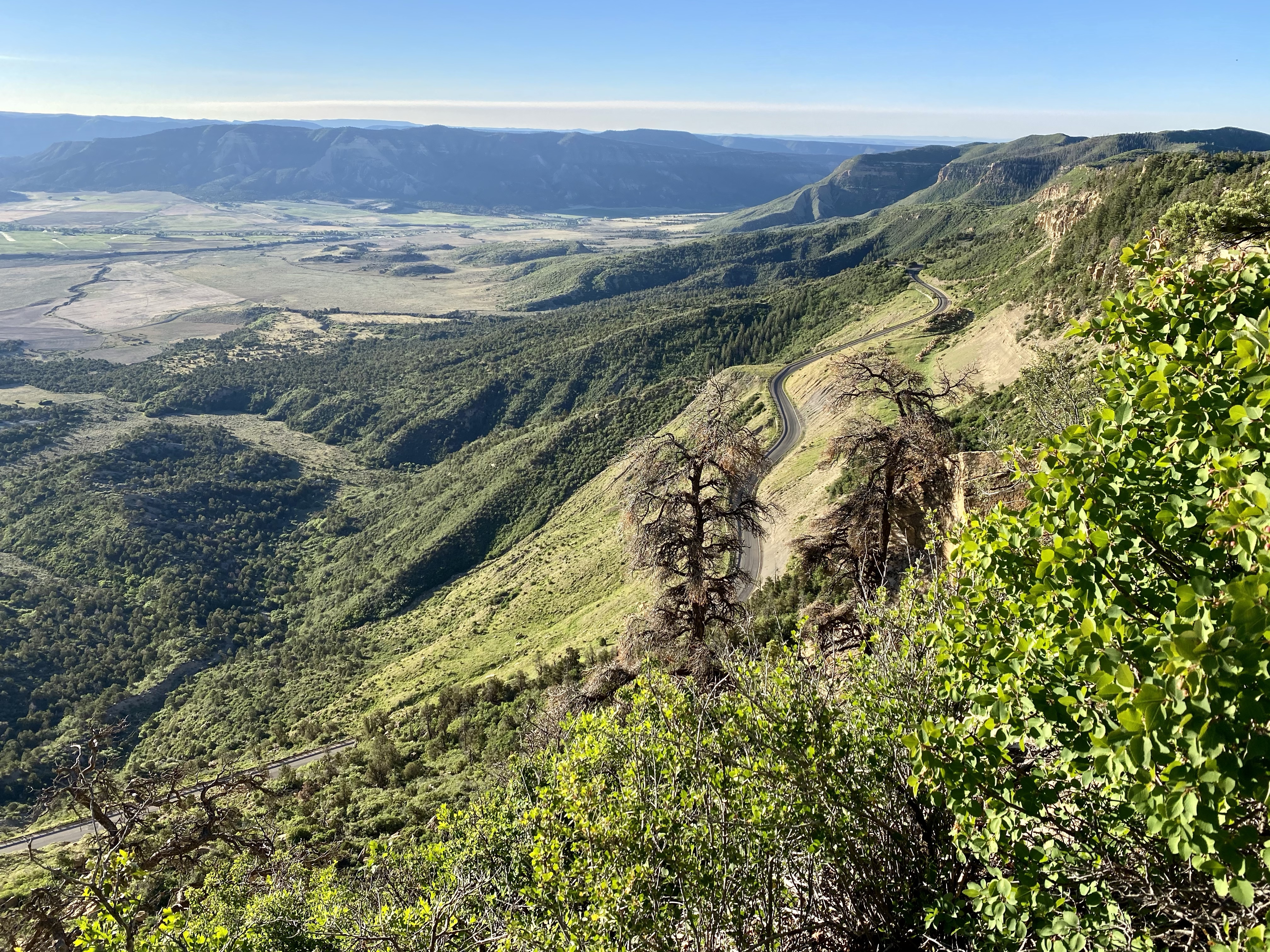
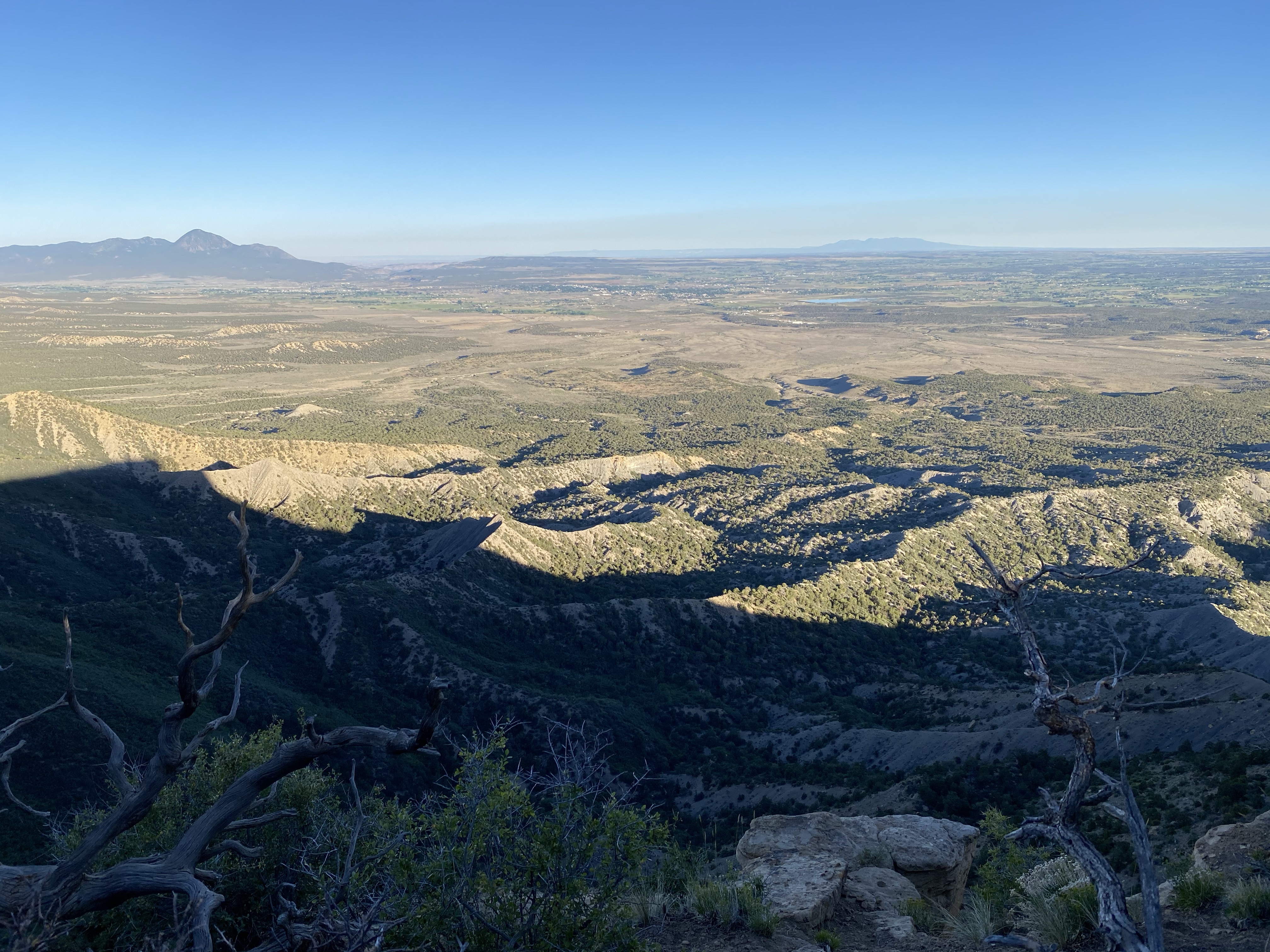
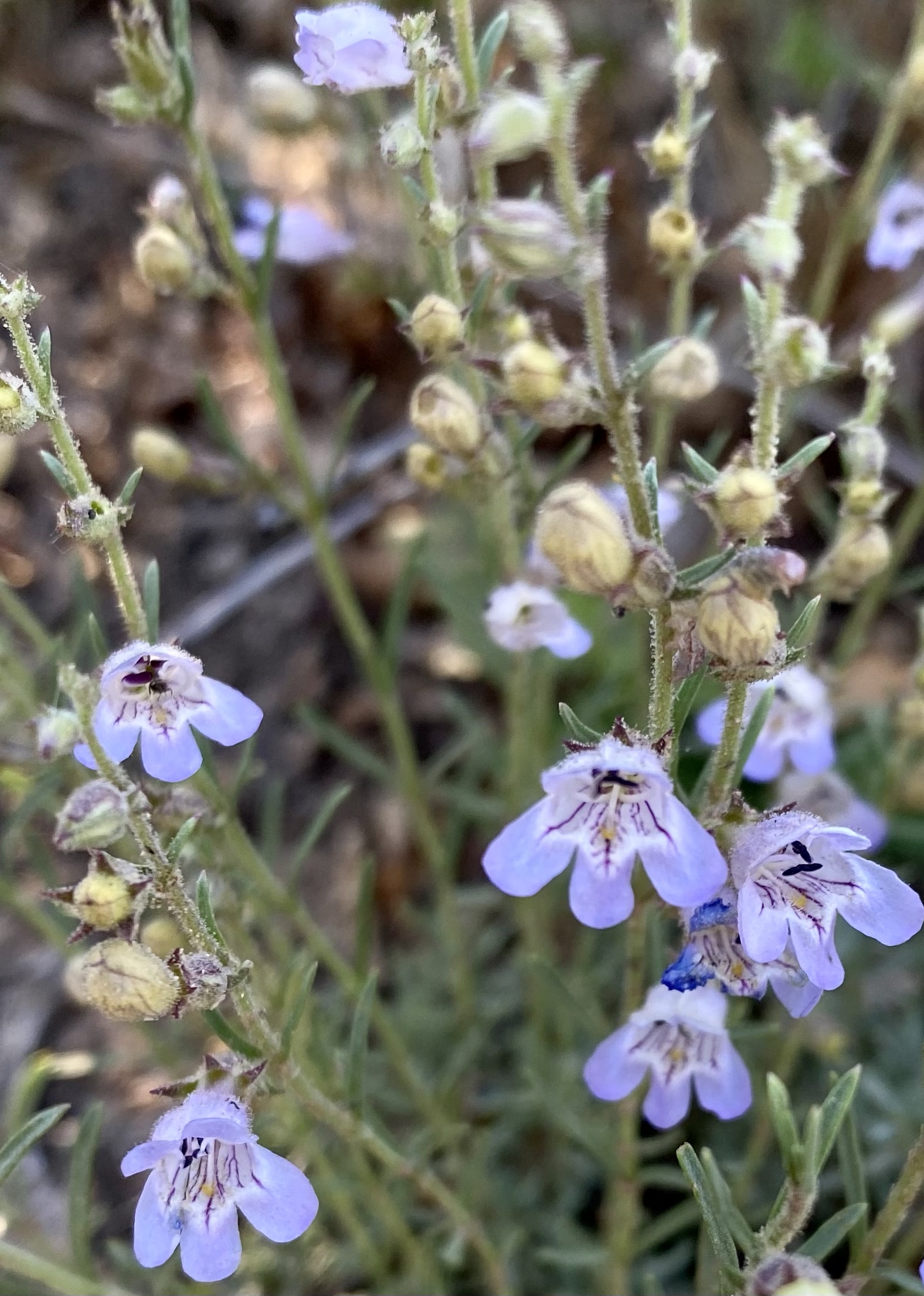
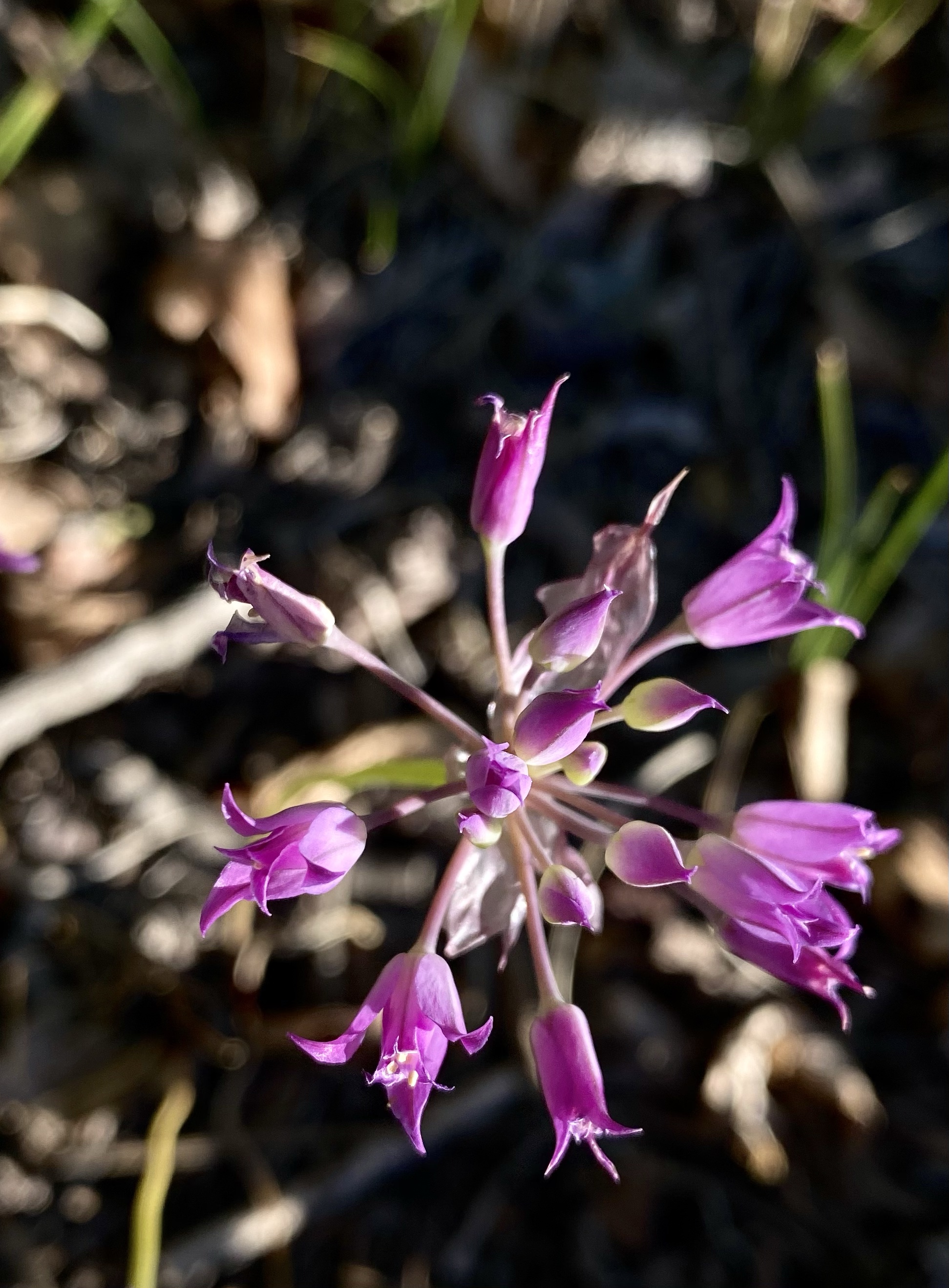
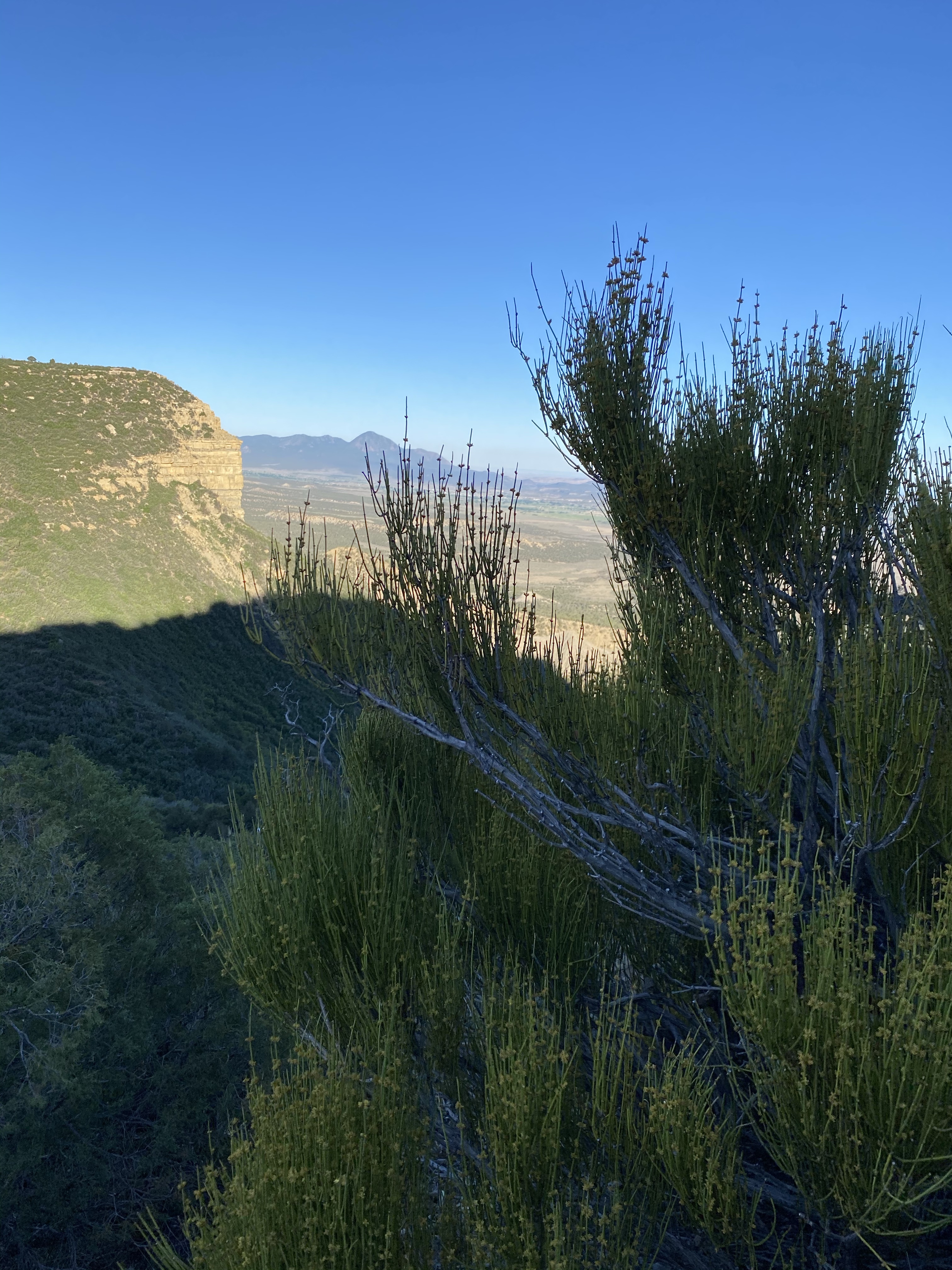
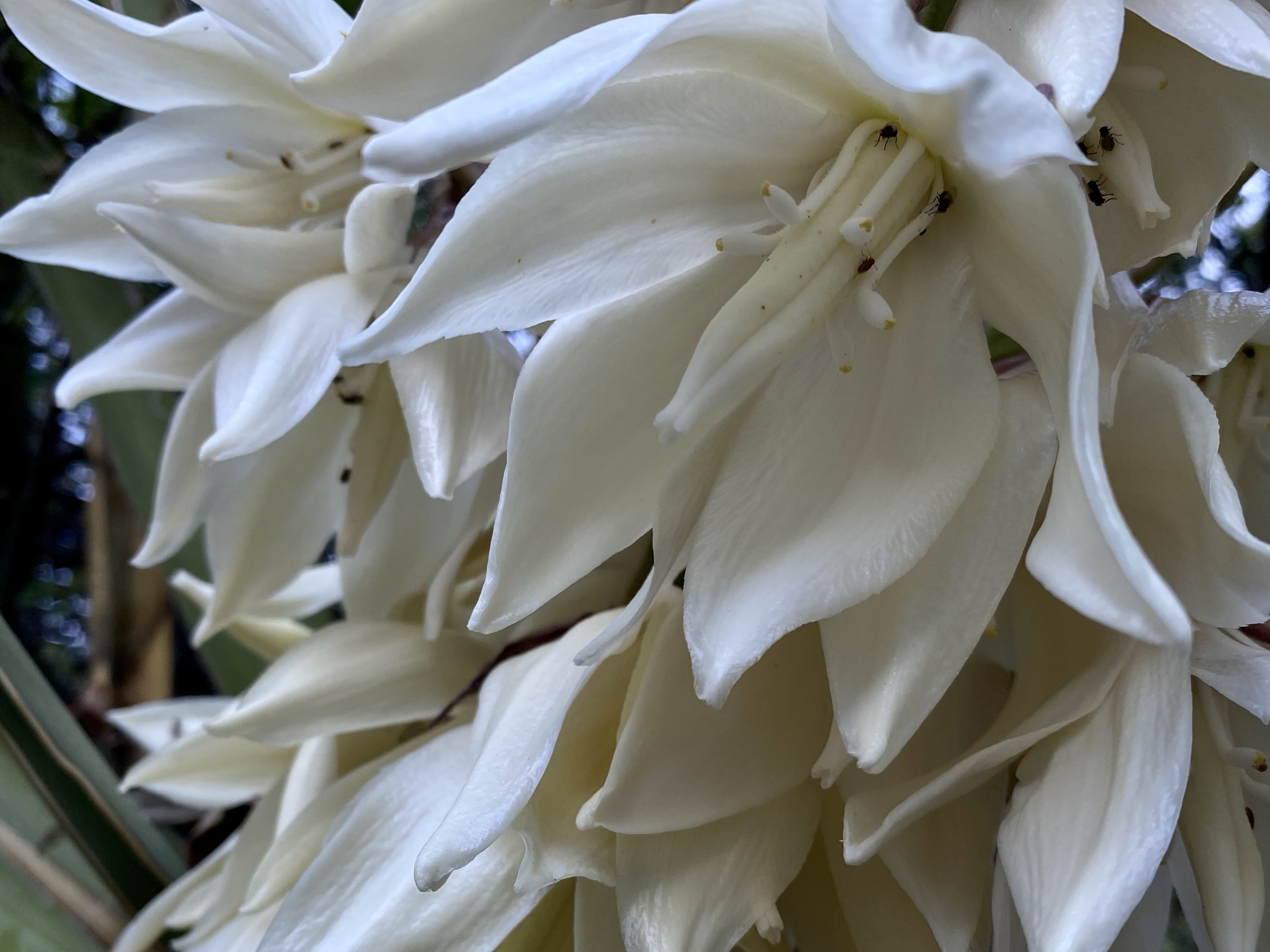
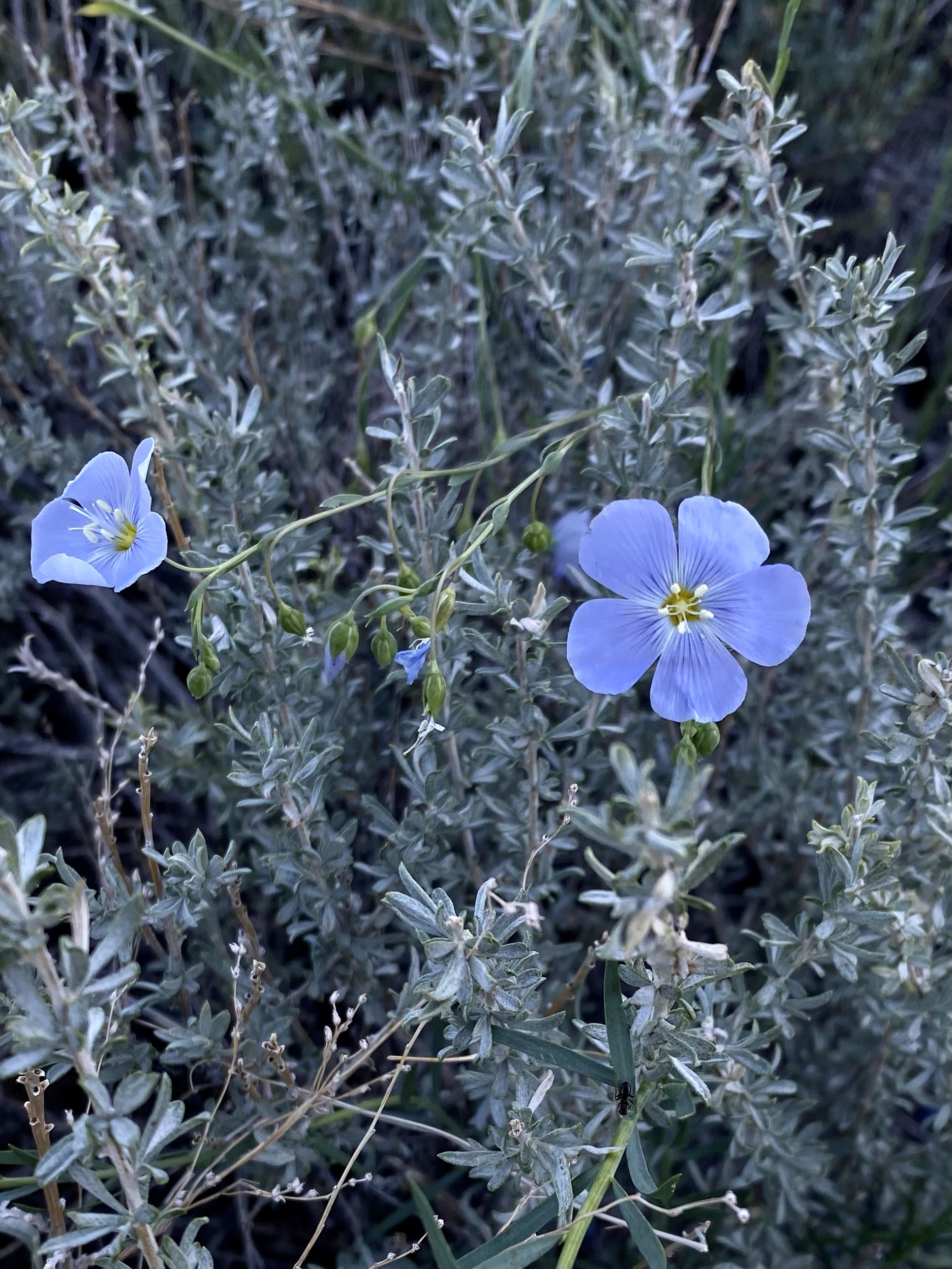
Then I headed down the trail, admiring all the flowers and views I missed in the darkness of the morning. I had a great view of the road into the park, beautiful flowers, and spectacular mountains. Certainly put me in a good mood for the day!
After a nap and cleaning up camp, off to my next destination. Stay tuned!
 Tonelli's Travels