From Mount Rainier we spied Mount Saint Helen in the background, its flat top an easy indicator to spot. Visiting the volcano wasn’t going to fit the itinerary, but we could go to the visitor center. So we said goodbye to Mount Rainier NP that morning and headed down the road.
The mountain is known to the Cowlitz people as Lawilátla (lo-wet-LOT-thla), meaning “the smoker.” The Cowlitz have lived around the volcano for millennia, witnessing its eruption multitudes of times. This place is sacred to the indigenous people, a place where great spiritual power lies because the mountain brought everything into being. It connects them to a time when all animals could speak. The mountain is important to their lives and culture.
Despite living around the mountain and its waterways for millennia, the Cowlitz had to petition the government to be federally recognize, an expensive battle that took nearly 150 years. Their ancestors lived in villages all along the river. The Upper Cowlitz, Taidnapaum, lived in the high meadows and prairies and by lakes while speaking the Sahaptin language. The Lower Cowlitz spoke Coastal Salish and lived along the waterways to the south of the mountain. Having language diversity gave the indigenous people advantages and power.
Today, members of the Cowlitz tribe carry on traditions such as smelt, salmon, and camas harvests. They also have drumming and singing celebrations throughout the year. The park works with the native peoples to care for and make decisions about the land.
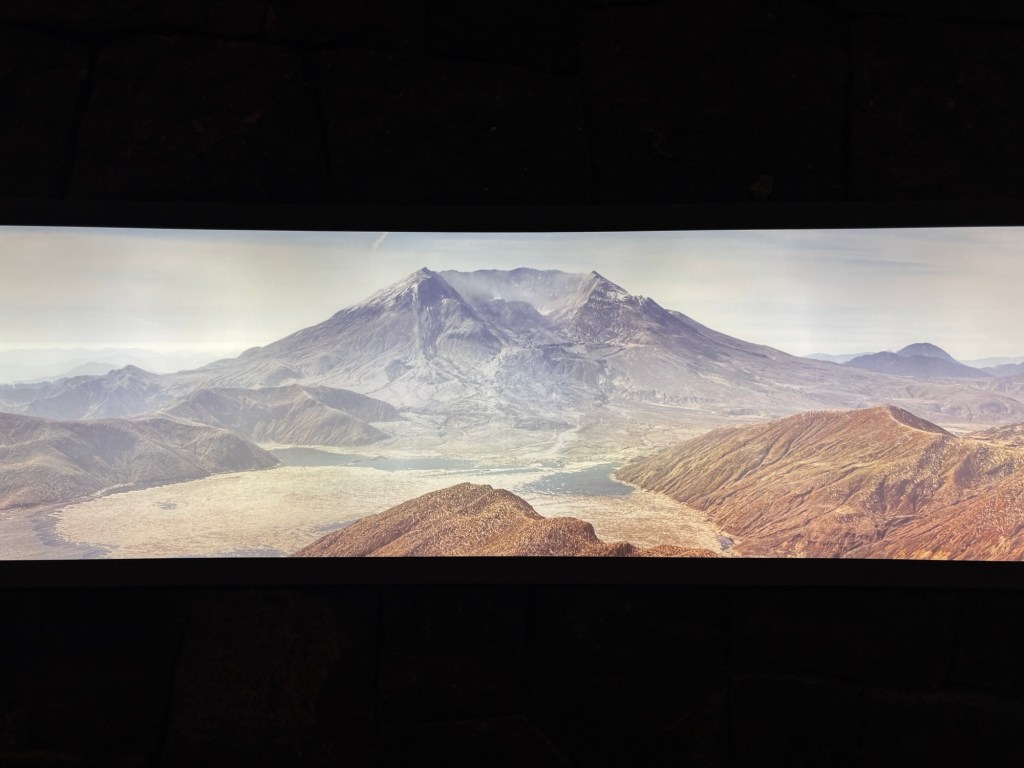
In addition to educating us on the Cowlitz people, the visitor center also displays the history of the 1980’s eruption of Mount Saint Helen. One of the things most fastening to me was how strongly people denied that the volcano might erupt. Many had become so accustomed to recreating and working on and near the mountain that despite days of volcanic activity leading up the eruption people were asking the government to let them return to their vacation homes, logging work, etc. They surely did not understand the power of the mountain like the indigenous Cowlitz did.
When the big explosion did happen, it occurred within a matter of seconds. While 57 people did lose their lives, only 3 of those people were inside the evacuation zones. The others ended up dying from the after effects of ash, etc. The eruption caused tremendous mudslides, wiping away homes forever. The lake near the volcano, Spirit Lake, rose 200 feet. It drastically changed the landscape of the area forever.
This traumatic event left its mark on people and land. And, fascinatingly, the earth is rebounded faster than any scientists predicted. While many parts are still barren, 45 years later wildlife have returned, trees and wildflowers are growing. New life has emerged and in some cases is flourishing. When nature is left to take care of itself, she does amazing things.
With my mind spinning in the best way, we headed back out for the rest of our journey. Traffic through Portland made for a long drive, but we eventually made it to the blueberry farm and enjoyed our river view spot. And some delicious blueberry treats.

 Tonelli's Travels