A last minute decision to visit Mammoth Cave gave me the opportunity to experience a tiny portion of this spectacular place. A park with forest, hiking, water, ferry rides, and caves, several days would be needed to do it justice. The caves alone need a few days. There are over 400 miles of surveyed passageways! Due to the spur of the moment trip, I was only able to enter participate in the Self-Discovery Tour through the Historic Entrance. That was pretty cool though.
Upon arriving at the park, you drive through miles of green, thickly trees forest. Below this covering lies a world of caves, spreading out and intertwining like spaghetti, for over 400 miles! So many surprises await underground.
The visitor center is a hubbub of activity, everyone trying to book tours and awaiting their entrance time. I was lucky, as a solid traveler, to snag a spot on a soon to begin tour and awaited my turn. To pass the time, I shopped the bookstore and passed through the museum.
This is the largest known cave system in the world with passages intersecting and running above and below each other. The fact that Kentucky is a karst landscape, meaning water flows rapidly underground, has made this cave system possible. The mildly acidic water dissolves the limestone, creating the tunnels. The sandstone above protects the tunnels from collapsing, thus the enormous size of Mammoth Cave. It also means in most of the cave there are no intricate stalagmites or stalactites because water from the surface does not drip down. Therefore, most of this cave system will always remain open. Caves like Carlsbad Caverns will eventually fill up with structures.
The water that created Mammoth Cave is connected to the Green River. As it sunk lower and lower below the surface, it created all kinds of shapes. Down underground there are tubes, fissures, vertical shafts, and canyons. Cave explorers continue to undercover more miles of this cave each year. What a thrilling job!
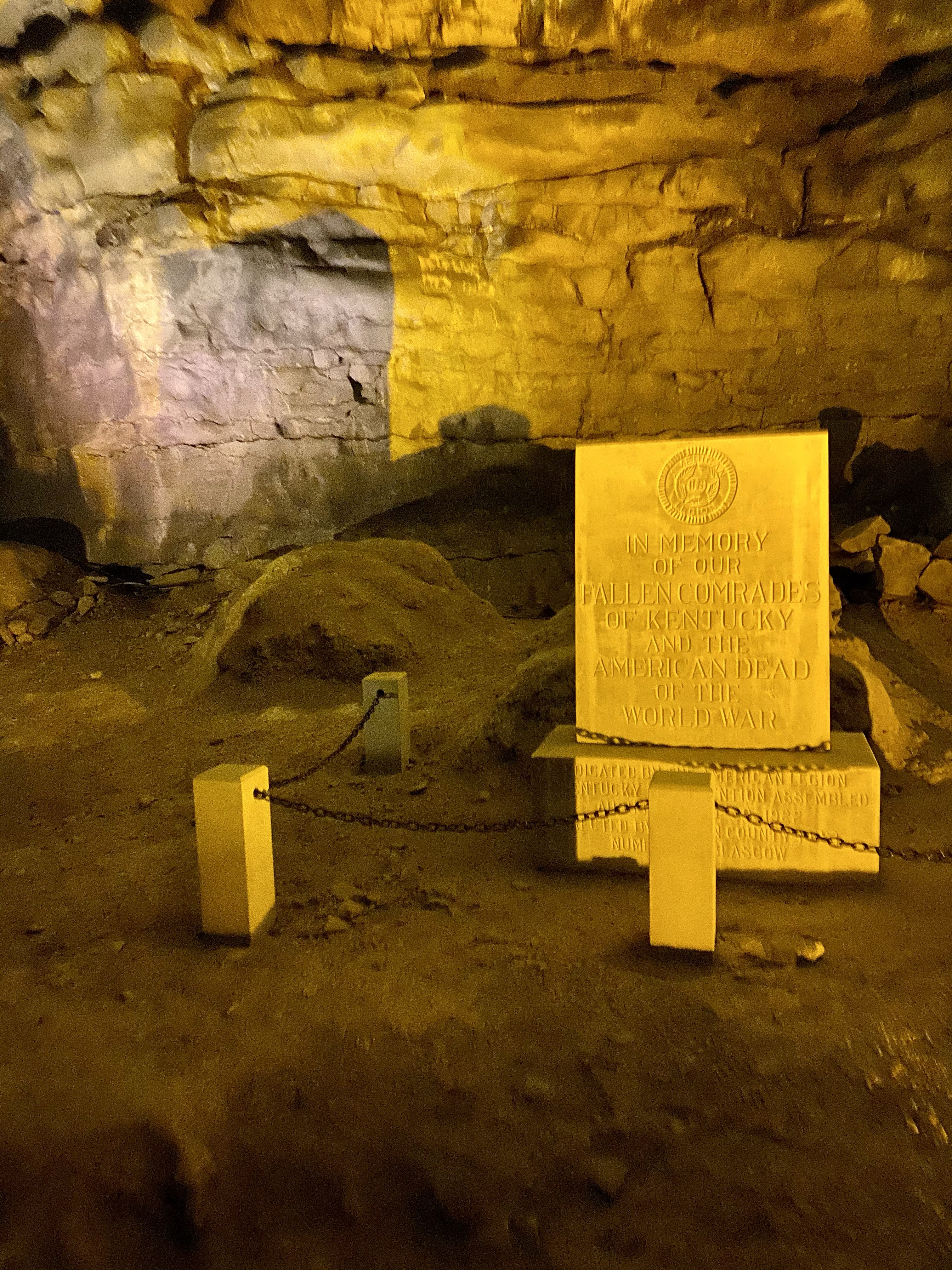
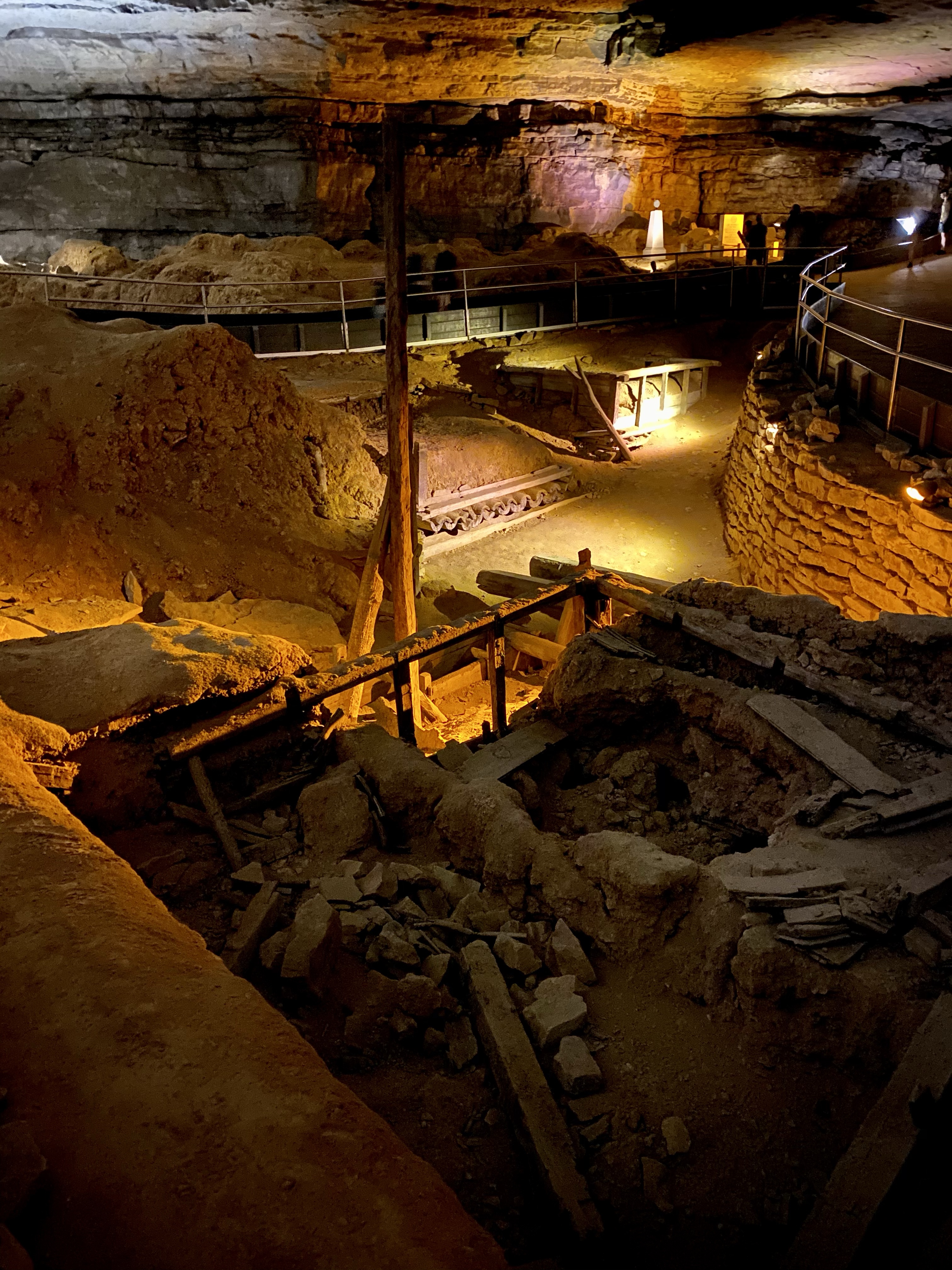
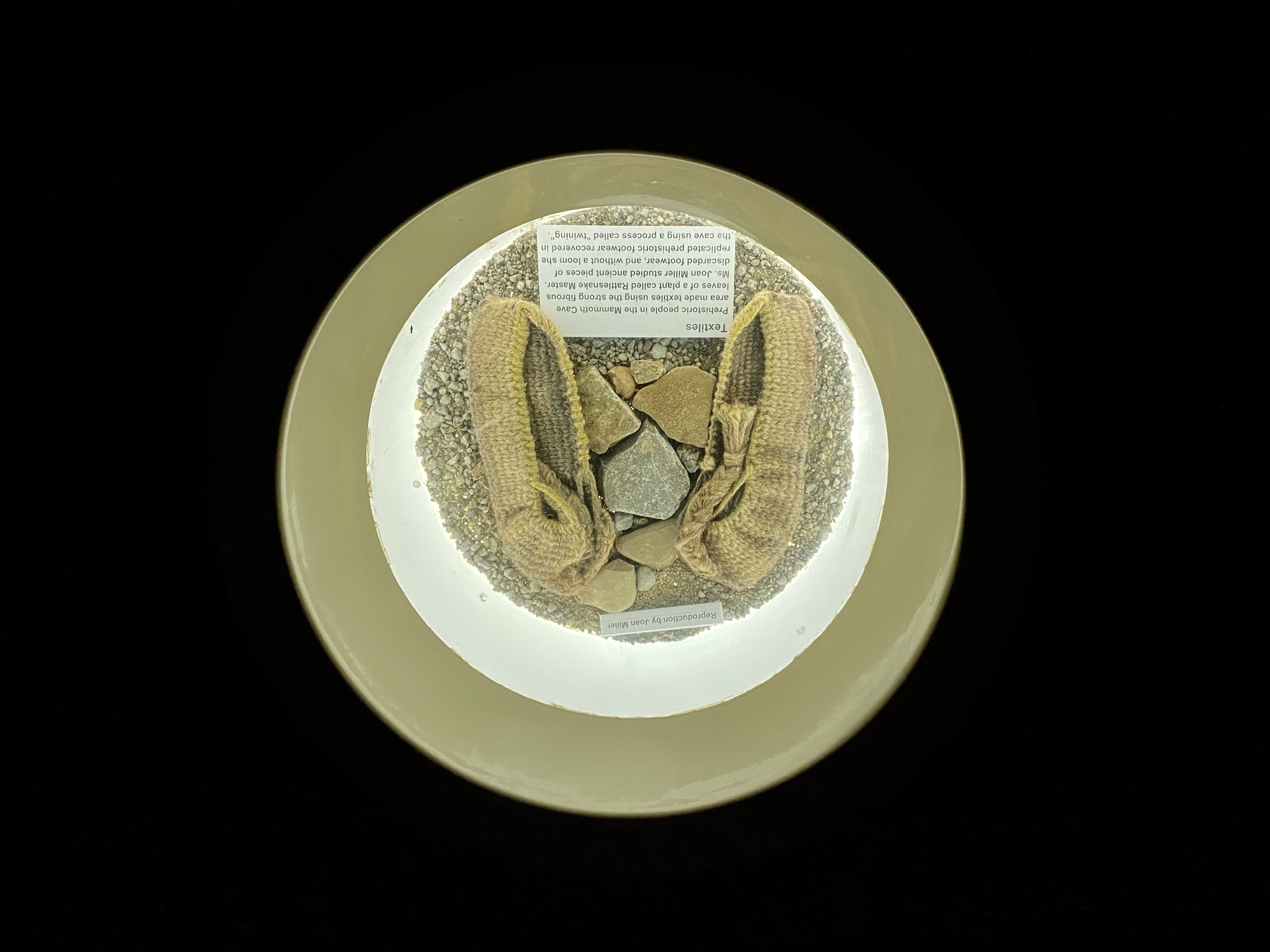
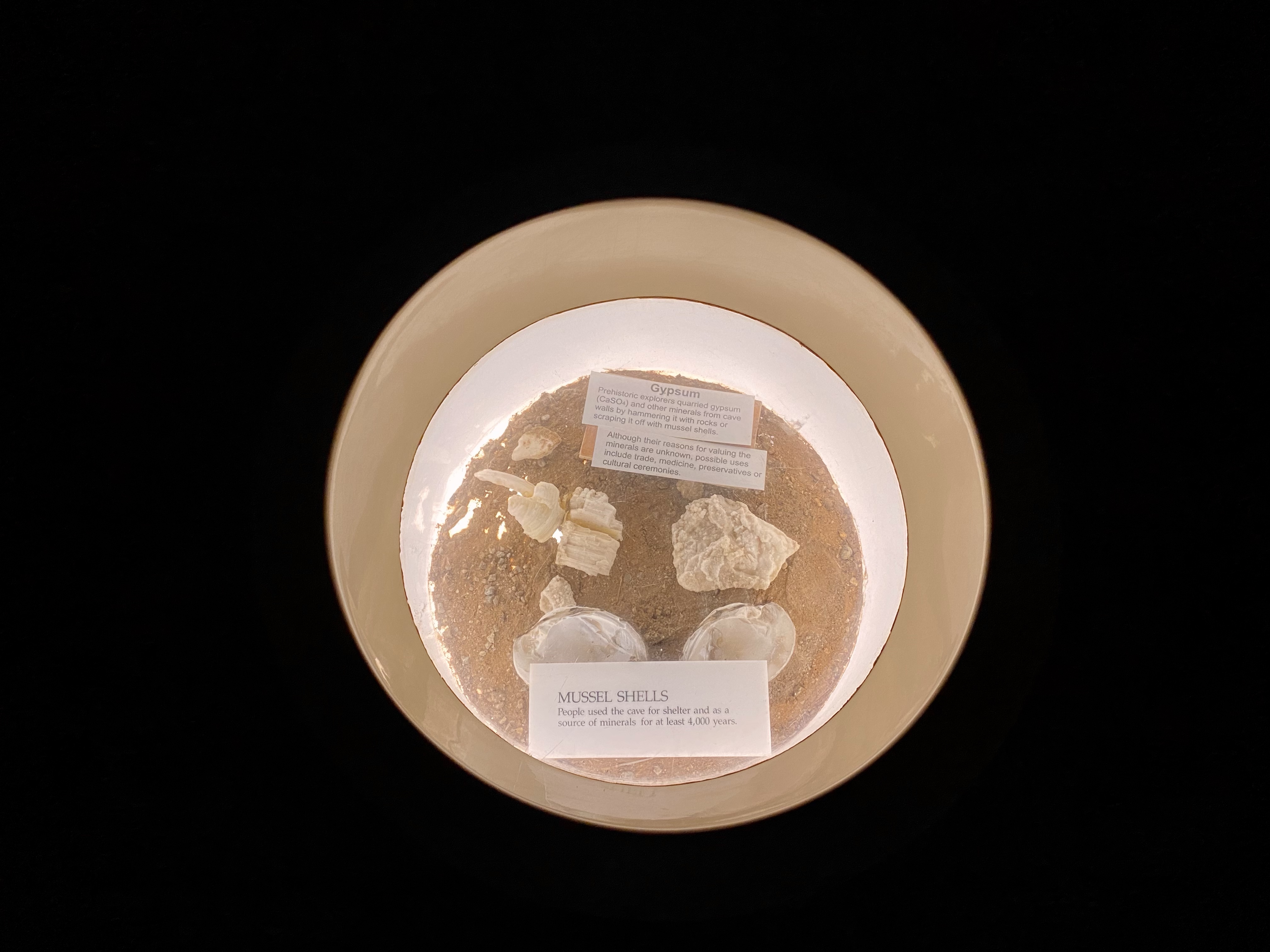
The cave has had many purposes over the years. First, the beginning miles of the cave I entered were used by prehistoric indigenous people for many years. Their exact purposes are largely unknown as of today, but they might have been ceremonial or for minerals. In the 1800s, after the cave was rediscovered, operations to extract nitrate-rich cave soil to make gunpowder ensued, harvest limestone for gravel, host WWI Memorials, and even a mushroom farm. As you wander through this part of the cave on your self-guided tour, you can see the artifacts of these operations all around.
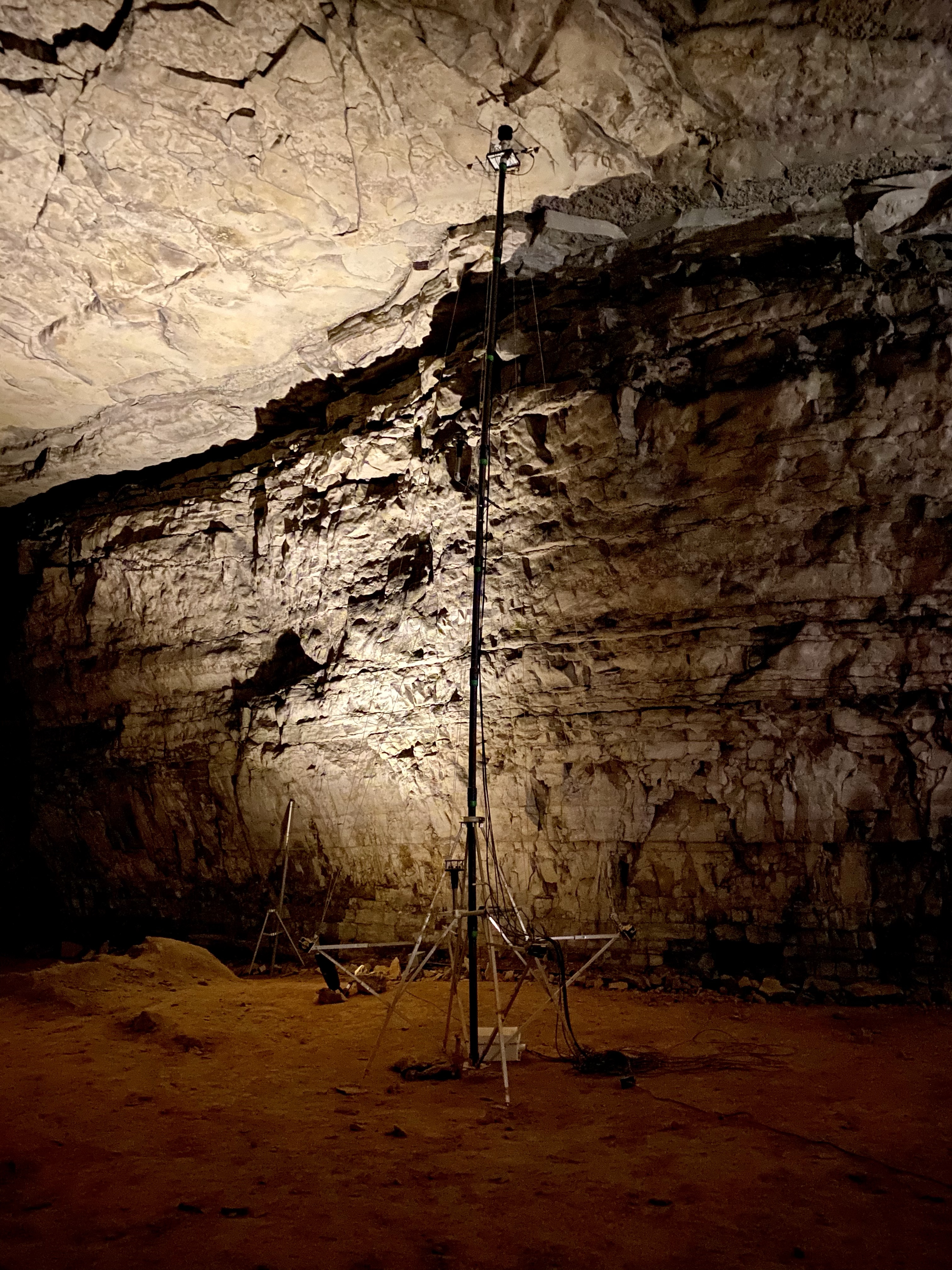
Down below they are also conducting science experiments to track how humans affect the cave and its animal dwellers. In the Twilight Zone, the transition zone between light and complete darkness, ferns and mosses grow and salamanders, mice, raccoons and wood rats live. Bats rest in the dark recesses of the cave, but come out to hunt for food. And in the subterranean rivers, eyeless cavefish swim and eat other invertebrates dwelling down there.
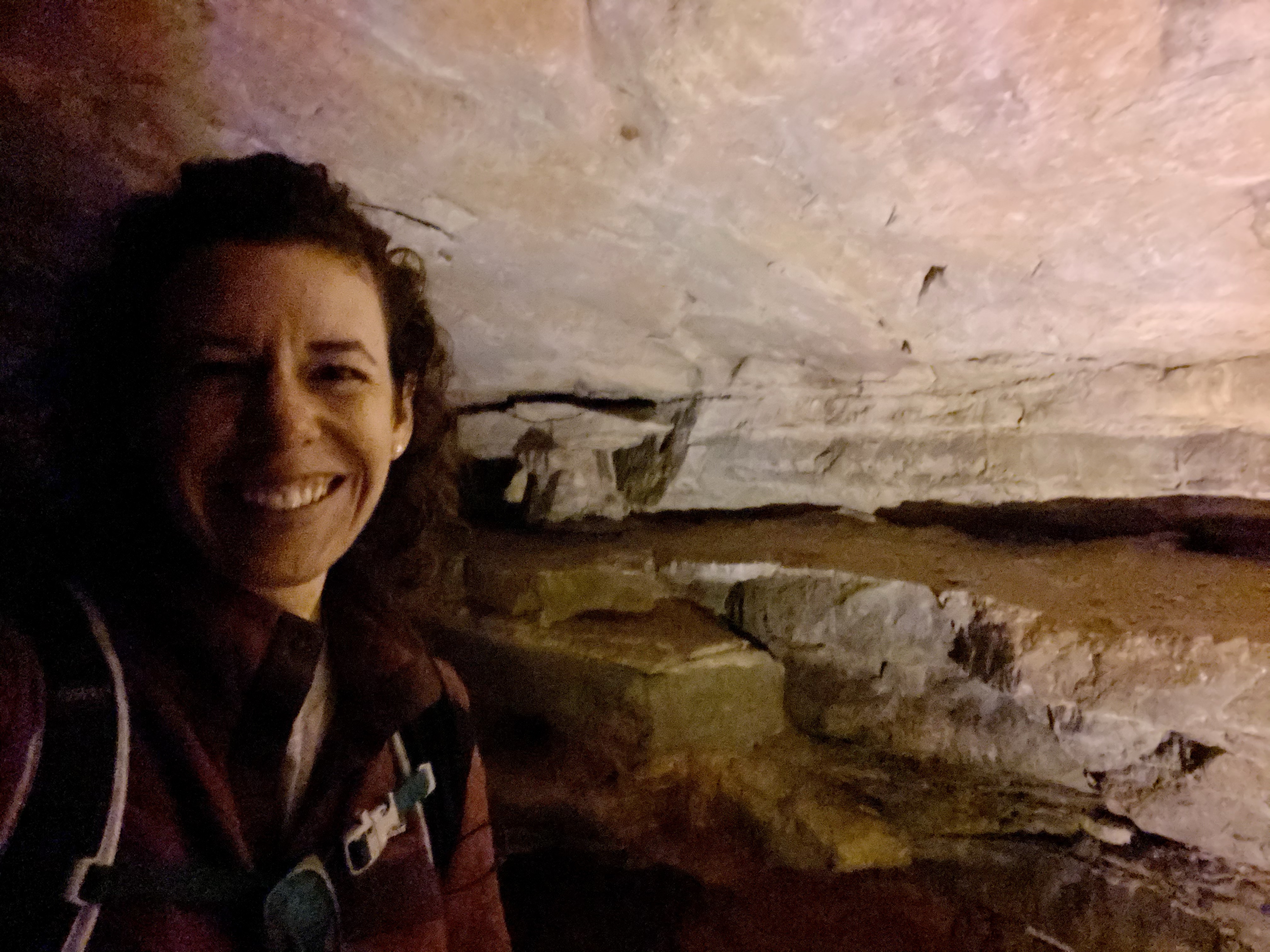
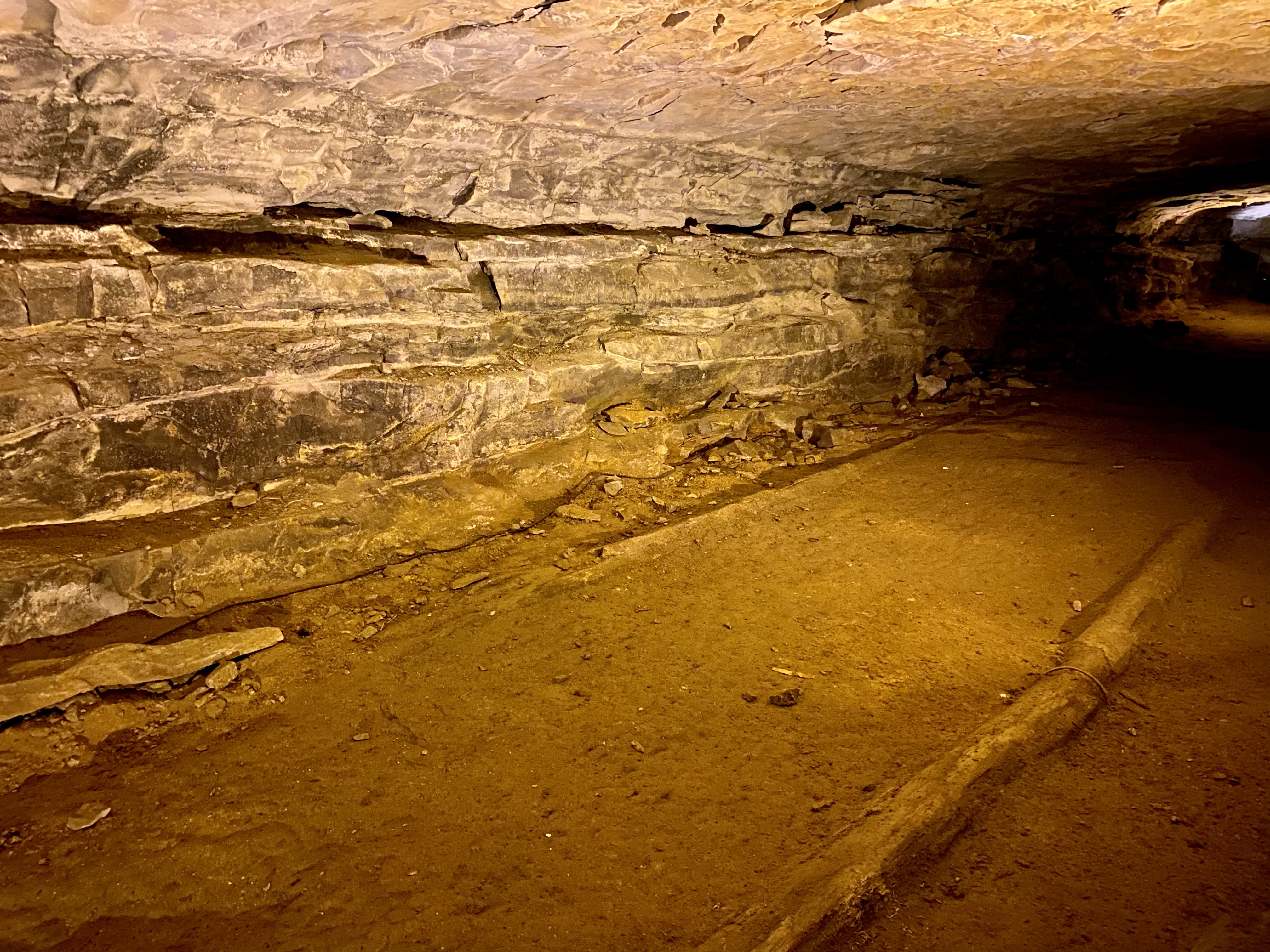
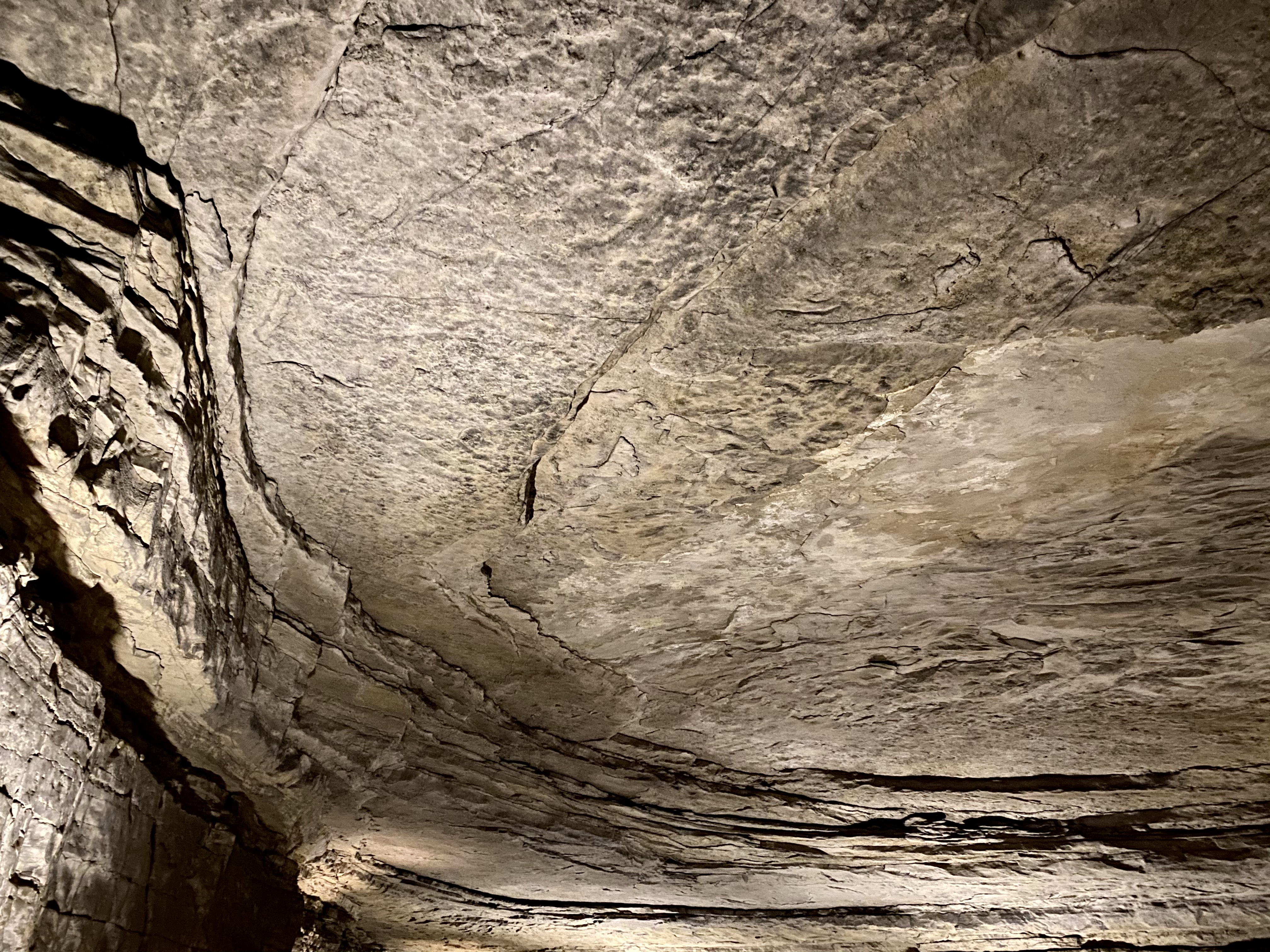
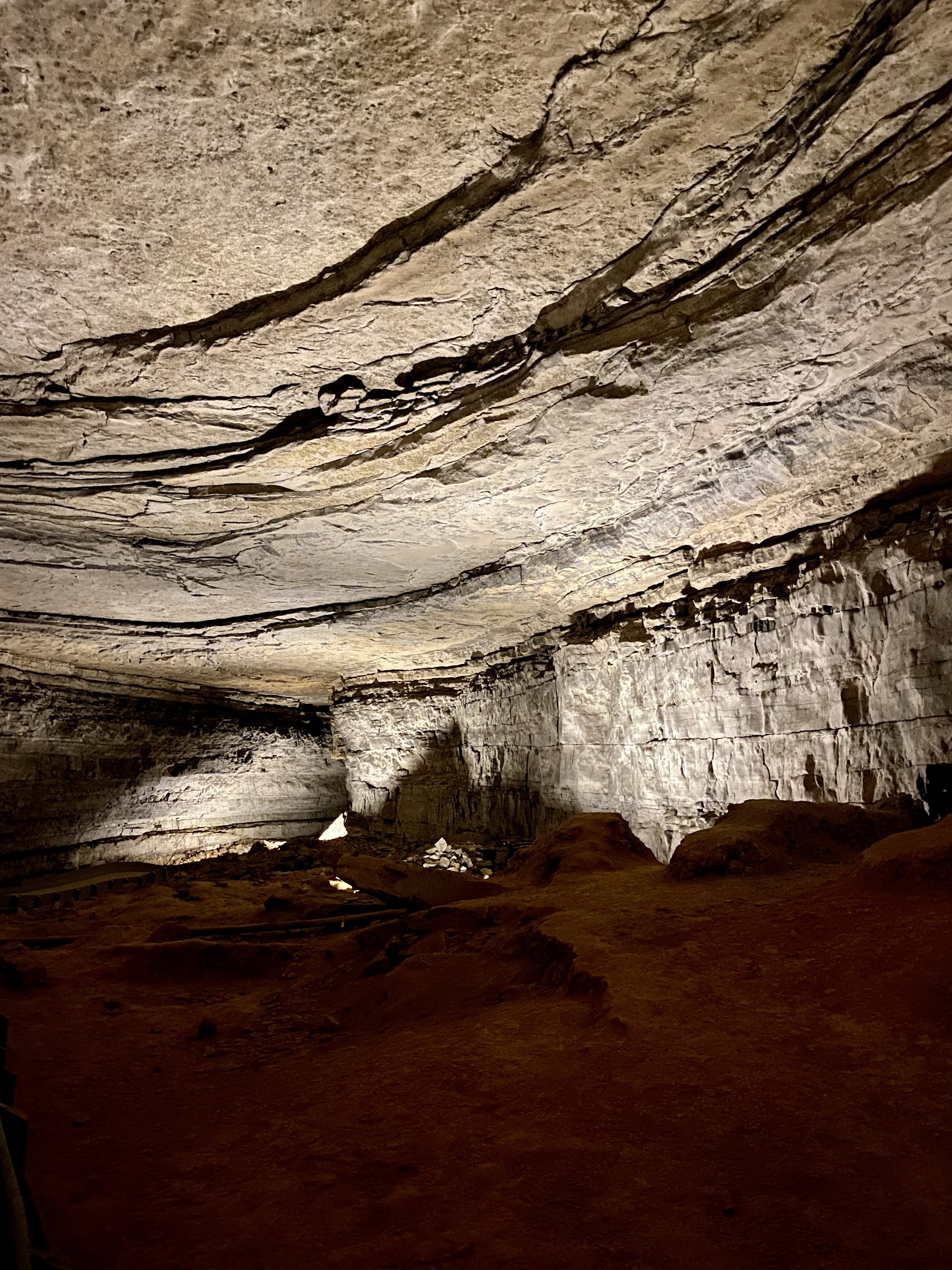
After a short walk through the woods, I descended the stairs into the dimly lit cave and walked about. Wide with low ceilings at first, the cave opens into a large tunnel and several mammoth rooms. Rock walls curve above you, tens of feet above your head. Yellow, white, tan and black from ash of ancient flames, the cave is cool (54 degrees) and damp. Sound echoes around you. You feel small.
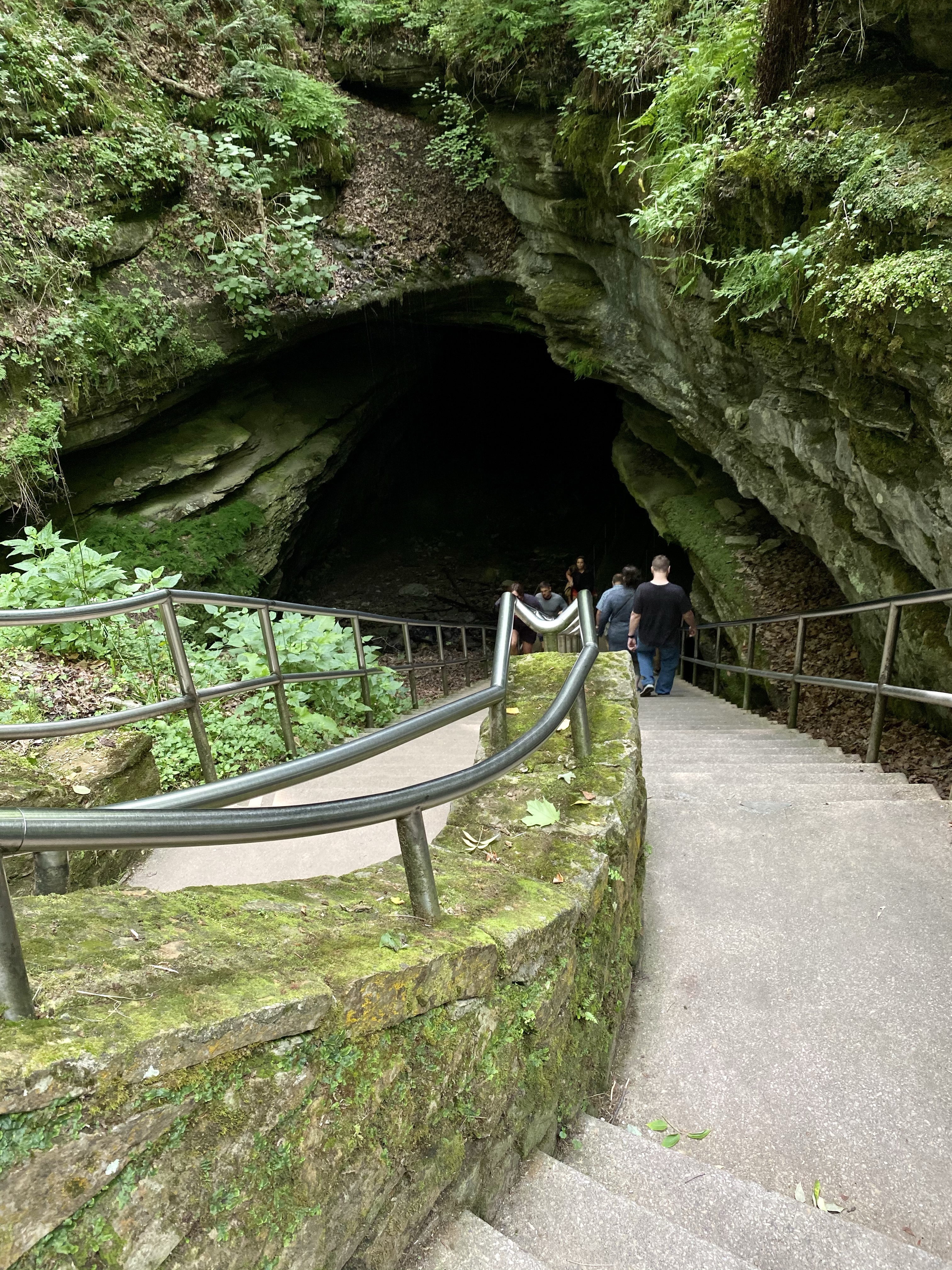
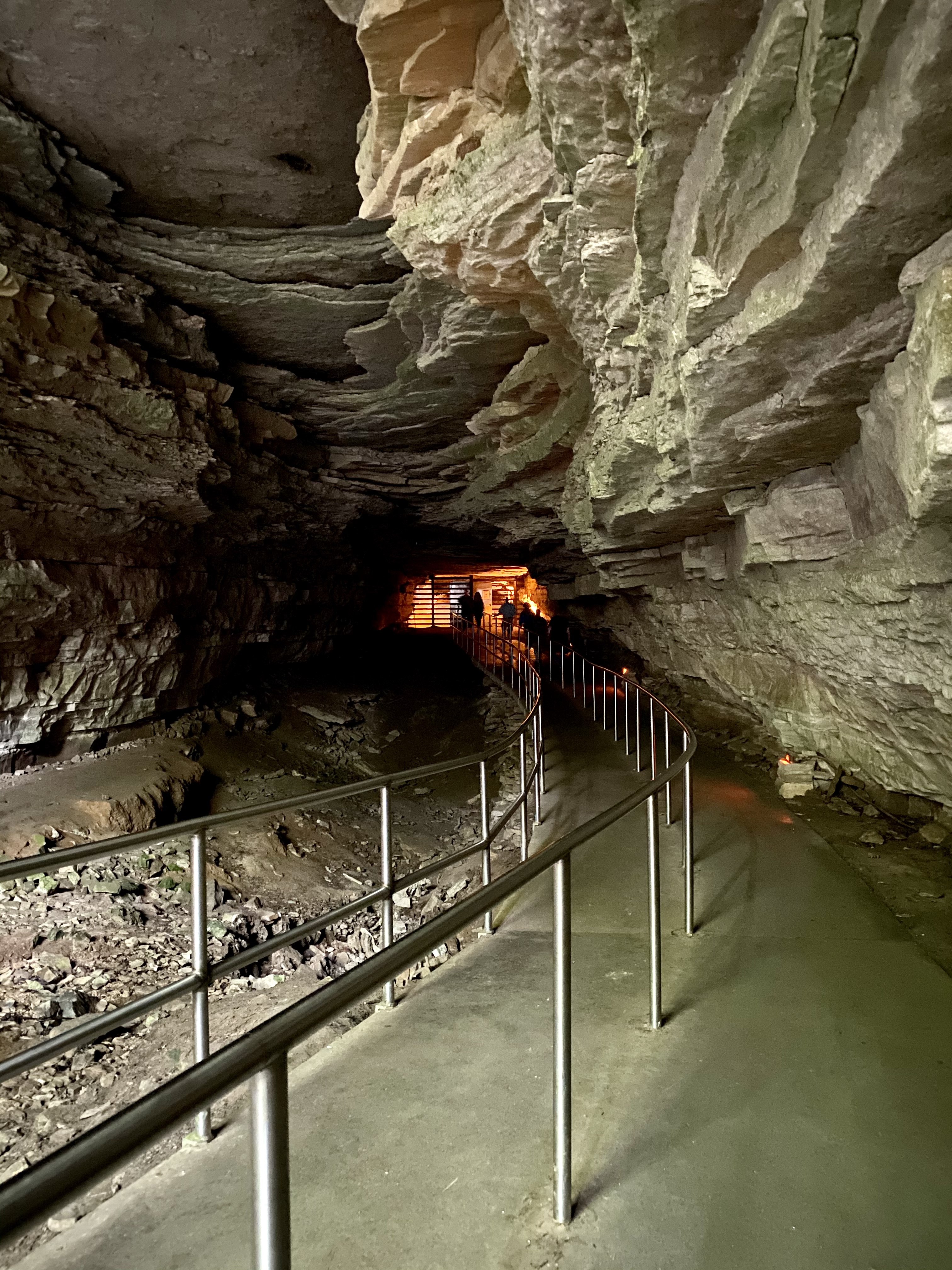
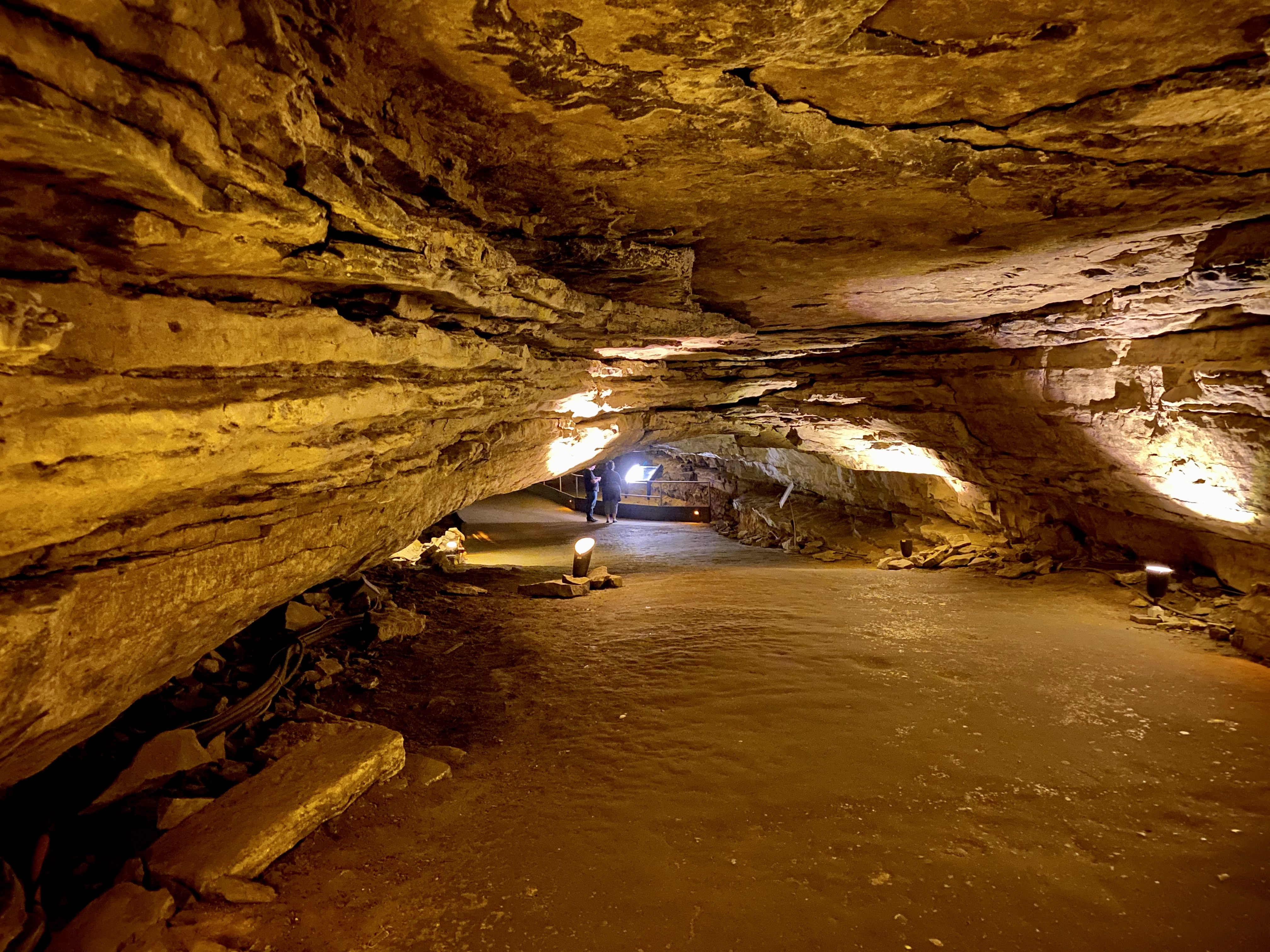
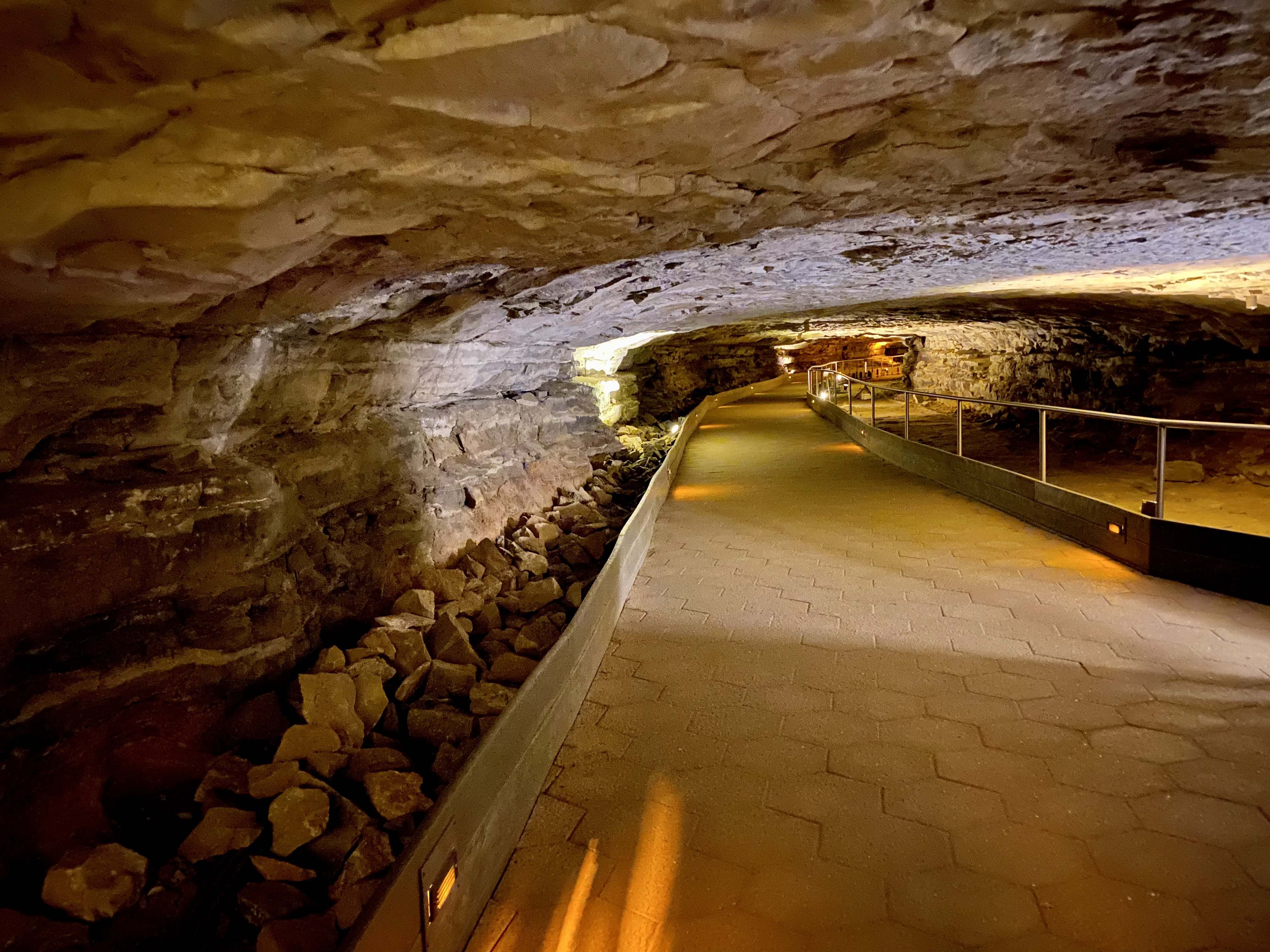
I spent about an hour walking around, reading, learning, admiring, talking to park rangers. Then I exited into the heat and humidity of above ground. This short introduction certainly enticed me to return! I’m thinking maybe a latent tour, or a crawling tour next time? Who wants to join me?
Before I left to head to Tennessee, I finished my tour of the museum to learn about the indigenous people connected to this land. The Cherokee, Chickasaw, Shawnee tribes all have connections to this land. Long before it was a national park and World Heritage Site, these indigenous people farmed the land, lived under rock shelters, and utilized the caves for a variety of purposes which need more research. Disease, war, and broken treaties pushed them out of their lands over the years. The Park and its staff are working closely with the relatives of previous inhabitants to make sure this sacred place is respected today.
I’ll be back one day to check on how the park is honoring the indigenous people and to appreciate more of this preserved place!



 Tonelli's Travels
Wow, Shannon! Spectacular. The pictures leave me speechless. It is a beautiful place. You are having the experience of your life.
LikeLike